
Hematocrit is a critical component of a complete blood count (CBC) test, measuring the percentage of red blood cells in your total blood volume. When hematocrit levels fall below normal, it often signals an underlying health issue—most commonly anemia. A low hematocrit can affect oxygen delivery throughout the body, leading to fatigue, weakness, and more serious complications if left untreated. Understanding what causes low hematocrit, recognizing its symptoms, and knowing what the results mean empowers individuals to take proactive steps toward better health.
What Is Hematocrit and Why It Matters
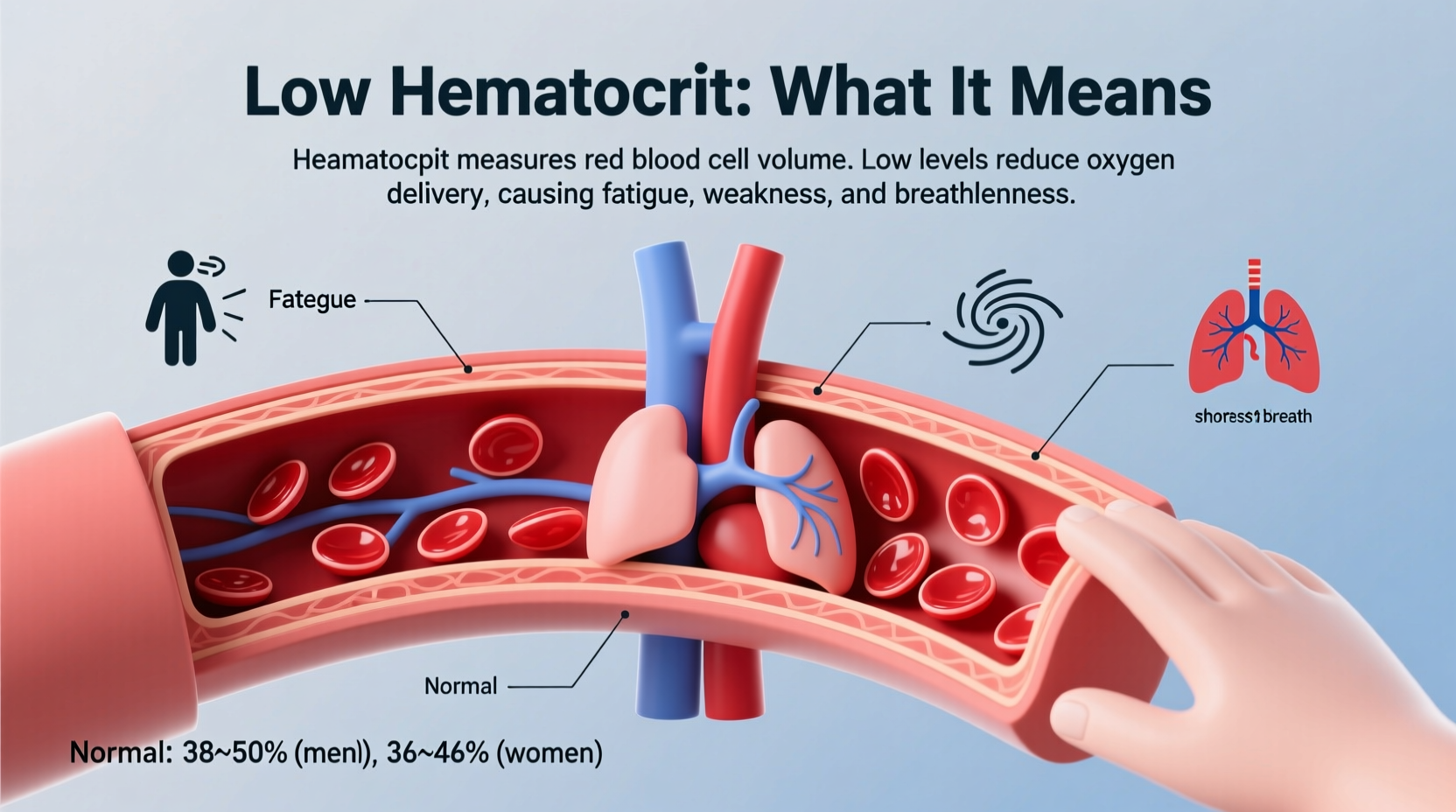
Hematocrit reflects the proportion of your blood made up of red blood cells (RBCs), which are responsible for carrying oxygen from the lungs to tissues and organs. Normal hematocrit ranges vary slightly by age and sex:
- Men: 38.3%–48.6%
- Women: 35.5%–44.9%
- Children: Varies widely by age, typically between 30%–44%
A value below these thresholds indicates low hematocrit. This doesn’t diagnose a condition on its own but serves as a vital clue pointing toward possible issues such as iron deficiency, chronic disease, or blood loss. Because red blood cells rely on hemoglobin—a protein rich in iron—to transport oxygen, anything that impairs RBC production or increases destruction can lower hematocrit.
“Hematocrit is one of the first indicators we check when evaluating fatigue or shortness of breath. It’s a window into the body’s oxygen-carrying capacity.” — Dr. Lena Torres, Hematology Specialist, Boston General Hospital
Common Causes of Low Hematocrit
Low hematocrit arises from three primary mechanisms: decreased red blood cell production, increased destruction, or blood loss. Identifying the root cause is essential for effective treatment.
1. Nutritional Deficiencies
The most common nutritional culprits include:
- Iron deficiency: Essential for hemoglobin synthesis; poor diet, menstruation, or gastrointestinal bleeding can deplete stores.
- Vitamin B12 and folate deficiency: Necessary for RBC maturation; seen in vegans, malabsorption disorders like celiac disease, or pernicious anemia.
2. Chronic Diseases
Conditions such as kidney disease, cancer, rheumatoid arthritis, and chronic infections interfere with erythropoietin production (a hormone that stimulates RBC formation) or trigger inflammation that suppresses bone marrow activity.
3. Blood Loss
Acute or chronic bleeding—whether from trauma, surgery, ulcers, heavy menstrual periods, or colon polyps—directly reduces red blood cell mass and hematocrit.
4. Hemolytic Anemias
Inherited or autoimmune conditions like sickle cell disease or lupus cause premature destruction of red blood cells, lowering hematocrit despite normal or even elevated production.
5. Bone Marrow Disorders
Diseases such as aplastic anemia, myelodysplastic syndromes, or leukemia impair the bone marrow's ability to produce sufficient red blood cells.
Symptoms Associated with Low Hematocrit
Because low hematocrit reduces oxygen delivery, symptoms often reflect tissue hypoxia. The severity depends on how quickly levels drop and how low they go.
| Symptom | Why It Occurs |
|---|---|
| Fatigue and weakness | Reduced oxygen supply to muscles and brain |
| Pale skin, especially in face and nail beds | Less hemoglobin in circulation |
| Shortness of breath | Lungs compensate for low oxygen by increasing respiration |
| Dizziness or lightheadedness | Brain not receiving adequate oxygen |
| Rapid or irregular heartbeat (palpitations) | Heart works harder to pump oxygenated blood |
| Cold hands and feet | Reduced peripheral circulation due to prioritized core oxygenation |
In severe cases, very low hematocrit can lead to chest pain, confusion, or fainting—signs requiring immediate medical attention.
What Low Hematocrit Means for Your Health
A single low reading isn't always alarming—it may result from hydration changes, recent illness, or lab variation. However, persistently low values demand investigation. Left unaddressed, chronic low hematocrit can lead to:
- Decreased exercise tolerance and quality of life
- Cardiac strain due to prolonged tachycardia
- Complications during pregnancy, including preterm birth
- Worsening of underlying conditions like heart or lung disease
For older adults, unexplained anemia is linked to higher mortality and increased risk of hospitalization. In children, iron deficiency anemia can impair cognitive development and physical growth.
Mini Case Study: Recognizing Hidden Iron Deficiency
Sarah, a 32-year-old teacher, began feeling unusually tired after her second child. She dismissed it as postpartum exhaustion until she fainted during a school assembly. Her CBC revealed a hematocrit of 29% and low ferritin. Further testing uncovered undiagnosed celiac disease causing malabsorption of iron. After starting a gluten-free diet and iron supplementation, her energy returned within weeks. This case illustrates how low hematocrit can be a silent marker of deeper systemic issues.
Diagnosis and Next Steps
If your hematocrit is low, your doctor will likely order additional tests to pinpoint the cause:
- Complete blood count (CBC): Evaluates red cell indices (MCV, MCH) to distinguish between microcytic (small cells), normocytic, or macrocytic (large cells) anemia.
- Reticulocyte count: Measures new RBC production; low in deficiency states, high in hemolysis or blood loss.
- Serum iron, ferritin, TIBC: Assesses iron stores and availability.
- Vitamin B12 and folate levels: Rules out megaloblastic anemia.
- Kidney function tests: Checks for erythropoietin deficiency in renal disease.
- Stool tests: Screens for occult blood indicating GI bleeding.
Checklist: Actions to Take After a Low Hematocrit Diagnosis
- ✔️ Review all medications with your doctor (some cause GI bleeding or suppress bone marrow).
- ✔️ Evaluate dietary intake of iron, B12, and folate.
- ✔️ Schedule follow-up blood work as recommended.
- ✔️ Consider referral to a hematologist if cause remains unclear.
- ✔️ Monitor symptoms and report any worsening (e.g., chest pain, severe dizziness).
Frequently Asked Questions
Can dehydration cause low hematocrit?
No—dehydration typically causes a falsely high hematocrit because reduced plasma volume concentrates red blood cells. True low hematocrit usually indicates a real decrease in RBC mass.
Is low hematocrit dangerous during pregnancy?
Yes. Pregnant women have naturally lower hematocrit due to increased plasma volume, but levels below 33% in the second trimester warrant evaluation. Severe anemia increases risks for preterm delivery, low birth weight, and maternal complications.
Can stress cause low hematocrit?
Not directly. However, chronic stress may contribute to poor nutrition, gastrointestinal issues, or inflammation, which can indirectly affect red blood cell production over time.
Conclusion: Taking Control of Your Blood Health
Low hematocrit is more than just a number on a lab report—it’s a signal from your body that something needs attention. Whether due to diet, disease, or blood loss, identifying and addressing the root cause can restore energy, prevent complications, and improve long-term well-being. Don’t ignore persistent fatigue or unexplained pallor. Work with your healthcare provider to interpret your results in context and develop a plan tailored to your needs.




 浙公网安备
33010002000092号
浙公网安备
33010002000092号 浙B2-20120091-4
Comments
No comments yet. Why don't you start the discussion?