
For those just starting their lash journey, choosing between magnetic lashes and traditional glue-on lashes can feel overwhelming. Both promise dramatic volume and length, but their application methods, learning curves, and long-term usability differ significantly. While magnetic lashes are often marketed as beginner-friendly, and glue-ons as classic and customizable, the real question isn’t just about ease—it’s about what kind of experience you want, how much time you’re willing to invest, and what fits your lifestyle.
This article breaks down both options from a practical standpoint, focusing specifically on beginners. We’ll examine setup, precision, cleanup, durability, and common pitfalls—backed by real user experiences and expert insights—to determine which type truly wins when it comes to ease of use.
The Basics: How Each Type Works
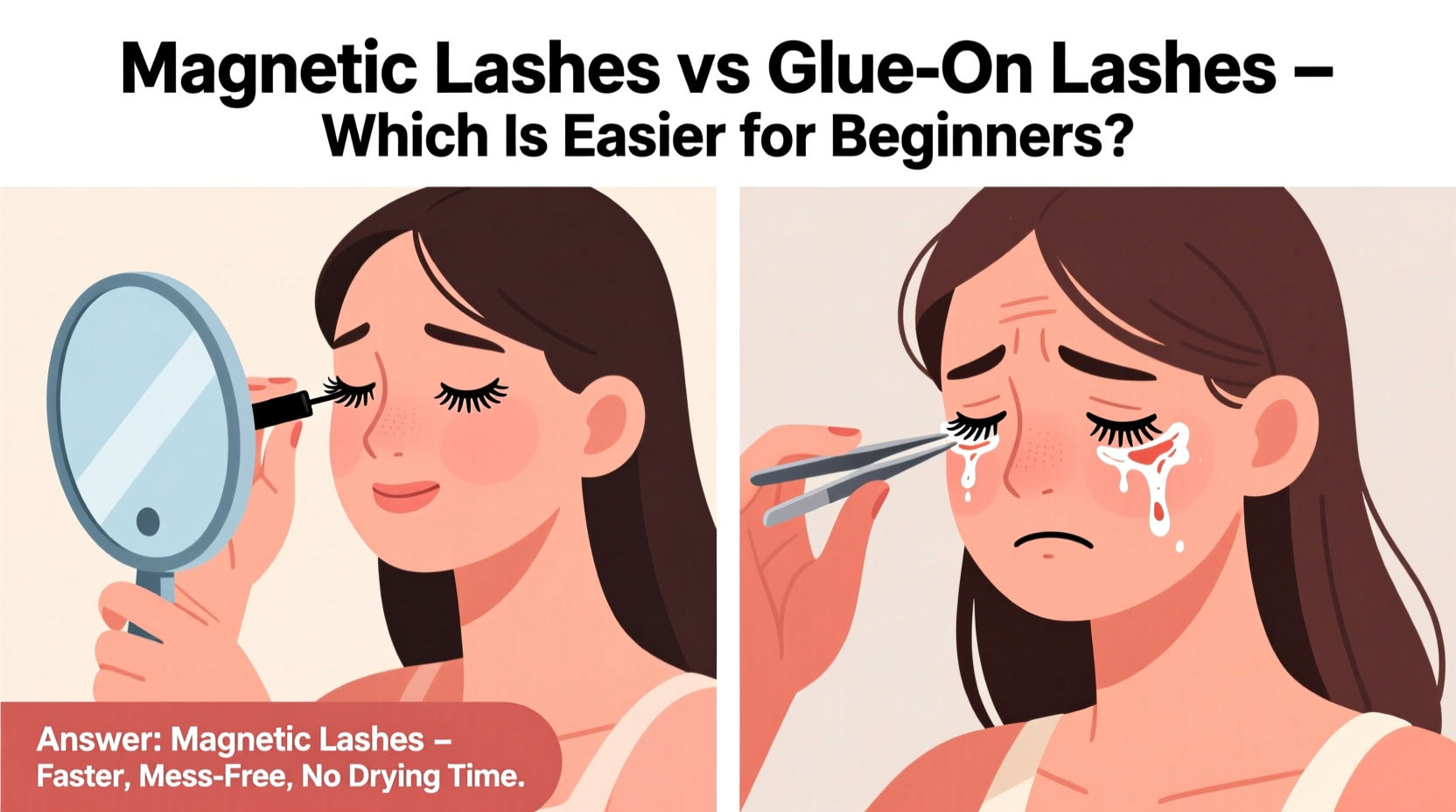
Before comparing difficulty, it's important to understand how each lash type functions.
Magnetic lashes consist of two parts: a false lash strip with tiny magnets embedded along the band, and a second magnetic liner or matching bottom strip that holds the lash in place via magnetic attraction. The lash “sandwiches” your natural lashes between two magnetized bands, eliminating the need for adhesive.
Glue-on lashes, on the other hand, rely on eyelash glue applied to the lash band. After the glue becomes tacky (usually after 20–30 seconds), the lash is pressed onto the natural lash line and held in place until secure. This method has been used for decades and offers a wide range of styles—from subtle wispy lashes to bold theatrical ones.
While both aim to enhance your eyes, the mechanics behind them create vastly different user experiences—especially for someone applying false lashes for the first time.
Learning Curve: First-Time Application Compared
Beginners often struggle not with the idea of wearing false lashes, but with the execution. Shaky hands, misalignment, glue mishaps, and discomfort are common complaints. Let’s compare how each type performs during that critical first try.
Magnetic Lashes: Simpler Setup, But Precision Still Matters
Magnetic lashes are frequently advertised as “no glue, no mess,” and this is true—but they aren’t entirely foolproof. Most magnetic systems require you to apply a top lash and a bottom magnetic liner (or dual-strip system), aligning them precisely so the magnets connect correctly.
The challenge lies in alignment. If the upper and lower magnets don’t meet exactly, the lash may sit unevenly or pop off throughout the day. Some brands offer pre-connected magnetic strips that snap together easily, while others require careful placement.
Glue-On Lashes: Steeper Initial Learning Curve
Applying glue-on lashes involves multiple steps: measuring the lash to fit your eye shape, applying glue to the band, waiting for it to become tacky, then placing it as close to your natural lash line as possible without touching your skin directly.
First-timers often make these mistakes:
- Using too much glue, causing white residue or smudging makeup.
- Applying the lash too soon after gluing, resulting in sliding or misplacement.
- Pressing too hard and disturbing the eyeliner or eyeshadow.
- Not trimming the lash to size, leading to gaps at the outer or inner corners.
It typically takes 3–5 attempts before most beginners achieve a smooth, seamless look. However, once mastered, glue-ons offer greater control over positioning and blending with natural lashes.
“With magnetic lashes, the barrier to entry is lower, but they demand precision in alignment. Glue-ons require patience, but teach foundational skills that improve overall eye makeup technique.” — Lena Torres, Professional Makeup Artist & Beauty Educator
Side-by-Side Comparison: Key Factors for Beginners
| Factor | Magnetic Lashes | Glue-On Lashes |
|---|---|---|
| Setup Time | 2–3 minutes (once familiar) | 4–7 minutes (including drying time) |
| Required Tools | Lashes, liner (if needed), tweezers/applicator | Lashes, glue, scissors, tweezers, mirror |
| Clean-Up Difficulty | Easy—just peel off | Moderate—glue residue requires oil-based remover |
| Skin Sensitivity Risk | Low (no chemical adhesive) | Higher (latex in some glues causes irritation) |
| Durability (Reusability) | 15–30 uses (magnets weaken over time) | Up to 20+ uses (with proper care) |
| Comfort Level | Moderate—can feel bulky due to double band | High—when properly applied, feels lightweight |
| Beginner Error Tolerance | Low—misaligned magnets won’t hold | Moderate—can reposition slightly before glue sets |
From this comparison, magnetic lashes win in speed and lack of chemicals, but lose points in comfort and error forgiveness. Glue-ons take longer and involve more materials, but allow minor corrections during application and tend to feel more natural once worn.
Real-World Experience: A Beginner’s Journey
Consider Sarah, a 28-year-old office worker who decided to try false lashes for her best friend’s wedding. With no prior experience, she bought both a popular magnetic lash kit and a drugstore glue-on set to test them.
Her first attempt with magnetic lashes took nearly 10 minutes. She struggled to align the upper lash with the magnetic liner, accidentally smudging her eyeliner twice. On the third try, she got them to snap into place—but one corner kept lifting by midday.
Switching to glue-ons, her initial results were messy. She used too much glue, blinked too soon, and ended up with clumps. But by her second practice session (two days later), she learned to wait for the glue to get tacky and placed the lash steadily using tweezers. By the wedding day, she applied them confidently in under five minutes—and wore them comfortably for 12 hours.
“I thought magnets would be easier,” Sarah said. “But I ended up preferring the glue-ons because once I got the hang of it, they stayed put and looked more natural.”
Her story reflects a common pattern: magnetic lashes offer a promising shortcut, but glue-ons reward persistence with better long-term results.
Step-by-Step: Applying Magnetic Lashes (Beginner-Friendly Method)
If you're leaning toward magnetic lashes, follow this simplified process designed for first-time users:
- Prep your eyes: Apply eyeliner and mascara as desired. Avoid heavy creams near the lash line—they reduce grip.
- Check lash fit: Hold the magnetic lash against your eye. Trim only the outer end if needed—never the inner corner where magnets are placed.
- Apply magnetic liner (if required): Draw a thin line along your upper lash line using the included magnetic eyeliner. Wait 60 seconds for it to dry slightly.
- Pick up the lash: Use tweezers or an applicator. Hold the lash by the center band, not the fibers.
- Align and place: Start by placing the center of the lash over your natural lash line, then gently press the inner and outer corners. Let the magnets attach naturally—don’t force them.
- Secure and adjust: Blink slowly to help the magnets settle. If one side lifts, gently press it back into place with clean fingertips.
- Finish makeup: Add additional eyeliner to hide any gaps and blend the lash with your natural look.
Note: Not all magnetic systems use liquid liner. Some come with a matching lower lash strip applied beneath the eye. In that case, align the upper lash directly over your natural lashes and let it magnetically attach to the lower strip.
Checklist: What You Need Before Trying Either Option
Ensure you have these essentials before beginning:
- ✔ Well-lit mirror (preferably magnifying)
- ✔ Tweezers or lash applicator tool
- ✔ Scissors (for trimming lashes to fit)
- ✔ Eyelash glue (for glue-ons) or magnetic liner (for magnets)
- ✔ Oil-based makeup remover (for safe removal)
- ✔ Clean lash case (for storage)
- ✔ Patience and at least 10 minutes of uninterrupted time
Skipping even one item—like not having tweezers—can turn a simple task into a frustrating experience.
Common Pitfalls and How to Avoid Them
Both types come with predictable challenges. Knowing them in advance helps beginners avoid discouragement.
Magnetic Lash Mistakes
- Using expired or weak magnets: Over time, repeated use degrades magnetic strength. Replace kits every 2–3 months with regular use.
- Applying liner too thick: Thick strokes prevent close contact between lash and liner, weakening the hold.
- Ignoring lash curvature: If the lash doesn’t match your eye shape, it won’t sit flush. Choose C-curve or D-curve based on your lid structure.
Glue-On Lash Mistakes
- Skipping the tackiness wait: Applying too soon causes sliding; too late means no adhesion. Wait 20–30 seconds after gluing.
- Not sealing the edges: Press the inner and outer corners firmly—they’re the most likely to lift.
- Reusing dirty lash bands: Leftover glue prevents proper sticking. Clean after each use with micellar water or lash-safe remover.
Frequently Asked Questions
Can I wear magnetic lashes every day?
Yes, but frequent use may cause strain on natural lashes if not removed carefully. Always peel gently from the outer corner and avoid tugging. Give your eyes a break at least 1–2 days per week to maintain lash health.
Are glue-on lashes safer than magnetic ones?
Neither is inherently unsafe, but risks differ. Glue-ons carry a higher chance of allergic reactions (especially to latex-based adhesives), while magnetic lashes may cause friction-related irritation if worn too tightly. Always patch-test new products and remove both types gently.
Which lasts longer throughout the day?
When applied correctly, glue-on lashes generally last longer—up to 12 hours without adjustment. Magnetic lashes can shift during prolonged wear, especially in humid conditions or if blinking frequently. Some users report needing to re-press corners after meals or naps.
Final Verdict: Which Is Actually Easier for Beginners?
The answer depends on what kind of “easy” you’re looking for.
If your priority is speed and simplicity of setup, magnetic lashes are easier. No glue, no drying time, and minimal tools make them ideal for occasional wear or quick touch-ups. They’re particularly helpful for people with sensitive eyes or latex allergies.
However, if you value long-term reliability, comfort, and natural appearance, glue-on lashes are worth the steeper learning curve. Once you master the timing and placement, they become faster to apply and stay put reliably. Plus, they’re more affordable and widely available in diverse styles.
Ultimately, many beginners find that starting with magnetic lashes builds confidence, but transition to glue-ons for everyday versatility and performance.
Take the Next Step
Don’t let early frustration decide your lash future. Set aside three evenings to practice—one with magnetic lashes, one with glue-ons, and a final test run combining your preferred method with full makeup. Track which felt smoother, lasted longer, and made you feel more confident.
Beauty routines evolve with practice. Whether you choose magnets or glue, what matters most is finding a method that fits your life—not one that promises instant perfection.




 浙公网安备
33010002000092号
浙公网安备
33010002000092号 浙B2-20120091-4
Comments
No comments yet. Why don't you start the discussion?