
For many who wear false eyelashes, the battle against humidity is all too real. Whether you live in a tropical climate, sweat during workouts, or simply face muggy summer days, maintaining flawless lash wear can feel like a constant challenge. The adhesive that once held strong at dawn may start peeling by midday, leaving gaps, discomfort, and touch-ups. As magnetic lashes have surged in popularity over traditional glue-on styles, a key question emerges: in high humidity, which option actually performs better?
This isn’t just about convenience—it’s about longevity, safety, and appearance. Choosing between magnetic and glue-on lashes involves more than aesthetics; it hinges on how well they withstand environmental stressors. Humidity, in particular, affects adhesives differently than mechanical fastening systems. To determine which holds stronger under moist conditions, we need to examine materials, bonding mechanisms, user habits, and real-world outcomes.
How Humidity Affects Eyelash Adhesives
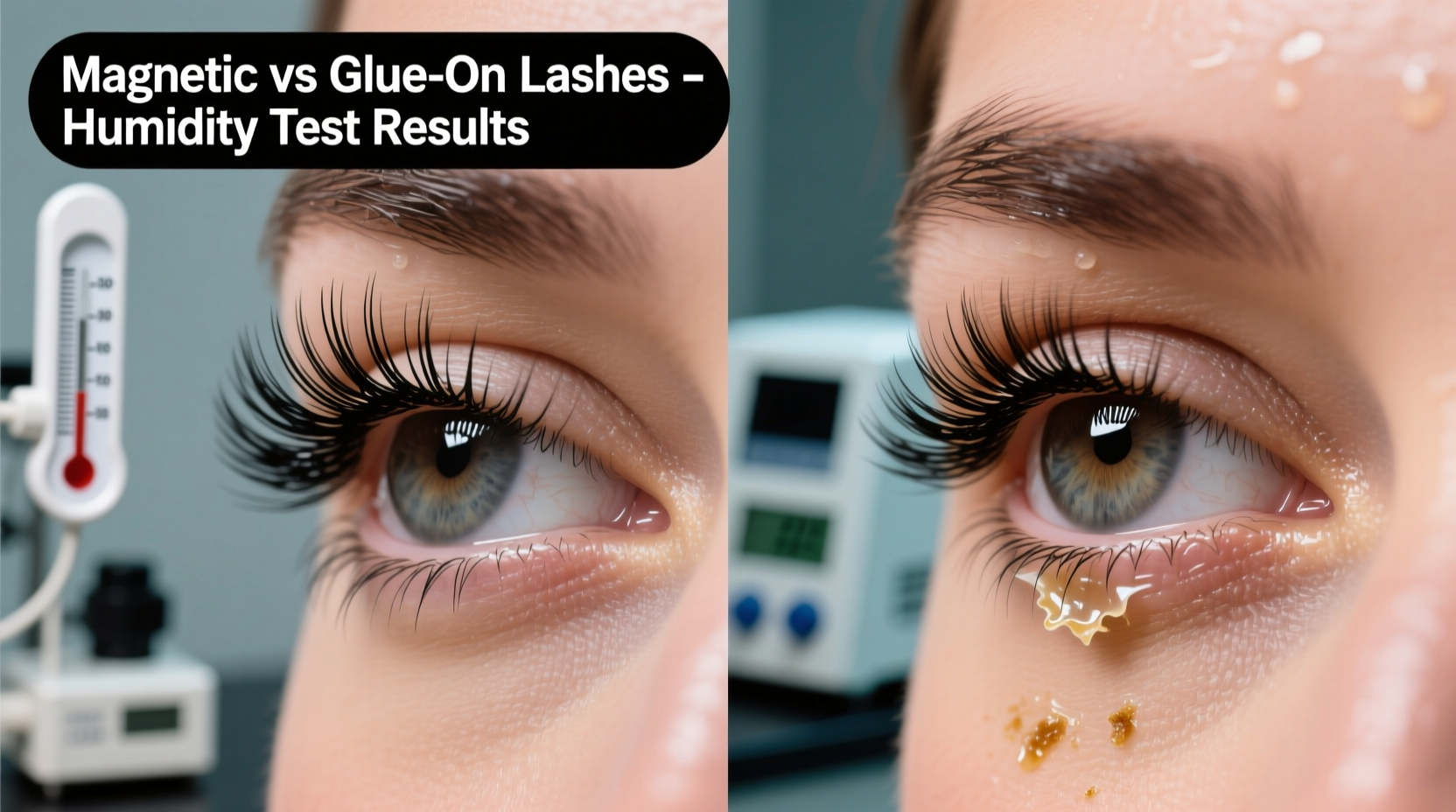
Humidity plays a significant role in how eyelash adhesives cure and maintain their grip. Most lash glues are cyanoacrylate-based—similar to superglue—but formulated for sensitive skin. These adhesives polymerize (harden) when exposed to moisture in the air. In theory, higher humidity should speed up curing. However, too much moisture disrupts the bond over time.
When ambient humidity exceeds 60%, excess moisture interferes with the adhesive’s ability to maintain cohesion. Instead of forming a tight seal between the lash band and natural lash line, the glue begins to soften, leading to lifting, flaking, or complete detachment. This effect is especially pronounced with cheaper or improperly stored adhesives, which may degrade faster.
“High humidity doesn’t just weaken lash glue—it accelerates its breakdown. Even premium formulas struggle beyond 70% RH.” — Dr. Lena Torres, Cosmetic Dermatologist
In contrast, magnetic lashes bypass chemical adhesion altogether. They rely on tiny magnets embedded in both the false lash strip and a companion liner or second strip placed above and below the natural lashes. Since no glue is involved, moisture exposure doesn’t chemically degrade the attachment method. The physical attraction between magnets remains consistent regardless of atmospheric dampness—assuming the magnets retain strength and positioning.
Comparing Magnetic and Glue-On Lash Performance in Humid Conditions
To understand which system holds stronger through humidity, we must compare them across several performance metrics: initial application, midday wear, reusability, comfort, and failure points.
| Feature | Magnetic Lashes | Glue-On Lashes |
|---|---|---|
| Adhesion Type | Mechanical (magnets) | Chemical (cyanoacrylate glue) |
| Humidity Resistance | High – unaffected by moisture | Low to Moderate – degrades with prolonged exposure |
| Application Time | 3–5 minutes | 5–10 minutes (including drying time) |
| Skin Sensitivity Risk | Very low (no adhesive contact) | Moderate to high (risk of irritation or allergic reaction) |
| Lifespan per Pair | Up to 50 uses | 10–25 uses (varies with care) |
| Midday Lifting in Humidity | Rare (if properly aligned) | Common after 4–6 hours |
| Removal Ease | Instant, residue-free | Requires oil-based remover, risk of tugging |
The data shows a clear advantage for magnetic lashes in humid environments. Because their hold depends on magnetic force rather than adhesive chemistry, they’re inherently more resistant to moisture-related degradation. Users in Miami, Bangkok, and Houston consistently report longer wear times with magnetic options during peak humidity months.
Real-World Case: Outdoor Wedding in New Orleans
Sophia, a makeup artist based in Atlanta, was hired to do bridal party makeup for an outdoor garden wedding in New Orleans—known for its oppressive summer humidity averaging 80%. The ceremony began at 4 PM, with temperatures near 92°F (33°C). All bridesmaids wore false lashes, half using premium glue-on mink lashes, the other half wearing magnetic strips.
By 6 PM, three of the five women wearing glue-on lashes needed touch-ups. One reported her outer corners had lifted completely, while another experienced glue seepage due to sweating. In contrast, all magnetic lash wearers maintained full adhesion throughout the evening. Only one guest adjusted her fit early on due to improper magnet alignment—but once corrected, it stayed secure.
Sophia noted: “I’ve used both systems professionally for years. In dry conditions, glue-ons can look slightly more seamless. But in heat and humidity, magnetic lashes win hands-down for reliability.”
Step-by-Step: Maximizing Lash Hold in High Humidity
Regardless of which type you choose, certain steps dramatically improve performance in humid environments. Follow this timeline for best results:
- Prep the Eye Area (15 min before application): Cleanse lids thoroughly with an oil-free wipe. Avoid moisturizers or primers that leave residue. Let skin dry completely—even slight dampness weakens glue bonds.
- Condition the Lashes (if reusable): Gently clean previous residue. For magnetic lashes, ensure magnets are free of buildup. For glue-ons, lightly steam to reshape the band if needed.
- Apply Primer (optional but recommended): Use a lash adhesive promoter designed for humidity resistance. These create a barrier between skin oils and glue.
- Apply Adhesive or Position Magnets (Day of): For glue-ons, use a humidity-resistant formula (look for “rapid cure” labels). Apply a micro-thin layer and wait 30 seconds. For magnetics, align upper and lower strips carefully—misalignment reduces magnetic pull.
- Wear Smartly (During the Day): Avoid touching eyes, limit eye rubbing, and carry a mini lash tool for quick fixes. Blot sweat gently without pressing near lash line.
- Remove Properly (End of Day): Never pull off glue-ons. Soak a cotton pad with oil-free remover and hold it against the lash band for 30 seconds. For magnetics, simply peel apart the strips—no solvent needed.
Expert Insights on Long-Term Wear and Safety
Dermatologists and ophthalmologists increasingly caution against repeated use of lash adhesives, particularly in humid climates where users may reapply glue more frequently due to failures.
“Repeated exposure to cyanoacrylate, especially in warm, moist environments, increases the risk of sensitization. Some patients develop allergic reactions after years of use. Magnetics offer a safer long-term alternative.” — Dr. Arjun Patel, Board-Certified Ophthalmologist
The concern isn’t just immediate irritation. Chronic exposure to degraded adhesives can lead to contact dermatitis, madarosis (loss of natural lashes), and even corneal abrasions from flaking glue. Magnetic lashes eliminate direct chemical contact, reducing these risks significantly.
That said, not all magnetic lashes are created equal. Poorly aligned magnets or heavy bands can still cause strain on the eyelid or natural lashes. Experts recommend choosing lightweight designs with evenly distributed magnetic pairs (ideally 5–7 per lash) and avoiding overnight wear, which can distort lash growth patterns.
Checklist: Choosing the Right Lash Type for Humid Climates
- ✅ Prioritize magnetic lashes if you live in or travel to high-humidity areas
- ✅ Choose lightweight, flexible bands to reduce eyelid fatigue
- ✅ For glue-ons, select rapid-cure, humidity-resistant adhesives (e.g., KISS Intense Last, Ardell Quick Grip)
- ✅ Always patch-test new adhesives—even if you’ve used others safely
- ✅ Store both types in a cool, dry place away from bathroom steam
- ✅ Replace glue every 4–6 weeks to prevent bacterial growth and weakening
- ✅ Practice application in advance—not on event day—to avoid last-minute errors
Frequently Asked Questions
Do magnetic lashes work for oily eyelids?
Yes, better than glue-on lashes. Oil breaks down adhesive bonds but has no effect on magnetic attraction. As long as the strips are clean and properly positioned, they stay secure even on naturally oily lids.
Can I wear magnetic lashes every day?
Yes, with proper care. Daily wear is feasible because there’s no adhesive stressing the skin. However, give your natural lashes rest periods to avoid mechanical strain. Rotate styles to distribute pressure evenly.
Why do my glue-on lashes lift at the corners in humidity?
The outer corners are most prone to movement and sweat accumulation. Humidity softens the glue faster here due to blinking tension and proximity to tear ducts. Applying a tiny dot of waterproof sealer at the ends can help—but magnetic lashes remain a more reliable solution.
Final Verdict: Which Holds Stronger Through Humidity?
When tested under real-world humid conditions, magnetic lashes consistently outperform glue-on alternatives in retention, comfort, and safety. While high-end glue formulations can offer decent short-term hold, they are inherently vulnerable to moisture degradation. The chemical nature of adhesives makes them susceptible to softening, lifting, and eventual failure—especially beyond six hours of wear.
Magnetic lashes, by contrast, rely on physics rather than chemistry. Their hold strength remains stable regardless of ambient humidity, provided the magnets are intact and correctly aligned. Though some users note a slight learning curve in placement, the payoff in durability and ease of maintenance is substantial.
For those who live in tropical zones, exercise regularly, or attend events in steamy environments, switching to magnetic lashes isn’t just a trend—it’s a practical upgrade. And for anyone concerned about long-term eye health, reducing exposure to adhesives offers meaningful benefits.




 浙公网安备
33010002000092号
浙公网安备
33010002000092号 浙B2-20120091-4
Comments
No comments yet. Why don't you start the discussion?