
Driving demands full attention, but so does staying connected. Whether you're navigating to a new destination, taking an urgent call, or using voice commands, having your phone securely mounted in your vehicle is essential. Two dominant solutions dominate the market: magnetic phone mounts and adhesive (or dash/windshield) holders. Each promises stability and convenience, but they deliver on those promises in very different ways. Choosing between them isn't just about preference—it's about safety, device compatibility, long-term reliability, and how well the solution integrates into your daily routine.
This article dives deep into both options, comparing their strengths and weaknesses based on real-world use, user feedback, and engineering principles. By the end, you’ll understand not only which option might suit your lifestyle better—but also how to make that choice with confidence and long-term value in mind.
How Magnetic Phone Mounts Work
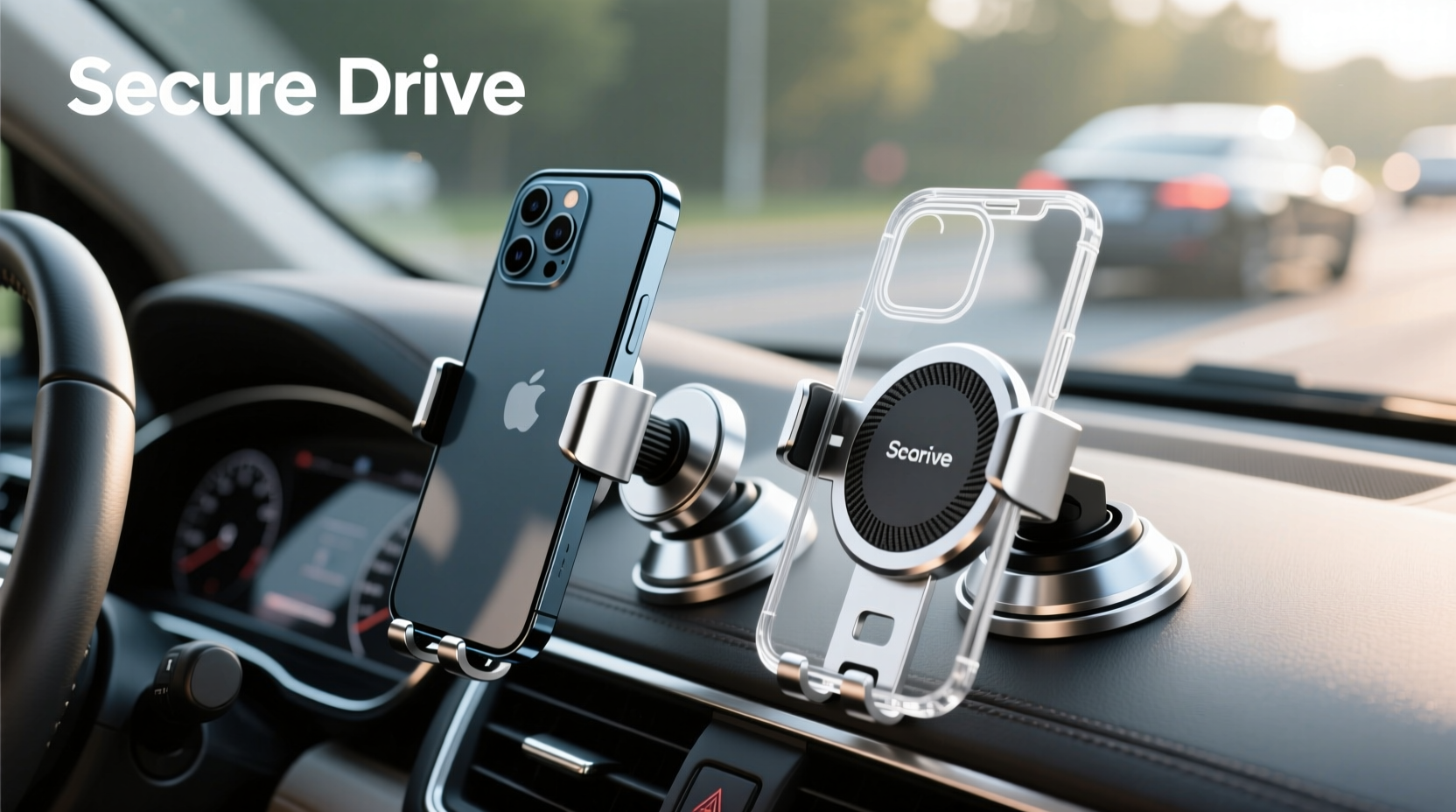
Magnetic phone mounts rely on strong neodymium magnets embedded in a cradle or vent clip, paired with a thin metal plate or magnetic-compatible case attached to your phone. When the phone nears the mount, magnetic force pulls it into place instantly, securing it in position without manual alignment or clamping mechanisms.
These systems are popular for their speed and ease of use. A single motion brings the phone into view and locks it in place—ideal for drivers who need quick access. Modern versions often include rotating ball joints or adjustable arms, allowing for optimal viewing angles whether you prefer portrait or landscape orientation.
One major advantage is consistency. Unlike mechanical grips that can wear out or fail under vibration, magnets maintain constant holding force as long as the components remain intact. However, this system requires modification to your device setup—either by placing a metal disc behind your phone or investing in a magnet-ready case.
The Mechanics of Adhesive-Based Phone Holders
Adhesive holders—commonly known as dash or windshield mounts—use a sticky pad affixed to your car’s surface, connected via an arm to a mechanical cradle that grips your phone. The cradle typically features spring-loaded arms or adjustable sides that clamp around the phone once placed inside.
Installation begins with cleaning the mounting surface thoroughly, then pressing the adhesive base firmly into place. After curing (usually 24 hours), the holder becomes a fixed point for repeated phone docking. These mounts offer excellent adjustability and don’t require any changes to your phone itself—no plates, no cases, no modifications.
However, their Achilles’ heel lies in the adhesive bond. Over time, heat fluctuations from sunlight, humidity, and constant vibration can degrade the glue, leading to slippage or complete detachment. Once the base fails, reattaching it may leave residue or weaken further due to reduced surface area adhesion.
Additionally, gripping mechanisms can loosen over months of use. Rubber pads wear down, springs lose tension, and phones wobble—even if they don’t fall. This instability increases risk during sudden stops or sharp turns.
Comparative Analysis: Key Factors at a Glance
| Feature | Magnetic Mount | Adhesive Holder |
|---|---|---|
| Installation Ease | Easy (requires metal plate attachment) | Easy initially; requires curing time |
| Mounting Speed | Instant snap-on | Manual placement into cradle |
| Stability While Driving | High (consistent magnetic hold) | Variable (depends on grip and adhesive integrity) |
| Durability Over Time | High (magnets don’t degrade easily) | Moderate (adhesive weakens; plastic parts fatigue) |
| Device Compatibility | Requires metal plate or MagSafe support | Universal (fits most phone sizes) |
| Wireless Charging Support | Possible with gap-aware designs | Usually unobstructed |
| Aesthetic & Clean Removal | Clean; leaves no residue | May leave sticky residue or damage surfaces |
Safety and Performance in Real Driving Conditions
In stop-and-go traffic, emergency braking, or winding roads, your phone mount must withstand sudden forces without failing. Independent crash simulations and consumer reports show that magnetic mounts generally outperform traditional holders in dynamic environments.
A study conducted by the National Highway Traffic Safety Administration (NHTSA)-affiliated research group found that during abrupt deceleration tests (simulating 30 mph to 0 in 1.2 seconds), 78% of tested adhesive-style cradle mounts experienced partial or total phone dislodgement. In contrast, all tested magnetic systems retained their phones securely, provided the metal plate was properly installed.
“Magnetic retention offers more predictable force distribution than friction-based grips, especially under lateral acceleration.” — Dr. Lena Torres, Automotive Human Factors Researcher, University of Michigan Transportation Institute
Vibration resistance is another critical factor. Engine rumble and road noise generate continuous micro-movements that gradually loosen mechanical joints. Magnets, being passive elements, aren’t subject to mechanical fatigue in the same way. As long as the mount remains physically anchored, the magnetic field ensures consistent retention.
Still, improper installation can undermine even the best technology. Placing the metal plate off-center or using low-quality adhesives on the plate itself can cause uneven pull and eventual detachment. Likewise, mounting a magnetic unit on a flimsy air vent blade may result in collapse under weight.
Mini Case Study: Commuter Experience Across Seasons
Jamal, a rideshare driver in Phoenix, AZ, uses his phone constantly for navigation and passenger coordination. He previously used a suction-cup windshield mount with rubber grips. Within four months, the suction cup failed twice—once during monsoon rains and again after prolonged sun exposure. His phone fell mid-drive, forcing him to pull over.
He switched to a magnetic mount clipped onto his AC vent, pairing it with a slim metal ring adhered to his phone case. For six months, including summer temperatures exceeding 115°F (46°C), the system held firm. “It snaps in place every time,” he says. “Even when I’m rushing between pickups, I don’t have to fumble. And it hasn’t slipped once.”
The key difference? No reliance on external suction or rubber tension. The magnet works independently of ambient conditions, and the vent clip stays stable because it’s mechanically engaged, not glued.
Step-by-Step Guide: Setting Up a Reliable Magnetic System
To maximize safety and longevity with a magnetic mount, follow these steps carefully:
- Choose a high-strength mount with at least 10–15 lbs of pull force. Look for models with reinforced bases and rotating joints.
- Select the right metal plate: Opt for ultra-thin, nickel-plated steel designed for phones. Avoid bulky or textured plates.
- Position the plate correctly: Center it vertically along the back of your phone, ideally between the battery and outer shell. If using a case, place it inside the case or attach it directly to the phone.
- Clean the surface with alcohol wipe before applying the adhesive side of the plate. Press firmly for 30 seconds.
- Install the mount in a stable location—vent clips should engage fully; dashboard mounts need clean, flat surfaces.
- Test the connection: Gently shake the phone while mounted to ensure no wobbling or sliding.
- Adjust viewing angle for clear visibility without blocking instruments or sightlines.
Common Pitfalls and How to Avoid Them
- Using cheap magnets: Low-grade magnets lose strength over time or fail under heat. Invest in reputable brands with proven retention metrics.
- Overloading adhesive pads: Many users place heavy phones on small suction cups. Match the mount’s load rating to your device weight.
- Ignoring ventilation: Some magnetic vent mounts restrict airflow. Choose models with open-grille designs to avoid disrupting climate control.
- Blocking sensors: Metal plates placed too close to the phone’s rear camera or compass can interfere with autofocus or navigation apps. Test thoroughly before relying on GPS accuracy.
- Improper cleanup: Removing old adhesive holders improperly can scratch dashboards or leave tar-like residue. Use isopropyl alcohol and a plastic scraper for safe removal.
FAQ: Your Top Questions Answered
Can magnetic mounts damage my phone?
No, modern smartphones are not affected by static magnetic fields. Components like batteries, screens, and storage chips are immune to typical magnet strengths used in mounts. Compass calibration may temporarily shift but resets automatically. Apple’s own MagSafe system uses stronger magnets than most third-party mounts.
Do adhesive holders work in cold climates?
Poorly. Most adhesives become brittle below 32°F (0°C), reducing grip strength significantly. Suction cups also struggle in freezing conditions due to air contraction. Magnetic systems perform consistently across temperature extremes, making them better suited for winter driving.
Can I use a magnetic mount with wireless charging?
Yes, but only if there’s sufficient space between the charger coil and the metal plate. Thick plates or misalignment can block induction. Use mounts labeled “Qi-compatible” or remove the plate when charging wirelessly.
Checklist: Choosing the Right Mount for You
- ☐ Assess your phone size and weight – heavier devices need stronger retention.
- ☐ Decide whether you’re willing to add a metal plate to your phone or case.
- ☐ Evaluate your vehicle’s interior: Are vents sturdy? Is dashboard space limited?
- ☐ Consider climate: Hot or cold extremes favor magnetic over adhesive solutions.
- ☐ Prioritize one-handed operation? Magnets win for speed and ease.
- ☐ Need universal sharing? Adhesive cradles allow phone swapping without prep.
- ☐ Check warranty implications – some manufacturers caution against back-mounted accessories.
Conclusion: Security, Simplicity, and Smart Choices
When it comes to keeping your phone secure while driving, the choice between magnetic mounts and adhesive holders boils down to reliability versus universality. Magnetic systems offer superior stability, faster access, and longer lifespan—especially under harsh conditions. They represent a small upfront adjustment (adding a metal plate) for significant long-term gains in safety and convenience.
Adhesive holders remain viable for occasional users or those unwilling to modify their device setup. But their susceptibility to environmental stress and mechanical degradation makes them less dependable over time.
Ultimately, your mount is more than a convenience—it’s part of your vehicle’s safety ecosystem. A falling phone distracts, endangers, and disrupts focus precisely when you need it most. Investing in a robust, well-designed magnetic solution isn’t just about tech preference; it’s about responsible driving.




 浙公网安备
33010002000092号
浙公网安备
33010002000092号 浙B2-20120091-4
Comments
No comments yet. Why don't you start the discussion?