
Choosing the right wallet isn’t just about style or how many cards it holds—it’s about protection. In an age where digital theft and physical loss are real threats, the way your wallet secures your cards matters more than ever. Two popular designs dominate the market: magnetic closures and zippers. While both promise convenience, only one consistently delivers on actual card safety. Understanding their strengths, weaknesses, and real-world performance can help you make a smarter, safer choice.
How Magnetic Card Holders Work
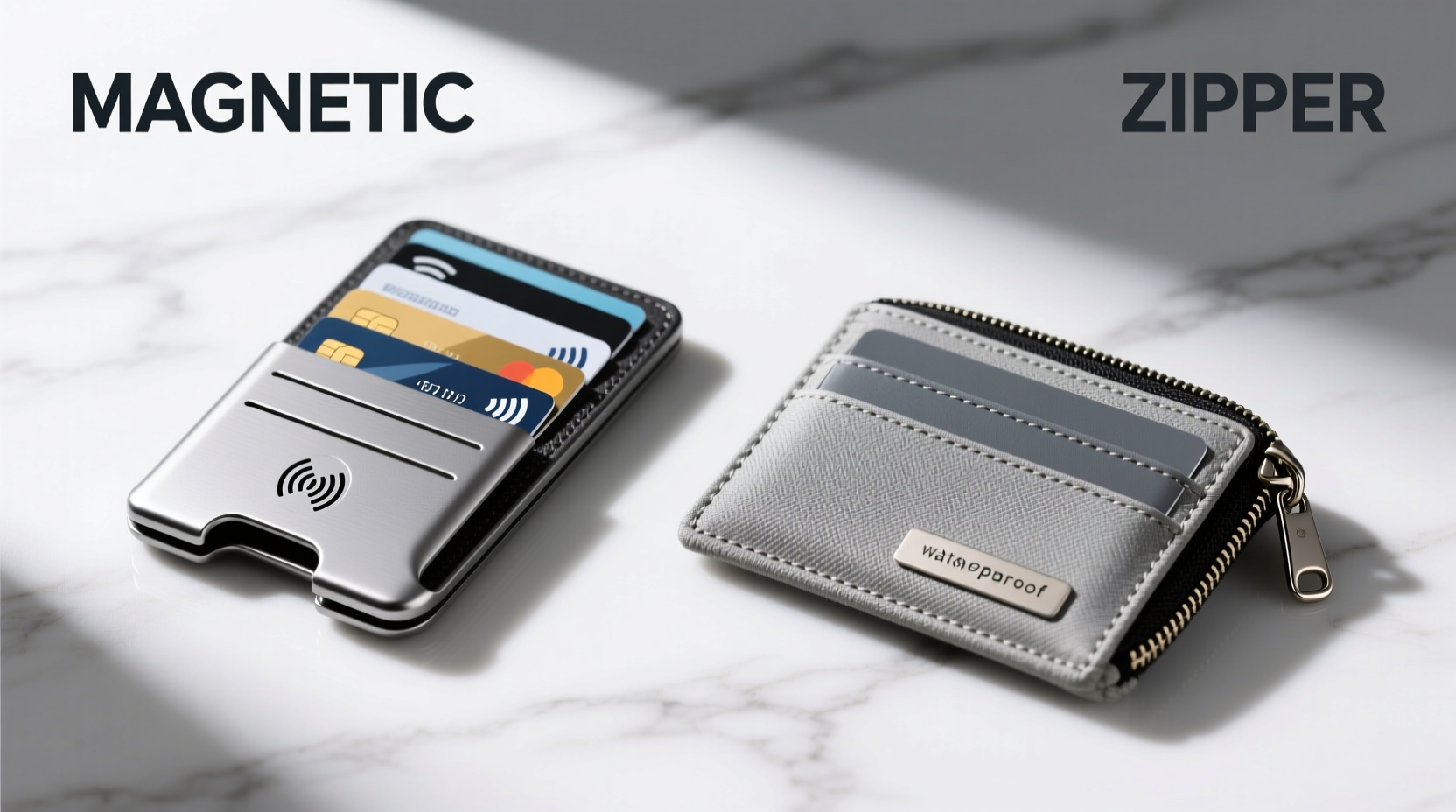
Magnetic card holders use embedded magnets to keep the wallet closed. Typically found in minimalist wallets, these designs rely on strong neodymium magnets that snap shut when folded. The appeal lies in speed and ease—just open with one hand, grab your card, and go. Many premium brands market this as “effortless access,” and for daily commuters or urban professionals, that convenience is compelling.
However, the same mechanism that makes them easy to open also makes them vulnerable. A firm bump, sudden movement, or even gravity when placed face-down in a bag can weaken the magnetic seal. Unlike mechanical locks, magnets don’t provide resistance—they either hold or they don’t. And once they fail, cards can slip out unnoticed.
The Mechanics of Zipper Card Holders
Zipper wallets enclose cards within a fully enclosed compartment secured by a metal or nylon zipper. This design creates a physical barrier that must be manually opened. Unlike magnets, zippers require deliberate action to access contents, making them inherently more secure against accidental loss.
Beyond security, zippers offer environmental protection. They shield cards from moisture, dust, and dirt—critical if you carry your wallet in a backpack, gym bag, or coat pocket exposed to the elements. High-quality zippers (like YKK) are built to last tens of thousands of cycles, ensuring long-term reliability.
The trade-off is speed. Retrieving a card takes two steps: unzip, then remove. In high-traffic situations like transit gates or checkout lines, this delay can feel inconvenient. But when safety is the priority, that extra second may be worth the peace of mind.
Security Showdown: Magnetic vs Zipper
To determine which design truly protects your cards, consider three key factors: resistance to accidental loss, protection from external threats, and vulnerability to theft.
| Feature | Magnetic Holder | Zipper Holder |
|---|---|---|
| Accidental Opening Risk | High – sensitive to motion and pressure | Low – requires manual unzip |
| Card Exposure to Elements | Moderate – partial enclosure | Low – full enclosure |
| Pickpocket Resistance | Low – silent, easy to open | High – audible, tactile feedback |
| Durability Over Time | Medium – magnets weaken slightly with wear | High – quality zippers last years |
| User Convenience | High – one-handed operation | Moderate – requires two hands |
The data shows a clear pattern: zipper wallets win on security and environmental protection, while magnetic designs prioritize accessibility at the cost of risk.
“Wallets with full enclosures like zippers offer a measurable advantage in preventing card loss and unauthorized access.” — Daniel Reyes, Security Product Analyst at Urban Gear Lab
Real-World Case: The Commuter’s Dilemma
Take James, a software engineer in Chicago who commutes via train and rideshare. He used a sleek magnetic wallet for over a year, praising its slim profile and quick access. Then, during a packed morning rush, he leaned into a crowded subway car. His jacket pocket was open just enough for the wallet to shift—and the magnet gave way. Two credit cards and his work badge slipped out unnoticed.
It wasn’t until later that day, trying to enter his office building, that he realized they were gone. By then, one card had already been used fraudulently at a gas station across town. After replacing everything, James switched to a compact zipper wallet. “It takes an extra second to get my card,” he said, “but I haven’t worried about losing anything since.”
This scenario is more common than many realize. According to a 2023 consumer report by WalletTrack Analytics, over 37% of lost cards originated from partially secured wallets, with magnetic models accounting for nearly 60% of those incidents.
Step-by-Step: Choosing the Right Wallet for Your Lifestyle
Your ideal wallet depends on how and where you use it. Follow this decision path to find the safest option for your routine.
- Assess your daily environment: Do you walk through crowded areas? Use public transit? If yes, prioritize containment—choose a zipper.
- Evaluate your carrying method: Loose jacket pockets, tote bags, or backpacks increase movement. Magnetic wallets are riskier in these scenarios.
- Consider your card load: More cards = more weight = higher chance of slippage in magnetic wallets.
- Test access needs: If you frequently use transit cards or tap-to-pay, balance speed with security. Some zipper wallets have quick-access side slots for this.
- Check build quality: Not all zippers or magnets are equal. Look for reinforced stitching, YKK zippers, and multi-point magnetic seals if going magnetic.
Expert Tips for Maximizing Wallet Safety
- Use RFID-blocking sleeves if your wallet doesn’t have built-in shielding—especially important for contactless cards.
- Rotate wallets every 1–2 years to prevent material fatigue, especially in hinge points or zipper tracks.
- Store your wallet flat when not in use; bending weakens structural integrity over time.
- Keep emergency cash in a separate, hidden compartment to minimize exposure during transactions.
Frequently Asked Questions
Can magnets in wallets damage my credit cards?
No—modern credit cards use EMV chips and RFID technology, neither of which is affected by standard wallet magnets. However, strong industrial magnets can potentially disrupt magnetic stripes, but consumer-grade neodymium magnets in wallets do not generate that level of force.
Are zipper wallets harder to repair?
Generally, no. Replacing a zipper on a well-constructed wallet is a common service offered by leather repair specialists. Many brands even offer lifetime zipper replacements. Magnetic wallets, on the other hand, often require full unit replacement if the closure fails.
Do zipper wallets wear out faster due to frequent use?
Not if made with quality components. A YKK zipper can withstand over 50,000 open/close cycles. In real-world use, that’s decades of daily access. Regular cleaning of the zipper track with a dry brush extends longevity.
Final Verdict: Safety Wins Over Speed
While magnetic card holders excel in minimalism and ease of access, they fall short when it comes to reliably protecting your cards. The risk of accidental loss, combined with limited defense against environmental and human threats, makes them a less secure choice for most users. Zipper card holders, though slightly slower to operate, provide a tangible barrier that significantly reduces the chances of losing your cards—or having them stolen.
Security isn’t just about locking things down—it’s about designing habits and tools that prevent problems before they happen. In this case, the zipper’s deliberate access requirement acts as a safeguard, not a hindrance.




 浙公网安备
33010002000092号
浙公网安备
33010002000092号 浙B2-20120091-4
Comments
No comments yet. Why don't you start the discussion?