
When you invest in a new iPhone, choosing the right case is one of the most immediate decisions you’ll face. With Apple’s MagSafe ecosystem now several years old, many users are still debating whether a MagSafe case justifies its higher price tag compared to a standard protective case. The difference can be as much as $20–$30, and while that might seem minor, it adds up—especially if you’re replacing cases every few months. So, is the added functionality worth the premium?
The answer isn’t a simple yes or no. It depends on how you use your phone, your charging habits, and what you value in daily convenience. To help you decide, let’s break down the key differences between MagSafe and regular cases, evaluate real-world performance, and weigh the tangible benefits against the cost.
Durability and Protection: Are They Equal?
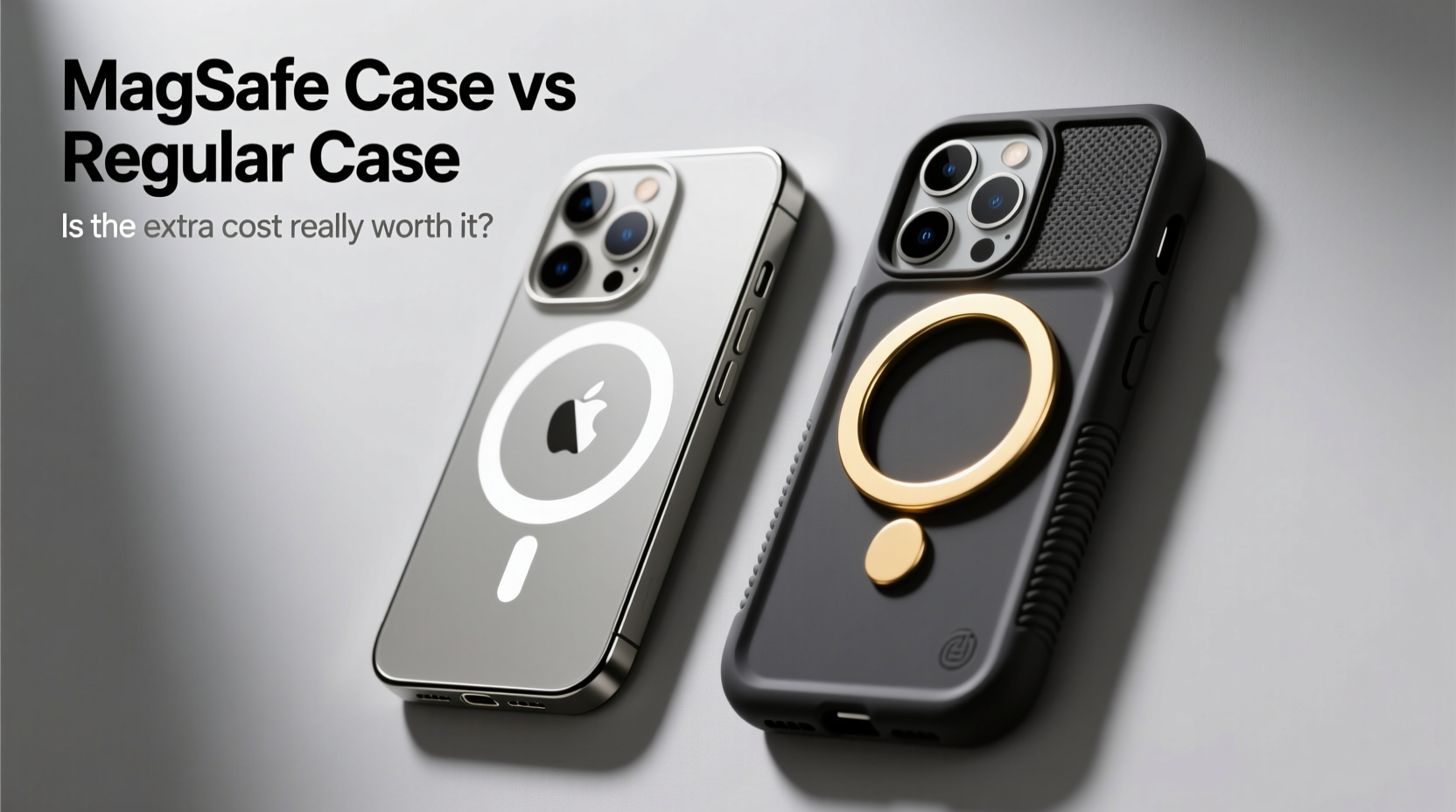
At their core, both MagSafe and regular cases are designed to protect your iPhone from drops, scratches, and everyday wear. Most reputable brands offer comparable drop protection—typically meeting military-grade standards (MIL-STD-810G)—regardless of whether the case supports MagSafe.
However, there's a subtle trade-off. MagSafe cases must incorporate a ring of magnets around the center back, which slightly alters internal structure. Some third-party models compensate with reinforced corners or softer internal linings, but others reduce internal padding to accommodate the magnet array. This means not all MagSafe cases offer the same level of shock absorption as bulkier traditional cases.
Apple’s official MagSafe cases use silicone or leather exteriors with a soft microfiber lining, offering excellent scratch resistance and moderate drop protection. But they lack raised edges around the camera bump, which could leave lenses vulnerable on rough surfaces. In contrast, many rugged non-MagSafe cases feature elevated bezels, deeper recesses, and thicker materials.
Charging Experience: Where MagSafe Shines
The biggest advantage of a MagSafe case is seamless wireless charging. Unlike regular cases, which may misalign or slow down Qi charging, MagSafe uses precision magnets to snap perfectly onto compatible chargers. This ensures optimal coil alignment, delivering full 15W charging speeds consistently.
With a standard case, even slight misplacement on a wireless charger can reduce efficiency by up to 30%, leading to slower charging and more heat buildup. Over time, inefficient charging degrades battery health faster. MagSafe’s alignment system mitigates this, making it especially valuable for users who rely on overnight or desk charging.
Beyond speed, MagSafe enables accessories beyond chargers—like car mounts, wallet attachments, and battery packs—that attach securely and instantly. These integrations create a frictionless ecosystem that regular cases simply can’t match.
“MagSafe isn’t just about charging—it’s about redefining how we interact with our devices daily.” — David Lin, Mobile Tech Analyst at TechPulse Weekly
Cost Comparison: Breaking Down the Value
Let’s compare typical pricing and features:
| Feature | MagSafe Case (Official) | Regular Case (Mid-tier) |
|---|---|---|
| Price | $49–$59 | $19–$35 |
| Wireless Charging Speed | Up to 15W (with MagSafe charger) | 5–7.5W average (varies with alignment) |
| Magnetic Mount Compatibility | Yes – instant snap | No (unless using add-on ring) |
| Accessory Ecosystem Access | Full (wallets, batteries, stands) | Limited |
| Drop Protection | Moderate (good for daily use) | Variable (can be higher with rugged designs) |
| Lifespan (Average) | 12–18 months | 12–24 months |
The data shows a clear pattern: you pay more for MagSafe not because it protects better, but because it connects better. If you frequently use your phone while driving, work remotely, or travel often, the ability to mount your phone instantly without fumbling is a genuine quality-of-life upgrade.
Real-World Example: A Day in the Life
Consider Sarah, a freelance photographer who uses her iPhone for client communication, editing previews, and navigation between shoots. She starts her day by snapping her phone onto a MagSafe car mount—one hand, zero distraction. During lunch, she attaches a MagSafe battery pack when her battery dips below 30%. Later, at a café, she aligns her phone on a MagSafe charger without looking, then clips on a slim wallet attachment to carry her ID and card.
None of these actions require removing her case or adjusting positioning. Over the course of a week, she estimates she saves nearly 10 minutes of setup and repositioning time compared to using a regular case with adhesive mounts and finicky wireless charging.
For Sarah, the $30 price difference pays for itself in convenience and reduced frustration. Her workflow stays uninterrupted, and she avoids the risk of dropping her phone while trying to adjust a loose mount.
When a Regular Case Makes More Sense
That said, not everyone needs MagSafe. If you primarily charge your phone via cable, rarely use mounts, or prefer maximum protection over sleek integration, a well-designed regular case may serve you better—and cost less.
Outdoor workers, parents with active kids, or those in physically demanding jobs often prioritize toughness over tech features. A heavy-duty OtterBox or UAG case offers superior impact resistance and weather resilience, even if it blocks MagSafe functionality entirely.
Additionally, some users report mild warmth during extended MagSafe charging sessions. While within safe limits, this can be a concern for those in hot climates or who keep their phones in pockets. A regular case with better airflow might feel safer under prolonged use.
Step-by-Step: How to Decide Which Case Is Right for You
- Assess your charging habits: Do you use wireless charging daily? If yes, MagSafe offers faster, more reliable performance.
- Evaluate accessory use: Do you use car mounts, portable batteries, or wallets? MagSafe integrates seamlessly with all three.
- Consider your environment: High-risk for drops? A rugged regular case may provide better protection.
- Test budget flexibility: Can you absorb the $20–$30 premium? If not, a regular case with a MagSafe disk insert is a viable hybrid option.
- Think long-term: Will you keep your iPhone for 3+ years? Investing in the MagSafe ecosystem may increase utility over time.
Frequently Asked Questions
Can I use a regular case with MagSafe accessories?
Only if it’s thin enough and doesn’t contain metal. Most thick or metal-reinforced cases block magnetic alignment. However, you can stick a MagSafe-compatible metal ring or disk inside many regular cases to enable partial functionality—though charging efficiency may still suffer.
Does MagSafe drain the battery when attaching accessories?
No. The magnets themselves consume no power. However, connected accessories like battery packs or wallets do not draw energy unless actively used. The system is passive until engagement.
Are MagSafe cases harder to remove?
Slightly. The snug fit required for proper magnetic alignment means they’re tighter than some snap-on regular cases. But they’re still designed for removal—just expect a bit more resistance, especially when new.
Final Verdict: Is the Extra Cost Worth It?
If you value speed, simplicity, and an integrated tech experience, then yes—the extra cost of a MagSafe case is justified. It transforms your iPhone into a modular hub that works intuitively with your lifestyle. The convenience of one-handed mounting, consistent fast charging, and access to innovative accessories delivers measurable improvements in daily usability.
But if your priorities are maximum protection, lowest cost, or minimalism, a high-quality regular case remains a smart, practical choice. You don’t lose core functionality—you just trade ecosystem fluency for affordability and ruggedness.
In the end, the decision hinges on how you define value. For some, it’s durability. For others, it’s seamless interaction. Understanding your own usage patterns is the key to making the right call.




 浙公网安备
33010002000092号
浙公网安备
33010002000092号 浙B2-20120091-4
Comments
No comments yet. Why don't you start the discussion?