
When Apple introduced MagSafe with the iPhone 12 series, it wasn’t just a new way to charge—it was the beginning of an ecosystem. At the heart of that ecosystem is the MagSafe case, designed to seamlessly integrate with wireless charging, accessories, and daily usability. But for many users, the question remains: is upgrading from a regular case to a MagSafe case truly worth it? The answer depends on how you use your phone, what kind of accessories you value, and whether the small but meaningful improvements in convenience justify the higher price.
This article breaks down the real differences between MagSafe and regular cases, evaluates tangible benefits, and helps you decide if the upgrade aligns with your lifestyle and tech habits.
How MagSafe Works: The Core Technology
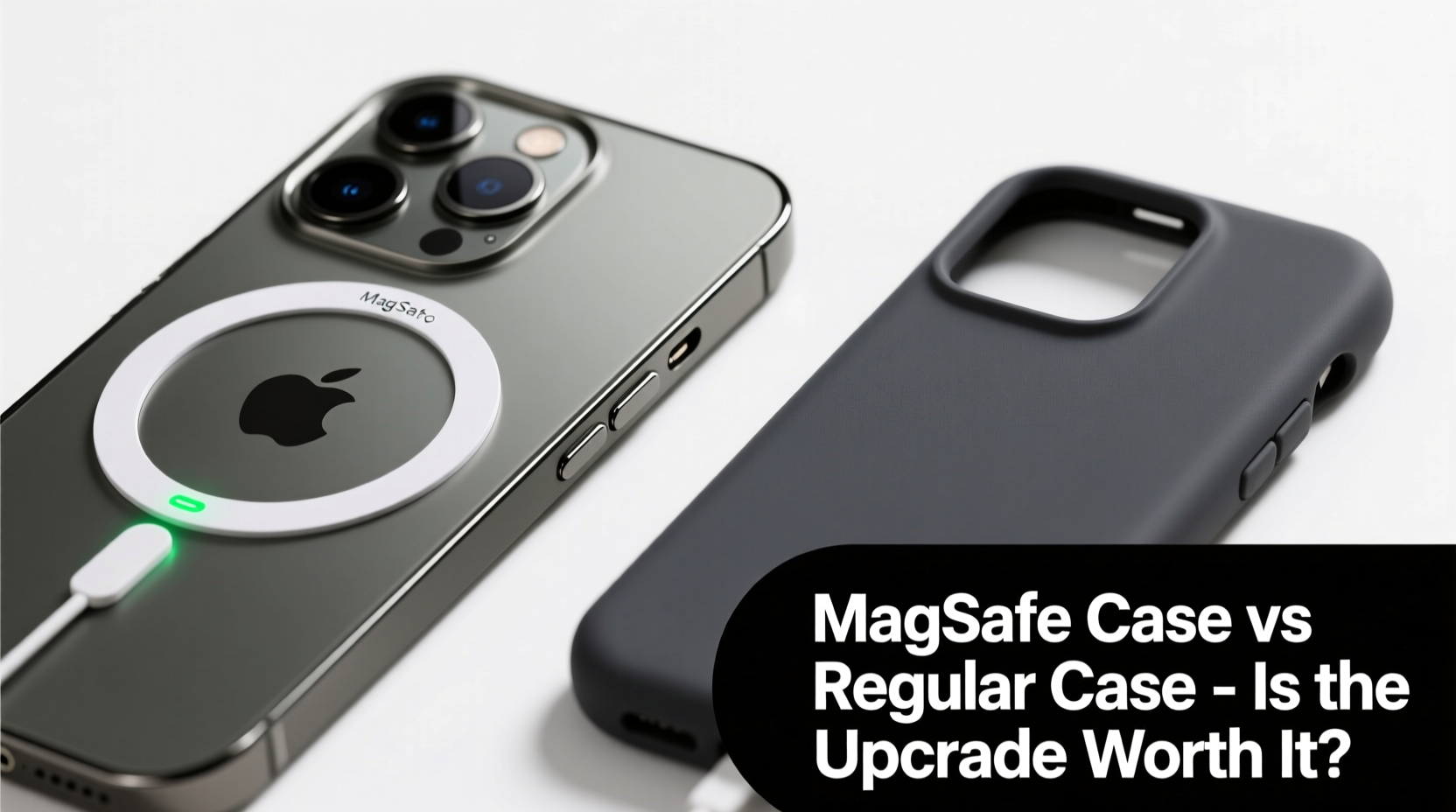
MagSafe uses a ring of magnets embedded around the wireless charging coil in compatible iPhones (iPhone 12 and later). These magnets precisely align the phone with MagSafe chargers and accessories, ensuring optimal charging efficiency and secure attachment. Unlike standard Qi wireless charging, which can be finicky due to misalignment, MagSafe delivers consistent performance thanks to magnetic guidance.
A MagSafe case includes this magnet ring in its design, allowing it to interact directly with MagSafe chargers, car mounts, wallets, and battery packs. Regular cases lack this integration—some even block or weaken the magnetic connection if they’re too thick or improperly aligned.
“MagSafe isn’t about reinventing the wheel; it’s about eliminating friction in everyday interactions with your phone.” — David Lin, Mobile Tech Analyst at GadgetFlow
Key Differences: MagSafe Case vs Regular Case
The most obvious distinction lies in compatibility and functionality. Below is a detailed comparison highlighting what sets these two types apart.
| Feature | MagSafe Case | Regular Case |
|---|---|---|
| Magnetic Alignment | Yes – ensures perfect alignment with chargers and mounts | No – relies on manual placement |
| Wireless Charging Speed | Up to 15W with MagSafe charger | Up to 7.5W with standard Qi |
| Accessory Compatibility | Fully supports MagSafe wallets, batteries, car mounts | Limited or no support; may require adapter |
| Price Range | $49–$69 (Apple), $25–$50 (third-party) | $10–$35 |
| Bulk & Weight | Slightly heavier due to internal magnets | Generally lighter and slimmer |
| Durability | Comparable materials; some third-party options less robust | Wide range depending on brand and design |
What You're Actually Gaining with a MagSafe Case
The value of a MagSafe case isn’t always obvious at first glance. It doesn’t dramatically change your phone’s appearance or protection level. Instead, the benefits are subtle yet cumulative—centered around consistency, speed, and ecosystem integration.
- Faster, more reliable wireless charging: With proper alignment, MagSafe consistently delivers 15W charging, nearly double the speed of standard Qi. This means shorter top-up times, especially useful during busy mornings or travel.
- One-handed attachment: Snap-on accessories like wallets or car mounts attach securely with a satisfying click. No fumbling or adjusting needed.
- Ecosystem expansion: A MagSafe case unlocks access to Apple’s growing lineup of accessories—credit card holders, external batteries, tripod adapters—all designed for instant attachment.
- Future-proofing: As Apple continues to invest in MagSafe (evident in newer AirPods and rumored devices), owning a compatible case keeps your device ready for upcoming innovations.
Real-World Example: Commuter Efficiency Boost
Consider Sarah, a marketing manager who commutes 45 minutes each way. She used a regular silicone case and a basic vent mount. Every morning, she’d struggle to align her phone correctly on her wireless charger before leaving, often forgetting and starting her drive with only 20% battery. Her dash-mounted phone would occasionally slip, forcing her to adjust it mid-drive—a safety hazard.
After switching to a MagSafe case and attaching a MagSafe car mount, her routine changed. She now places her phone on the charger the night before—it snaps into place instantly and charges fully by morning. In the car, one hand attaches the phone securely to the mount. No slipping, no guesswork. Over six months, she estimates she’s saved over five hours of fiddling and reduced stress significantly.
This isn’t about luxury—it’s about micro-efficiencies that compound across days, weeks, and years.
Is the Upgrade Worth It? A Practical Checklist
Before investing in a MagSafe case, ask yourself the following questions. Check off each item that applies to your usage pattern.
- Do you use wireless charging daily?
- Have you considered buying a MagSafe wallet or battery pack?
- Do you mount your phone in the car or at your desk?
- Do you value quick, reliable connections without needing to look?
- Are you likely to keep your iPhone for 2+ years?
If you checked three or more, the upgrade is likely worth it. The convenience, time savings, and accessory flexibility provide measurable returns for active users. However, if you primarily charge via cable, rarely leave your phone unattended, or prefer ultra-slim protection, a high-quality regular case may still serve you better at a lower cost.
Common Misconceptions About MagSafe Cases
Despite their advantages, MagSafe cases come with myths that can skew perception.
- Myth: They interfere with credit cards or medical devices. Reality: Apple designs the magnetic field to be focused and safe. While it's wise to avoid placing cards directly between the phone and charger, normal use poses no risk.
- Myth: All third-party MagSafe cases work the same. Reality: Some budget cases include weak magnets or misaligned rings, leading to poor charging performance. Stick to reputable brands like Nomad, Spigen, or Belkin for reliable results.
- Myth: They make your phone too bulky. Reality: While slightly thicker than minimalist cases, most MagSafe-compatible designs remain pocket-friendly. The added functionality often outweighs the negligible increase in size.
FAQ: Your Top Questions Answered
Can I use a regular case with MagSafe accessories?
You can—but effectiveness varies. Thin, non-metallic cases may allow partial functionality, but anything thick or improperly aligned will reduce charging speed and prevent secure attachment. For best results, use a certified MagSafe case.
Does a MagSafe case drain battery faster?
No. The magnets themselves consume no power. Any perceived slowdown in charging usually stems from heat buildup when using low-quality chargers or cases. Using Apple-certified or MFi-approved accessories prevents inefficiency.
Are there durable MagSafe cases for outdoor or rugged use?
Yes. Brands like OtterBox, UAG, and Supcase offer rugged MagSafe-compatible cases with reinforced corners, raised edges, and military-grade drop protection—ideal for construction workers, hikers, or parents with active kids.
Final Verdict: When to Upgrade
The decision to switch from a regular case to a MagSafe case hinges on your relationship with convenience. If you charge wirelessly, drive often, or appreciate seamless tech integration, the upgrade pays dividends in daily ease. The faster charging, secure mounting, and expanding accessory ecosystem create a noticeably smoother experience.
However, if you rely on wired charging, prioritize minimalism, or own a non-MagSafe iPhone, a regular case remains practical and economical. There’s no one-size-fits-all answer—but for many modern users, MagSafe represents a quiet evolution in usability that becomes indispensable once experienced.




 浙公网安备
33010002000092号
浙公网安备
33010002000092号 浙B2-20120091-4
Comments
No comments yet. Why don't you start the discussion?