
In an era dominated by high-definition 3D graphics and photorealistic character models, it might seem strange that thousands of fans remain deeply attached to pixelated 2D sprites from a series that peaked in the late 1990s. Yet, the visual legacy of Marvel vs. Capcom—particularly its hand-drawn sprites—continues to inspire devotion, fan art, and even competitive modding communities. These aren't just game assets; they're cultural artifacts. The question isn’t whether they’re outdated—it’s why they still resonate so powerfully decades after their debut.
The Artistry Behind the Pixels
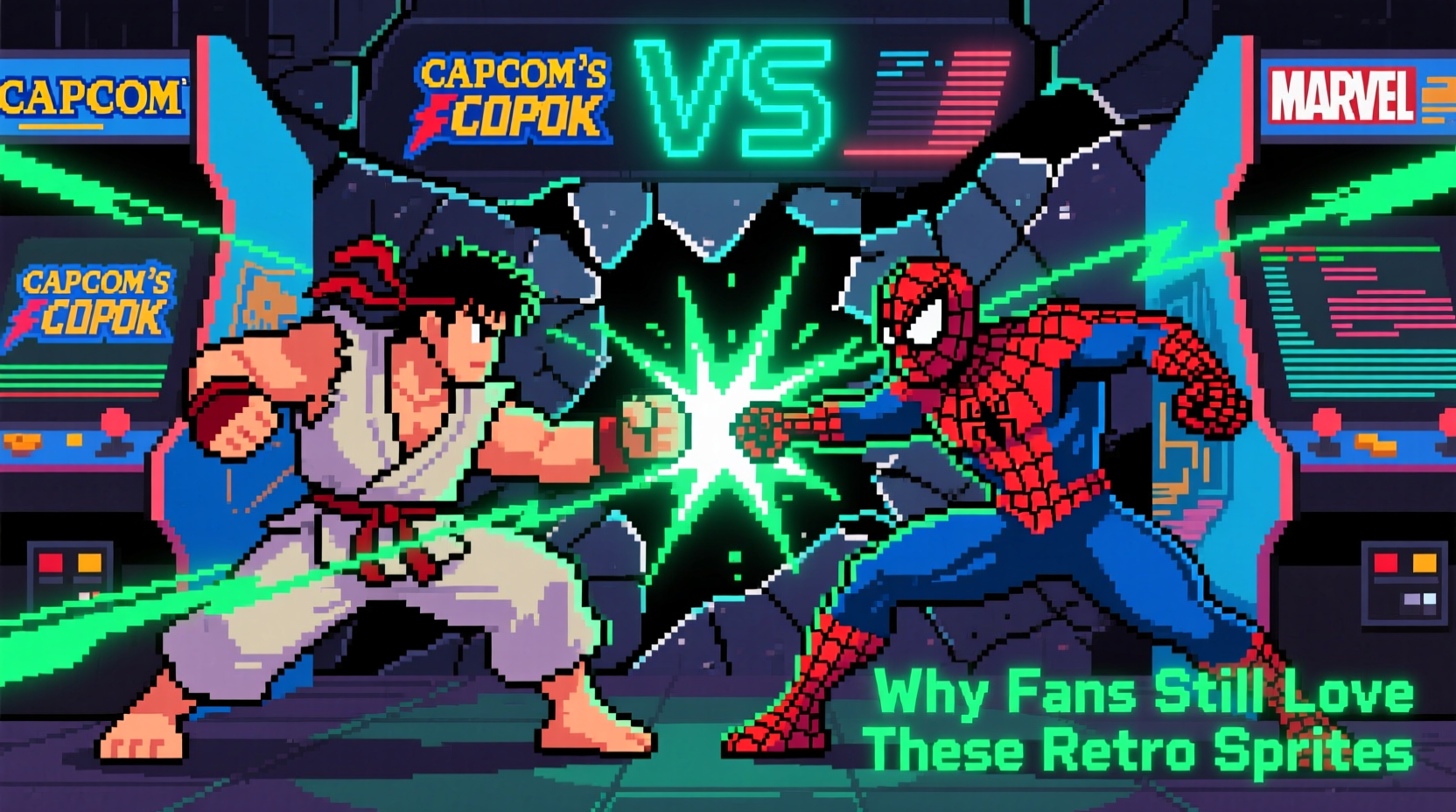
The sprites in Marvel vs. Capcom titles like Marvel vs. Capcom 2: New Age of Heroes were not generated by algorithms or motion capture. They were meticulously crafted by skilled artists frame by frame, often using traditional animation techniques adapted for video games. Each movement—whether it was Wolverine lunging with his claws or Ryu throwing a Hadouken—was drawn with expressive exaggeration, dynamic posing, and a sense of weight that modern 3D animations sometimes lack.
These sprites captured more than motion—they conveyed personality. Magneto didn’t just float; he hovered with regal disdain. Spider-Man bounced around with acrobatic flair. Every character had a visual rhythm, a kinetic identity rooted in comic book aesthetics and anime influence. This fusion of American superhero iconography and Japanese animation style created a unique visual language that felt both familiar and electrifyingly fresh.
“Hand-drawn sprites allowed us to push stylization further than polygons could at the time. We weren’t simulating reality—we were amplifying emotion.” — Kenichi Ishii, former Capcom animator (paraphrased from 2015 GDC panel)
Nostalgia Meets Cultural Longevity
For many players, Marvel vs. Capcom 2 wasn’t just a game—it was a shared experience. Arcades buzzed with combos, trash talk, and spontaneous tournaments. The soundtrack, the chaotic six-character tag battles, and yes, the sprites themselves became embedded in personal memories. Nostalgia plays a powerful role, but it doesn’t fully explain the ongoing obsession.
Unlike other retro franchises that faded into obscurity, MvC sprites have maintained relevance through persistent community engagement. Fan-made mods replace characters with alternate versions from comics or other games. TikTok and YouTube creators animate new scenes using original sprite sheets. Twitter accounts dedicated to “sprite appreciation” regularly go viral, showcasing zoomed-in details of facial expressions or attack frames that were invisible during actual gameplay.
Technical Mastery in Constraint
The technical limitations of the Dreamcast, PlayStation 2, and arcade hardware actually elevated the art form. Artists had to work within tight memory budgets—limited color palettes, low resolutions, and strict frame counts. These constraints forced creativity. Animators used clever tricks: palette swaps for special moves, reused base frames with altered limbs, and exaggerated hit sparks to mask collision detection.
Yet, despite these limits, the final product felt alive. Characters blinked, snarled, and gestured mid-battle. The idle animations alone—Iron Man adjusting his repulsors, Chun-Li tapping her foot—added layers of character that went beyond gameplay necessity. This attention to detail made the fighters feel like real personalities, not just combat avatars.
Sprite Design: Then vs. Now
| Aspect | Marvel vs. Capcom Era (2000) | Modern 3D Fighters (2020s) |
|---|---|---|
| Animation Style | Hand-drawn 2D sprites | 3D models with motion capture |
| Artistic Flexibility | High (exaggerated proportions, effects) | Moderate (bound by realism/physics) |
| File Size per Character | ~2–5 MB | 500+ MB |
| Community Modding Access | Widespread (sprite ripping, editing) | Limited (encrypted assets, DRM) |
| Emotional Expressiveness | Stylized, comic-book intensity | Realistic, nuanced facial capture |
Fan Creativity Keeps Sprites Alive
The open accessibility of sprite data has empowered a generation of digital artists. Unlike proprietary 3D models, 2D sprites can be extracted, edited, and reassembled with relatively simple tools. This has led to an explosion of derivative works: animated music videos, crossover fights, and even full fan remakes using engines like M.U.G.E.N.
One notable example is the “MvC: Clash of Superheroes Reborn” project, where a team of independent developers spent over three years redrawing every character in higher resolution while preserving the original animation timing. Their goal wasn’t to replace the old game, but to honor it—proving that the core appeal lies not in technical fidelity, but in artistic intent.
“We didn’t want to make it look ‘modern.’ We wanted it to look *more* like itself.” — Project lead, anonymous interview (2021, SpriteArchive Forum)
Mini Case Study: The Rise of “SpriteTok”
In 2023, a TikTok trend emerged under hashtags like #MvCSprites and #PixelFighters. Creators began isolating sprite animations and syncing them to popular audio clips—Wolverine slashing to a rap beat, Storm summoning lightning during a dramatic movie quote. One video, featuring Rogue flying across the screen with her arms outstretched set to a nostalgic Lo-fi track, amassed over 2 million views in a week.
What made these clips compelling wasn’t novelty—it was emotional resonance. Viewers commented about playing the game with siblings, remembering arcade trips, or feeling a surge of joy at seeing a childhood hero rendered in crisp pixels. The simplicity of the sprites allowed the audience to project their own memories onto them, turning static images into vessels of personal history.
Why Modern Games Haven’t Replaced Them
Despite advancements in technology, no recent fighting game has replicated the visual charm of MvC2’s sprite work. Titles like Marvel Ultimate Alliance 3 or Fortnite x Marvel events use 3D models that prioritize scalability and cross-platform consistency over stylistic boldness. While technically impressive, they often lack the hand-crafted soul of the originals.
Moreover, the shift to online multiplayer and digital distribution has fragmented the communal experience. There’s no equivalent to gathering around a cabinet, watching someone pull off a near-impossible Infinity Combo with Cable and Sentinel. The sprites were part of a physical, social ritual—one that today’s isolated gaming sessions struggle to recreate.
Checklist: How to Appreciate Classic Sprites Like a Pro
- Use a ROM emulator with frame-by-frame playback to analyze animation cycles.
- Compare idle frames across characters to spot personality cues.
- Look for “squash and stretch” principles in attacks and jumps.
- Download sprite sheets and examine layering (e.g., glowing eyes, energy trails).
- Join online forums like PixelJoint or Spriters-Resource to discuss techniques.
FAQ
Can I legally use Marvel vs. Capcom sprites in my own projects?
While extracting sprites for personal use is common, distributing them or using them commercially violates copyright. However, transformative works (e.g., redrawn fan art inspired by sprites) may fall under fair use, though legal boundaries remain gray.
Why do some fans prefer sprites over 3D models?
Sprites offer a distinct aesthetic—stylized, fast, and rich with hand-animated charm. Many fans feel 3D models sacrifice expressiveness for realism, losing the exaggerated motion that defined classic fighting games.
Will we ever get a new Marvel vs. Capcom with hand-drawn sprites?
Unlikely on a large scale due to cost and development complexity. However, indie titles like Skullgirls prove there’s still a market for high-quality 2D sprite work in modern contexts.
Conclusion: The Enduring Power of Pixel Art
The obsession with Marvel vs. Capcom sprites isn’t about clinging to the past—it’s about recognizing a peak moment in digital artistry. These sprites represent a confluence of technical ingenuity, cultural crossover, and emotional authenticity that few modern games achieve. They remind us that limitations can breed creativity, and that pixels, when infused with passion, can carry as much meaning as any cinematic cutscene.




 浙公网安备
33010002000092号
浙公网安备
33010002000092号 浙B2-20120091-4
Comments
No comments yet. Why don't you start the discussion?