
Learning isn’t one-size-fits-all. While some people absorb information effortlessly through reading, others need to hear it aloud or apply it physically to truly understand. The key to accelerating personal and professional growth lies not just in studying more—but in studying smarter. By identifying your unique learning preferences and applying tailored strategies, you can retain knowledge longer, master new skills faster, and increase confidence in any subject area.
This guide breaks down actionable methods to uncover your optimal learning style, refine your approach, and build habits that turn effort into results.
Understand Your Learning Style
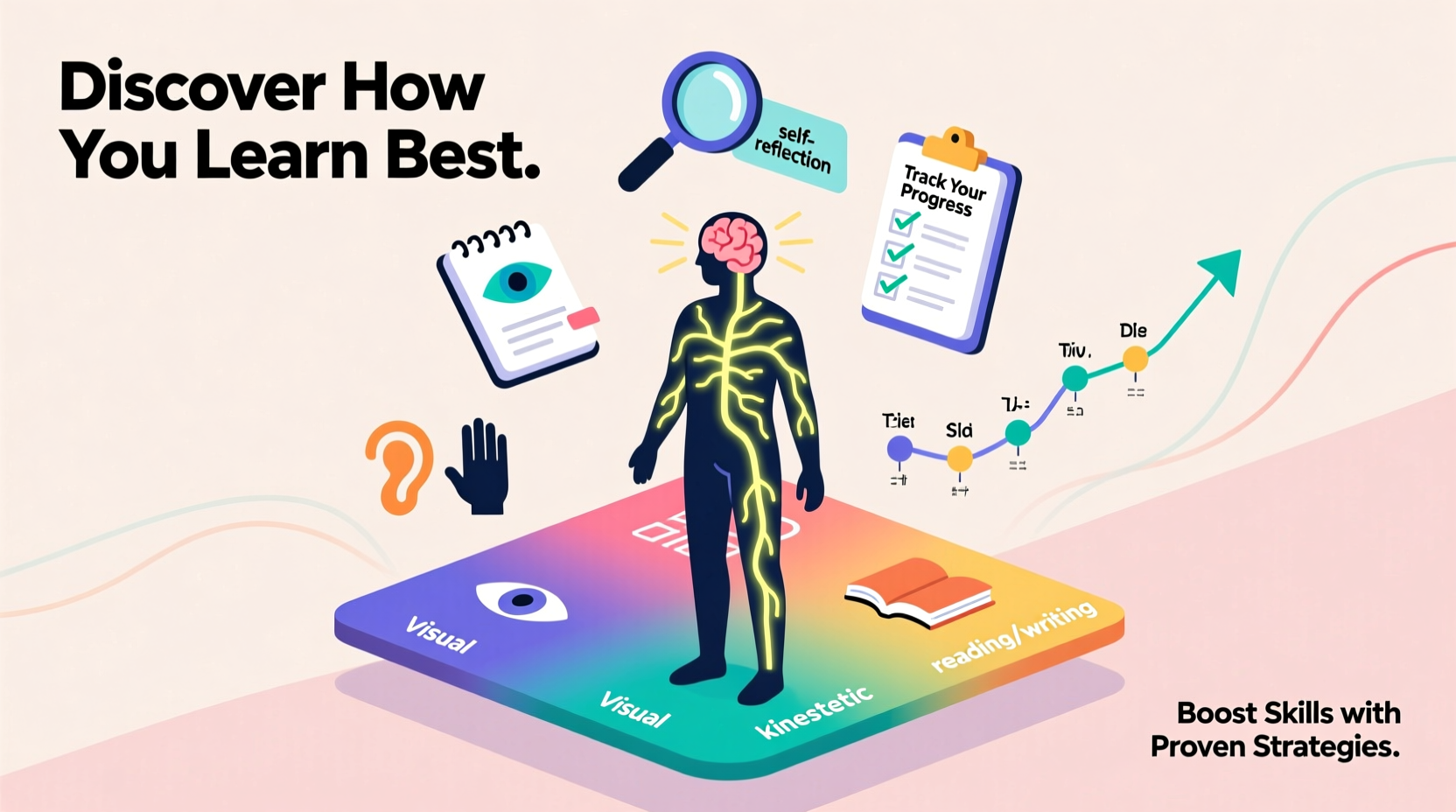
Researchers have long recognized that individuals process information differently. The most widely accepted model identifies four primary learning styles: visual, auditory, reading/writing, and kinesthetic (VARK). Recognizing which category aligns with your strengths allows you to customize your study methods for maximum impact.
- Visual learners benefit from diagrams, charts, color-coded notes, and mind maps.
- Auditory learners retain more when they listen—lectures, discussions, or even recording and replaying their own summaries help.
- Reading/writing learners prefer written material, taking detailed notes, and rewriting concepts in their own words.
- Kinesthetic learners learn by doing—hands-on practice, role-playing, or building models solidify understanding.
It's important to note that most people are multimodal—they use a blend of styles depending on context. The goal is not to box yourself in but to identify dominant patterns so you can lean into them strategically.
Conduct a Personal Learning Audit
To truly understand how you learn best, conduct a structured self-evaluation. Reflect on past experiences where you mastered something quickly versus times when you struggled despite effort. Look for patterns in environment, method, and engagement level.
- Recall successful learning moments. What were you doing? Were you alone or in a group? Was there movement involved?
- Identify obstacles. Did distractions, poor materials, or mismatched teaching methods hinder progress?
- Track current habits. For one week, log how you study, what tools you use, and how well you remember the material afterward.
- Evaluate outcomes. After each session, rate comprehension and retention on a scale of 1–10.
This audit builds self-awareness and provides data to refine your strategy. Over time, correlations will emerge—perhaps you score higher after discussing topics aloud or using flashcards.
Apply Evidence-Based Learning Techniques
Once you know your preferred style, enhance it with scientifically backed methods that improve memory and comprehension regardless of modality.
| Technique | How It Works | Best For |
|---|---|---|
| Spaced Repetition | Review material at increasing intervals to strengthen long-term memory. | All learners, especially those preparing for exams or certifications. |
| Active Recall | Test yourself without looking at notes to reinforce neural pathways. | Reading/writing and auditory learners. |
| Pomodoro Technique | Work in focused 25-minute blocks with short breaks to maintain concentration. | Visual and kinesthetic learners needing structure. |
| Feynman Method | Explain a concept simply, as if teaching a child, to expose gaps in understanding. | Auditory and reading/writing learners. |
“The most effective learners aren’t necessarily the smartest—they’re the ones who understand how their minds work and design systems around that.” — Dr. Linda Zhang, Cognitive Psychologist, Stanford University
Real-World Example: From Struggling Student to Top Performer
Carlos, a 28-year-old software developer transitioning into data science, initially struggled with statistical theory. He read textbooks cover to cover but retained little. Frustrated, he took a step back and conducted a learning audit. He realized he was spending hours reading dense material late at night while fatigued—a poor match for his kinesthetic and social learning tendencies.
He adjusted his approach: watching video tutorials during the day, coding examples immediately, joining a weekly study group, and using spaced repetition apps like Anki for formulas. Within six weeks, his quiz scores improved by 60%, and he completed a capstone project ahead of schedule.
Carlos didn’t change his intelligence—he changed his method.
Create a Customized Learning Plan
Now that you’ve assessed your style and tested effective techniques, build a sustainable plan. Follow this step-by-step framework:
- Define your goal. Be specific: “Learn Python for data analysis within three months” rather than “Get better at coding.”
- Select compatible resources. Choose videos, books, courses, or labs that match your learning style.
- Schedule active sessions. Use the Pomodoro technique and include recall or application in every session.
- Integrate feedback loops. Test yourself weekly and adjust based on performance.
- Reflect monthly. Ask: What worked? What didn’t? How has my retention improved?
Checklist: Optimize Your Learning Strategy
- ✅ Identify your dominant learning style(s) using a validated assessment.
- ✅ Conduct a personal learning audit to spot patterns and inefficiencies.
- ✅ Incorporate at least two evidence-based techniques (e.g., spaced repetition + active recall).
- ✅ Align study materials with your preferred modalities (videos, texts, labs).
- ✅ Design a structured weekly plan with built-in review and reflection.
- ✅ Apply knowledge immediately through projects, teaching, or problem-solving.
Common Pitfalls and How to Avoid Them
Even with the right tools, many learners fall into traps that undermine progress:
- Mistaking familiarity for mastery. Just because you recognize a concept doesn’t mean you can apply it. Always test yourself under pressure-free conditions.
- Over-relying on passive methods. Highlighting text or re-reading gives an illusion of learning. Replace these with active recall and practice.
- Neglecting sleep and recovery. Memory consolidation happens during rest. Sacrificing sleep sabotages retention.
- Ignoring emotional state. Stress and anxiety impair cognitive function. Practice mindfulness or breathing exercises before intense study sessions.
FAQ
Can my learning style change over time?
Yes. While core preferences often remain stable, life experiences, career demands, and deliberate practice can expand your adaptability across styles. Many adults become multimodal out of necessity.
Is it worth adapting to less-preferred styles?
Strategically, yes. Being able to learn from lectures (auditory), diagrams (visual), or manuals (reading) increases flexibility. But prioritize your strengths first, then gradually build weaker areas.
How do I stay motivated when progress feels slow?
Track small wins. Use a journal to record insights, completed tasks, or improved test scores. Visual progress fuels motivation more than abstract goals.
Take Control of Your Learning Journey
Discovering how you learn best isn’t a one-time exercise—it’s an ongoing process of experimentation and refinement. The most skilled professionals aren’t those who never struggle, but those who know how to pivot when something isn’t working. By combining self-knowledge with proven cognitive strategies, you gain a powerful advantage: the ability to learn anything more efficiently and with greater confidence.




 浙公网安备
33010002000092号
浙公网安备
33010002000092号 浙B2-20120091-4
Comments
No comments yet. Why don't you start the discussion?