
In an age of information overload, the ability to absorb knowledge efficiently is more valuable than ever. Reading faster isn’t about skimming headlines or rushing through pages—it’s about reading smarter. The goal is not just speed, but improved comprehension, retention, and critical engagement with material. Whether you're a student, professional, or lifelong learner, mastering intelligent reading techniques can transform how you learn, work, and think.
This guide breaks down proven methods for increasing reading speed while deepening understanding. From eliminating subvocalization to applying active reading strategies, each technique builds toward a more strategic and effective approach to consuming written content.
Understanding the Difference Between Fast and Smart Reading
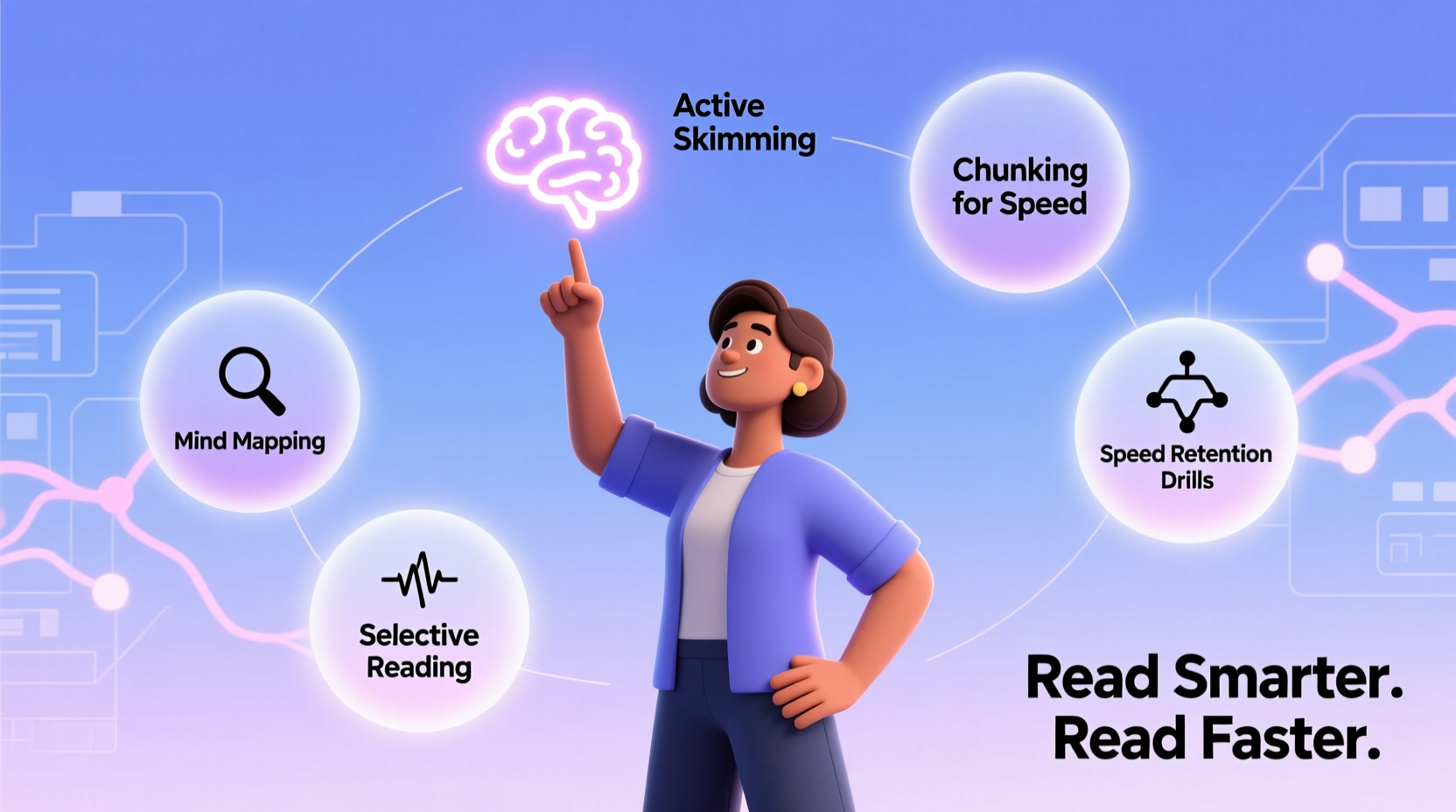
Many people equate fast reading with skipping words or scanning text superficially. True smart reading combines speed with purpose, focus, and comprehension. It means knowing when to slow down for complex ideas and when to accelerate through familiar or less critical sections.
The average adult reads at 200–250 words per minute (wpm) with moderate comprehension. Skilled readers can reach 400–600 wpm without sacrificing understanding. Exceptional learners go beyond speed—they extract meaning, connect concepts, and apply insights quickly.
Step-by-Step Guide to Smarter, Faster Reading
Becoming a smarter reader is a skill built through deliberate practice. Follow these steps to develop lasting improvements in both speed and comprehension.
- Preview the Material: Before diving in, scan headings, subheadings, summaries, and visuals. This primes your brain for structure and key ideas.
- Set a Clear Purpose: Ask yourself why you’re reading. Are you gathering facts? Learning a concept? Preparing for discussion? A defined goal sharpens focus.
- Use a Pointer or Pacer: Guide your eyes with a finger, pen, or cursor. This reduces regression (rereading lines) and maintains steady forward motion.
- Expand Your Peripheral Vision: Train yourself to see groups of words instead of individual ones. Practice chunking phrases to minimize eye stops.
- Reduce Subvocalization: Most readers silently “say” words in their head. While helpful for poetry or dense texts, it slows reading. Practice suppressing inner speech during simpler material.
- Adjust Speed by Content Type: Slow down for technical or philosophical passages; speed up for reviews, emails, or summaries.
- Summarize After Each Section: Pause briefly to mentally restate main points. This reinforces retention and checks understanding.
Training Exercises to Build Speed
Like any skill, reading improves with targeted drills. Try these exercises weekly:
- Timed Reading Sprints: Read for five minutes at maximum comfortable speed, then summarize. Gradually increase duration and complexity.
- Chunking Practice: Use online tools or apps that flash word groups briefly to train visual recognition.
- Regression Control: Cover each line after reading it with a card or ruler to prevent backward eye movement.
Active Reading: The Key to Retention and Insight
Smart reading isn’t passive consumption. Active reading involves questioning, annotating, and connecting ideas. It turns information into knowledge.
Engage with the text by asking: What’s the author’s main argument? How does this relate to what I already know? Do I agree? Why or why not?
| Passive Reading | Active Reading |
|---|---|
| Moves linearly from start to finish | Skims, jumps, revisits based on relevance |
| Focused on completion | Focused on understanding and application |
| Rarely takes notes | Annotates margins or keeps summary journal |
| Forgets content quickly | Retains core ideas through reflection |
“Reading is not just decoding symbols. It’s constructing meaning. The best readers are not the fastest—they’re the most engaged.” — Dr. Linda Phillips, Cognitive Psychologist
Common Barriers and How to Overcome Them
Several mental and physical habits hinder efficient reading. Recognizing them is the first step to improvement.
- Subvocalization: The habit of mentally pronouncing every word. Combat it by using background music or white noise to disrupt inner speech during light reading.
- Distractibility: Digital interruptions fracture attention. Use website blockers and read in focused 25-minute intervals (Pomodoro method).
- Perfectionism: Feeling compelled to understand every sentence slows progress. Accept that some ambiguity is normal—clarity often emerges later.
- Poor Lighting or Posture: Physical discomfort reduces concentration. Ensure ergonomic setup and adequate lighting to sustain longer sessions.
Real Example: How a Student Doubled Her Comprehension Speed
Sophia, a graduate student in public policy, struggled to keep up with weekly readings averaging 150 pages. She spent hours reading but retained little. After learning smart reading techniques, she implemented changes over six weeks.
She began previewing chapters, setting specific goals (\"Identify three policy implications\"), and using a pen as a pacer. She reduced subvocalization by practicing with news articles and summarizing each section aloud. Within two months, she cut her reading time in half while scoring higher on class discussions and exams.
Her breakthrough came not from reading faster alone, but from reading with intention. “I stopped trying to memorize everything,” she said. “Instead, I asked, ‘What matters here?’ That changed everything.”
Checklist: Build Your Smart Reading Routine
Use this checklist daily or weekly to reinforce better habits:
- ☐ Preview the structure before reading
- ☐ Define your purpose: What do I need to get from this?
- ☐ Eliminate distractions (phone off, browser closed)
- ☐ Use a pointer to guide your eyes
- ☐ Read in chunks, not word-by-word
- ☐ Pause every few paragraphs to summarize mentally
- ☐ Mark key ideas or questions in margins
- ☐ Review main points after finishing
Frequently Asked Questions
Can anyone learn to read faster without losing comprehension?
Yes—most people can improve reading speed by 50–100% with consistent training. The key is balancing pace with engagement. Techniques like previewing, chunking, and active summarization allow faster processing without sacrificing understanding.
Is subvocalization always bad?
No. Subvocalization aids comprehension in complex or unfamiliar material, such as academic papers or foreign languages. The goal is not elimination in all cases, but control—knowing when to engage it and when to suppress it for efficiency.
How long does it take to see results?
With 10–15 minutes of daily practice, noticeable improvements typically appear within 2–3 weeks. Greater gains come with sustained effort over months. Like building fitness, reading stamina grows gradually.
Conclusion: Start Reading with Purpose Today
Reading smarter and faster isn’t a shortcut—it’s a mindset shift. It means approaching every article, book, or report with clarity of intent, strategic technique, and active engagement. Speed follows naturally when you eliminate inefficiencies and focus on what truly matters.
The world rewards those who can process information quickly and think critically about it. By refining how you read, you invest in one of the most powerful skills for personal and professional growth.




 浙公网安备
33010002000092号
浙公网安备
33010002000092号 浙B2-20120091-4
Comments
No comments yet. Why don't you start the discussion?