
In an era where digital communication defines productivity, typing remains a foundational skill. Yet, not everyone can—or needs to—type with both hands. Whether due to injury, physical limitation, or personal preference, mastering one-handed typing is not just possible—it’s practical. With the right strategies, you can achieve impressive speeds while maintaining high accuracy. This guide explores structured methods, ergonomic insights, and real-world applications to help you type efficiently using only one hand.
Understanding One-Handed Typing: Why It Matters
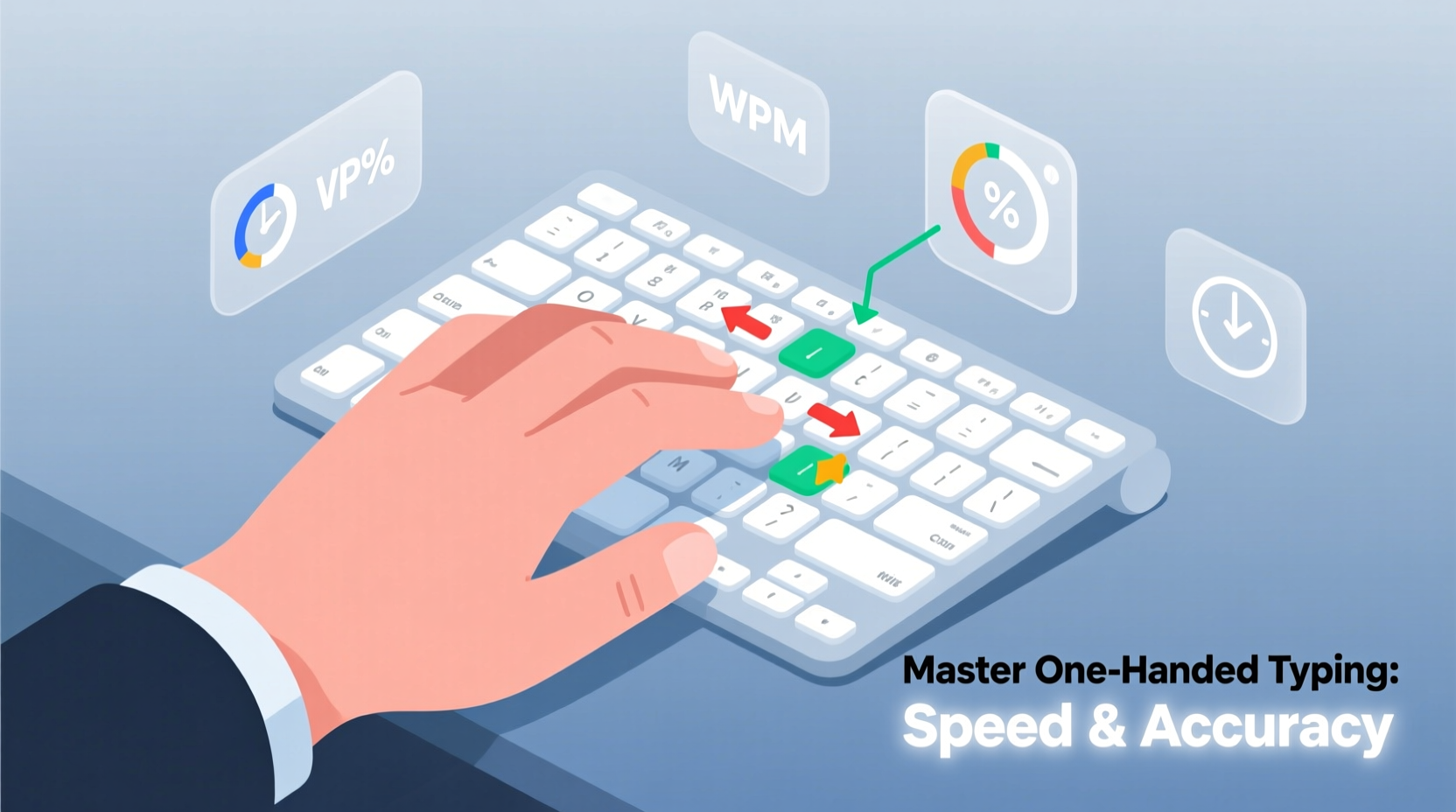
One-handed typing isn’t a compromise; it’s an adaptation. People use this method for various reasons: recovering from repetitive strain injuries, managing disabilities like hemiparesis, or optimizing workflow during multitasking (e.g., taking notes while holding a device). For programmers, journalists, or remote workers, even temporary conditions such as wrist sprains can make traditional typing painful or impossible.
The goal isn't necessarily to match two-handed typists’ top speeds but to develop a sustainable, accurate, and efficient system tailored to your capabilities. Studies show that skilled one-handed typists can reach 40–60 words per minute (WPM), which exceeds average two-handed typing speeds for casual users.
“Adaptive typing skills empower users to maintain independence and productivity despite physical constraints.” — Dr. Lena Torres, Assistive Technology Researcher, MIT Media Lab
Core Techniques for Building Speed and Accuracy
Success in one-handed typing hinges on three pillars: finger placement, rhythm, and keyboard layout optimization. Unlike standard QWERTY home row positioning, one-handed typing requires rethinking key access and movement patterns.
Finger Assignment and Key Mapping
Assign each finger a zone of keys based on reach and comfort. On a standard keyboard, the dominant hand typically covers:
- Pinky: Q, Tab, A, Caps Lock, Z, Shift
- Ring: W, S, X
- Middle: E, D, C
- Index: R, T, F, G, V, B, and most numbers
- Thumb: Spacebar
Practice transitioning between adjacent keys smoothly. Overextension leads to fatigue and errors. Use minimal finger lift—keys should be tapped, not pressed down forcefully.
Rhythm and Timing
Typing rhythm matters more when you have fewer fingers available. Focus on consistent timing between keystrokes rather than raw speed. This reduces skipped letters and mistyped characters.
Use metronome apps or audio cues at first to build muscle memory. Start slow—20 WPM—and gradually increase tempo as accuracy improves. Prioritize correct form over speed in early practice phases.
Optimizing Your Keyboard Layout
Standard QWERTY wasn’t designed for single-hand use. Alternative layouts redistribute high-frequency letters within easy reach of one hand, drastically improving efficiency.
Dvorak Simplified One-Hand Layouts
The Dvorak layout places common letters (A, O, E, U, I, D, H, T, N) on the home row. The left-hand Dvorak variant centers vowels on the left side, making it ideal for right-handed typists who want vowel-rich access. Similarly, right-hand Dvorak optimizes for left-handed users.
| Layout Type | Best For | Avg. Learning Curve | Speed Potential (WPM) |
|---|---|---|---|
| Standard QWERTY (one hand) | Beginners, short-term use | Low | 25–40 |
| Dvorak Left-Hand | Right-handed users | Medium | 45–60 |
| Dvorak Right-Hand | Left-handed users | Medium | 45–60 |
| Half-QWERTY (on-the-fly mirroring) | Two-handed transition | High | 50+ |
To switch layouts:
- Enable alternative keyboard input in OS settings (Windows, macOS, Linux).
- Download and install custom Dvorak one-hand variants.
- Use tools like Microsoft Keyboard Layout Creator or Ukelele (macOS) to design personalized maps.
Step-by-Step Guide to Mastering One-Handed Typing
Becoming proficient takes deliberate practice. Follow this six-week timeline to build lasting skill:
- Week 1–2: Learn the Layout
Choose a layout (Dvorak recommended). Spend 20 minutes daily identifying key positions without looking. Use tactile markers (like raised dots on F and J equivalents) if needed. - Week 3: Build Muscle Memory
Type simple sentences focusing on correct finger usage. Use free online trainers like Keybr.com or Monkeytype (set to one-hand mode). - Week 4: Increase Accuracy
Set accuracy targets (98%+) before increasing speed. Analyze error logs to identify weak keys. - Week 5: Introduce Real-World Text
Transcribe emails, articles, or notes. Simulate actual work conditions. - Week 6: Optimize Workflow
Integrate shortcuts, voice-to-text fallbacks, and predictive text tools to complement typing.
Real Example: How Alex Regained Productivity After Injury
Alex Rivera, a technical writer, fractured his left wrist in a cycling accident. Unable to type conventionally, he faced missed deadlines and mounting stress. Within days, he switched to the right-hand Dvorak layout on his MacBook.
Starting at 18 WPM, Alex practiced daily using a split ergonomic keyboard positioned close to his body. By week four, he reached 47 WPM with 96% accuracy. He combined typing with speech recognition software for editing tasks, enabling him to meet all project timelines.
“I didn’t think I’d ever type fast again,” Alex said. “But adapting forced me to learn smarter habits. Now I’m more efficient than before.”
Essential Tools and Accessories
Hardware and software choices significantly impact performance:
- Ergonomic Keyboards: Consider compact or split keyboards (like Kinesis Advantage360) that allow closer hand positioning.
- On-Screen Keyboards: Useful for touch-based correction and visual feedback.
- Text Expansion Tools: Use PhraseExpress or TextBlaze to auto-complete frequent phrases (e.g., email signatures).
- Voice Input: Pair typing with Dragon NaturallySpeaking or Apple Dictation for hybrid input.
Checklist: Setting Up for Success
- ✅ Choose a one-handed optimized layout (Dvorak preferred)
- ✅ Adjust chair height and keyboard position for neutral wrist alignment
- ✅ Install typing tutor software with customizable lessons
- ✅ Enable keyboard click sounds or haptic feedback for confirmation
- ✅ Schedule daily 15-minute practice blocks
- ✅ Track progress weekly using typing tests
Frequently Asked Questions
Can I really type fast with one hand?
Yes. While elite two-handed typists exceed 100 WPM, most people type between 30–50 WPM. Skilled one-handed typists regularly achieve 50–60 WPM, which is more than sufficient for everyday use.
Is one-handed typing bad for my hand?
Only if done improperly. Poor posture, excessive force, or lack of breaks can lead to strain. Use light keystrokes, take micro-breaks every 20 minutes, and stretch fingers and wrists regularly.
What if I need to use special symbols or shortcuts?
Customize your layout to place frequently used symbols (like @, _, /) within easy reach. Alternatively, create macros for complex combinations (e.g., Ctrl+C, Alt+Tab).
Conclusion: Unlock Efficiency Through Adaptation
Mastering one-handed typing isn’t about overcoming a limitation—it’s about unlocking new levels of adaptability and resilience. With intentional practice, the right tools, and a structured approach, you can maintain high productivity regardless of physical constraints. Whether you're recovering from injury, enhancing accessibility, or simply exploring alternative workflows, this skill offers lasting benefits.




 浙公网安备
33010002000092号
浙公网安备
33010002000092号 浙B2-20120091-4
Comments
No comments yet. Why don't you start the discussion?