
Whether you're assembling furniture, fixing a leaky faucet, or building a garden planter, a well-crafted step-by-step guide turns confusion into clarity. The ability to document processes clearly isn’t just useful—it’s empowering. When done right, a guide doesn’t just solve one problem; it becomes a repeatable roadmap for consistent success. Yet most DIY attempts fail not from lack of skill, but from poorly structured instructions. This article breaks down how to design practical, user-friendly guides that lead to real-world results—every time.
Why Step-by-Step Guides Matter in DIY Projects
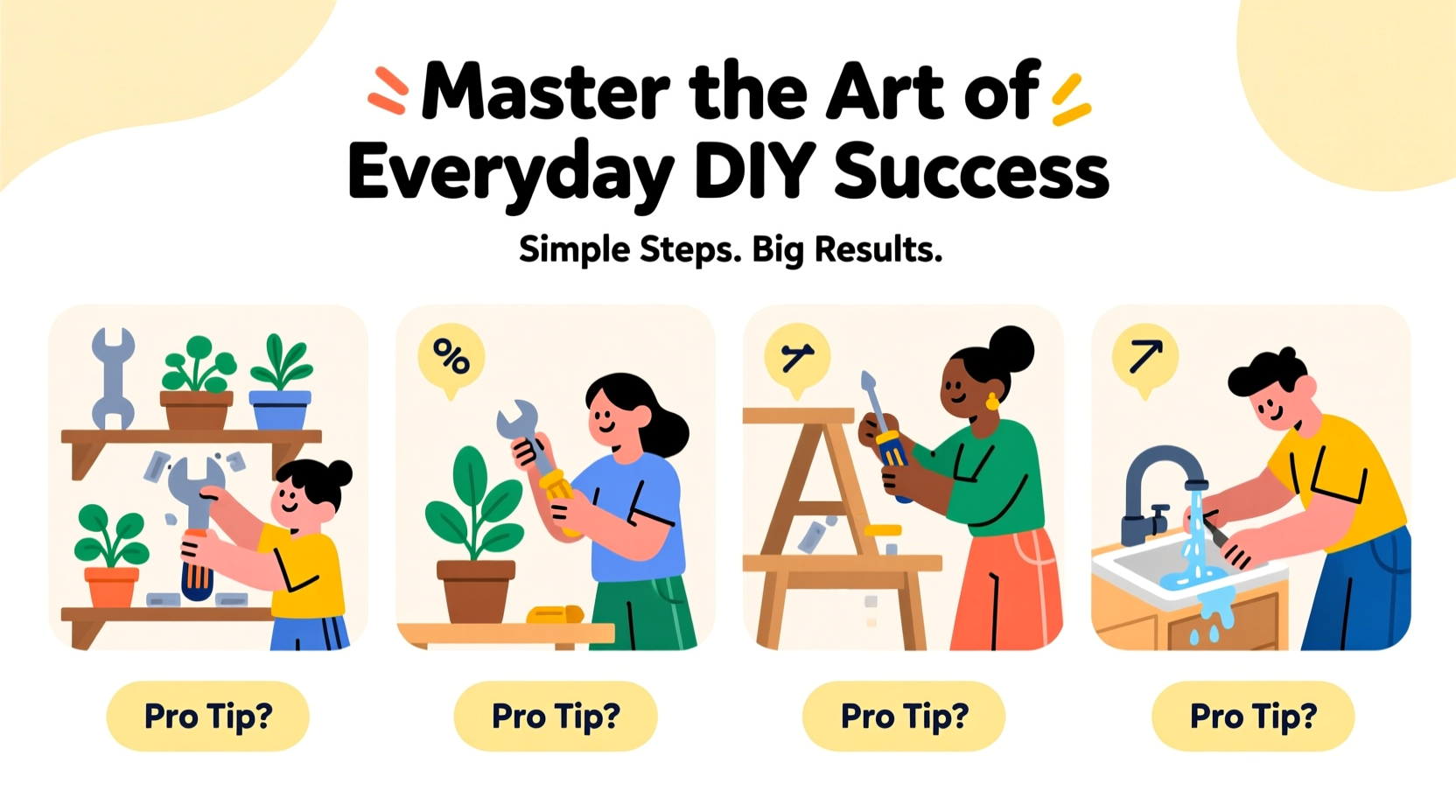
DIY culture thrives on independence and resourcefulness. But even experienced makers rely on clear direction when tackling unfamiliar tasks. A strong guide bridges the gap between intention and execution. It reduces errors, saves time, and builds confidence. More importantly, it allows knowledge to be shared, refined, and reused across different contexts.
Think of a recipe: without precise measurements and order, even simple dishes can go wrong. The same logic applies to home repairs, tech setups, or craft projects. A good guide anticipates questions before they arise and eliminates ambiguity through structure and detail.
“Clarity is kindness in instruction. The best guides don’t assume knowledge—they build it.” — Dr. Lena Patel, Cognitive Psychologist & Technical Communication Researcher
Core Principles of Effective Guide Design
Creating a reliable step-by-step guide isn’t about writing more—it’s about writing better. Follow these foundational principles to ensure your instructions are both usable and trustworthy:
- Simplicity: Use plain language. Avoid jargon unless absolutely necessary, and define terms when used.
- Sequence: Steps must follow a logical progression. One action should naturally lead to the next.
- Completeness: Include all necessary materials, tools, warnings, and prerequisites upfront.
- Reproducibility: Anyone following the guide should achieve the same result, regardless of experience level.
- Visual Logic: Even without images, use formatting (bullets, bolding, spacing) to enhance readability.
A Proven Framework: How to Build Your Guide in 5 Stages
Follow this timeline-tested method to turn any DIY process into a reliable, easy-to-follow guide.
- Define the Goal and Audience
Start by asking: What exactly should the reader accomplish? Who is this for—a beginner, intermediate, or expert? Tailor your tone and depth accordingly. - Break Down the Task
List every action required, no matter how small. Don’t skip steps like “gather tools” or “turn off power supply.” These are often where failures begin. - Organize Chronologically
Arrange steps in the exact order they must be performed. Use numbered lists to enforce sequence. Group related actions under subheadings (e.g., “Preparation,” “Assembly,” “Testing”). - Add Context and Warnings
Insert brief notes where mistakes are common. For example: “Do not overtighten screws—this may strip the threads.” - Edit Ruthlessly
Remove redundant words. Replace vague phrases (“attach it”) with specific ones (“screw the bracket into the wall stud using a #8 screw”).
Real Example: Building a Floating Shelf
Consider Mark, a first-time homeowner trying to install a floating shelf. He followed an online tutorial that said, “Secure the bracket to the wall.” But it didn’t specify finding studs or using anchors. Result? The shelf collapsed under minimal weight.
Afterward, he wrote his own guide with detailed steps: locating studs with a detector, marking drill points, inserting drywall anchors if needed, and leveling before final tightening. His revised version included a checklist and warnings. When shared with friends, all seven succeeded on their first try.
Checklist: Essential Elements of Every DIY Guide
Before publishing or using your guide, verify it includes these components:
- Clear title stating the outcome (e.g., “How to Unclog a Kitchen Sink Drain”)
- List of required tools and materials (with quantities)
- Estimated completion time
- Safety precautions (e.g., gloves, ventilation, power shutdown)
- Numbered steps with active verbs (e.g., “Cut,” “Attach,” “Test”)
- Troubleshooting tips for common issues
- Final verification step (“Turn on water and check for leaks”)
Do’s and Don’ts: Common Pitfalls in Guide Creation
| Do | Don’t |
|---|---|
| Use action-oriented language: “Drill a ¼-inch hole at marked point.” | Use passive voice: “A hole should be drilled.” |
| Include estimated time per step when relevant. | Assume readers know tool functions (e.g., difference between Phillips and flathead). |
| Group setup, execution, and cleanup phases separately. | Mix multiple actions in one step (“Screw in the bolt while holding the panel steady with pliers”). |
| Add a “What Could Go Wrong?” note for high-risk steps. | Omit safety warnings near electrical or pressurized systems. |
| Test the guide yourself after a few days to catch missing details. | Rely solely on memory when documenting a completed project. |
Frequently Asked Questions
How long should a step-by-step guide be?
There’s no fixed length. Focus on completeness, not word count. A simple task might need only five steps; a complex one could require fifty. Break longer guides into sections with clear headings to improve navigation.
Can I reuse parts of old guides for new projects?
Absolutely. Standardize recurring elements like safety disclaimers, tool lists, or preparation steps. Create templates for common project types (e.g., plumbing fixes, wood assembly) to save time and maintain consistency.
What if something goes wrong despite following the guide?
Update the guide. Note where the failure occurred and add preventive advice. Continuous improvement makes your documentation more robust over time. Consider adding a “Reader Feedback” section if sharing publicly.
Conclusion: Turn Knowledge Into Action
Mastering the creation of step-by-step guides transforms isolated successes into lasting skills. It turns fleeting moments of problem-solving into shareable, scalable knowledge. Whether you’re helping family members fix a bike chain or documenting a home automation setup, your guide becomes a tool for empowerment.
The next time you complete a DIY task, don’t just walk away. Take ten minutes to write down what you did. Structure it clearly. Test it. Improve it. Share it. You’ll not only reinforce your own understanding—you’ll enable others to succeed without starting from scratch.




 浙公网安备
33010002000092号
浙公网安备
33010002000092号 浙B2-20120091-4
Comments
No comments yet. Why don't you start the discussion?