
Skipping is more than just a childhood pastime—it’s a full-body workout that enhances cardiovascular health, coordination, rhythm, and muscular endurance. From young children building motor skills to adults boosting fitness, skipping offers scalable benefits for everyone. Unlike many forms of exercise, it requires minimal equipment and space, making it accessible whether you're in a backyard, gym, or urban park. Yet, despite its simplicity, mastering the technique can dramatically improve efficiency, reduce injury risk, and increase enjoyment.
Whether you’re picking up a rope for the first time or refining your double-unders, this guide delivers actionable strategies to help people of all ages develop proper form, build stamina, and make skipping a sustainable habit.
The Physical and Cognitive Benefits of Skipping
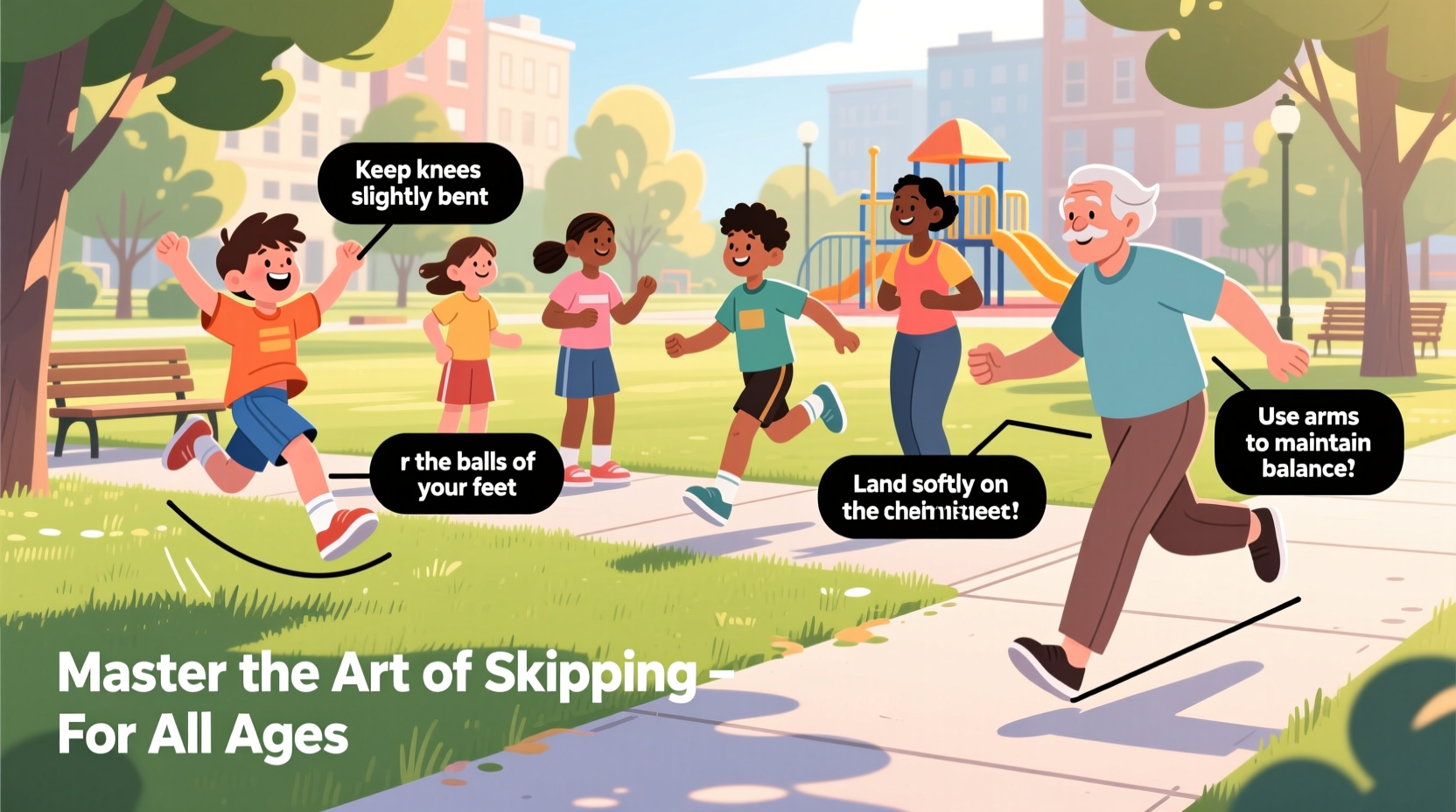
Skipping engages multiple muscle groups—including calves, quads, glutes, shoulders, and core—while elevating heart rate efficiently. Just 10 minutes of continuous skipping can burn as many calories as running a mile. But beyond physical gains, skipping sharpens neuromuscular coordination, improves balance, and strengthens proprioception (the body’s awareness in space).
For children, regular skipping supports cognitive development. Studies show rhythmic movement like jumping rope enhances focus, memory, and even reading comprehension by stimulating brain connectivity. Adults benefit cognitively too, with improved reaction time and mental clarity from consistent practice.
“Jumping rope is one of the most underrated functional exercises. It trains agility, timing, and endurance in a single motion.” — Dr. Lena Torres, Sports Physiologist
Essential Equipment and Setup
Choosing the right jump rope and environment sets the foundation for success. Not all ropes are created equal, and using the wrong type can lead to frustration or tripping.
| Rope Type | Best For | Length Tip |
|---|---|---|
| Beaded Rope | Beginners, outdoor use | Stands up to pavement; easier to see mid-swing |
| Speed Rope (PVC or coated wire) | Advanced users, fast rotations | Ideal for double-unders and cardio intervals |
| Fitness Rope (weighted handles) | Strength training, toning arms | Adds resistance; builds upper body endurance |
| Adjustable Rope | All ages, home use | Cut to fit height: Stand on center, handles reach armpits |
Surface matters just as much as equipment. Avoid concrete if possible—opt for sprung floors, rubber mats, or grass to reduce joint impact. Indoors, ensure at least 8 feet of clearance above and around you.
Step-by-Step Guide to Mastering Basic and Advanced Techniques
Progression is key. Rushing into complex moves without foundational skill leads to poor form and burnout. Follow this sequence to build confidence and control.
- Practice Dry Swings: Hold the rope without jumping. Swing it over your head and tap the ground behind you. Focus on wrist rotation—not arm swinging.
- Two-Feet Basic Jump: Jump just high enough to clear the rope (1–2 inches). Land softly on the balls of your feet. Aim for 30 seconds nonstop.
- Find Your Rhythm: Use a metronome app or upbeat music (120–140 BPM) to maintain consistent tempo.
- Increase Duration: Build in 30-second increments until you reach 5 continuous minutes.
- Introduce Variations: Try alternate-foot hopping, high knees, or side swings once comfortable.
- Advance to Double-Unders: Swing the rope twice per jump. Start with “scooping” motions, then transition to quick wrist snaps.
“Most people fail at double-unders because they jump too high. The rope needs speed, not altitude.” — Marcus Bell, Competitive Jump Rope Coach
Skip-Smart: Common Mistakes and How to Fix Them
Even experienced skippers fall into inefficient habits. Recognizing these early prevents plateaus and injuries.
- Mistake: Using elbows and shoulders to swing the rope.
Solution: Rotate only your wrists. Keep elbows close to ribs. - Mistake: Landing flat-footed or with locked knees.
Solution: Land lightly on the balls of your feet, knees slightly bent. - Mistake: Looking down while skipping.
Solution: Gaze forward, chin level. This aligns posture and reduces neck strain. - Mistake: Skipping every day without rest.
Solution: Limit high-impact sessions to 4–5 times per week. Alternate with low-impact cardio.
Adapting Skipping for Different Ages and Abilities
One size doesn’t fit all. Tailoring the approach ensures safety and engagement across generations.
Children (Ages 5–12)
Focus on play and rhythm. Use colorful beaded ropes and incorporate songs or clapping games. Short bursts of 30–60 seconds with rest work best. Group skipping or criss-cross patterns keep motivation high.
Teens and Adults (13–50)
Integrate skipping into fitness routines. Use interval training: 30 seconds fast, 30 seconds slow, repeat for 10 rounds. Add challenges like “100 jumps without missing” to build mental resilience.
Older Adults (50+)
Low-impact modifications are effective. Slow the pace, use a lighter rope, or simulate skipping motions without leaving the ground (“shadow skipping”). This preserves joint health while maintaining coordination.
“My patients in their 70s who skip daily report better balance and fewer falls. It’s functional fitness at its finest.” — Dr. Anika Patel, Geriatric Wellness Specialist
Sample Weekly Skipping Plan
This flexible schedule balances progression and recovery. Adjust intensity based on age and fitness level.
| Day | Workout | Duration |
|---|---|---|
| Monday | Basic jumps + rhythm drills | 5 min warm-up, 15 min total |
| Tuesday | Alternate-foot hops (interval style) | 3 x 1 min on / 1 min off |
| Wednesday | Rest or shadow skipping | 5–10 min light movement |
| Thursday | Double-under practice (or progressions) | 10 attempts, 3 sets |
| Friday | Endurance round: steady pace | 3 x 3 min with 1 min rest |
| Saturday | Fun session: tricks or music-based skipping | 15–20 min |
| Sunday | Rest | — |
FAQ
Can skipping stunt growth in children?
No scientific evidence supports this myth. In fact, weight-bearing activities like skipping support healthy bone density and growth during development.
How long before I can do double-unders consistently?
With daily practice, most beginners achieve consistency within 2–6 weeks. Focus on short, frequent sessions rather than long, infrequent ones.
Is skipping bad for knees?
When done with proper form and on appropriate surfaces, skipping is safe for knees. Those with existing joint issues should consult a physiotherapist and consider lower-impact alternatives initially.
Conclusion
Skipping is deceptively powerful—a simple tool with profound effects on physical fitness, mental sharpness, and emotional well-being. By selecting the right equipment, practicing proper technique, and progressing mindfully, people of every age can unlock its benefits. Whether you're teaching a child their first jump or training for a fitness goal, the rhythm of the rope offers a timeless path to vitality.




 浙公网安备
33010002000092号
浙公网安备
33010002000092号 浙B2-20120091-4
Comments
No comments yet. Why don't you start the discussion?