
Age is one of the first personal details exchanged in conversation, whether you're meeting someone new, filling out a form, or chatting casually. In Spanish, talking about age goes beyond memorizing a single phrase—it involves understanding grammar, cultural nuance, and regional variations. Getting it right helps you sound more natural, respectful, and fluent. Whether you're a beginner or brushing up on conversational skills, mastering how to ask and respond to age-related questions is a foundational step toward real communication.
How to Ask Someone’s Age in Spanish
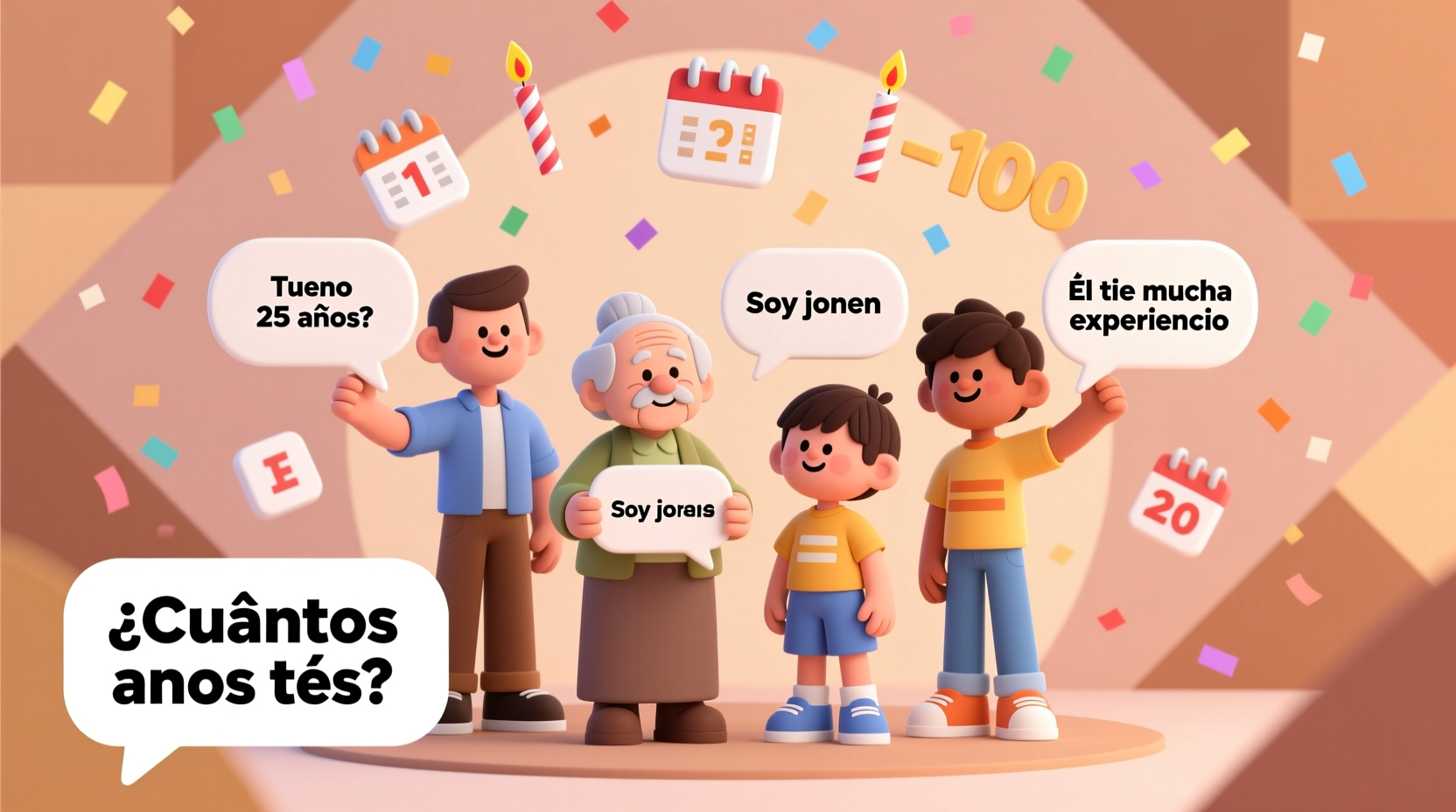
The most common way to ask someone’s age in Spanish is straightforward: “¿Cuántos años tienes?” This translates directly to “How many years do you have?” While this structure might sound odd in English, it’s perfectly natural in Spanish. The verb *tener* (to have) is used instead of *ser* (to be), which is a key grammatical point for learners.
However, depending on context and formality, there are several variations:
- ¿Cuántos años tienes? – Informal, used with friends, children, or peers.
- ¿Cuántos años tiene usted? – Formal version, appropriate for elders, professionals, or strangers.
- ¿Qué edad tienes? – Literally “What age do you have?” Also informal but slightly less direct.
- ¿Qué edad tiene? – Formal version of the above.
- ¿Cuántos años cumpliste? – “How many years did you turn?” Used after birthdays.
Responding Naturally: How to Say Your Age
Answering an age question correctly hinges on using the verb *tener* properly. The standard response follows the pattern: “Tengo [number] años.” For example:
- Tengo veinte años. (I am 20 years old.)
- Tiene treinta y dos años. (He/She is 32 years old.)
- Tenemos veinticinco años. (We are 25 years old.)
It’s important to conjugate *tener* according to the subject. Misconjugation is a common error among beginners—for instance, saying “Yo soy veinte años” instead of “Tengo veinte años.” Remember: in Spanish, you don’t “be” an age—you “have” that many years.
In casual speech, people often drop the pronoun. Instead of “Yo tengo dieciocho años,” they’ll just say “Tengo dieciocho años.” This makes the sentence flow better and sounds more native.
“Using 'tengo' instead of 'soy' for age is one of the first mental shifts learners must make. Once you internalize that, you’re already thinking in Spanish.” — Dr. Rafael Méndez, Linguist & Spanish Educator
Regional Variations and Nuances
Spanish varies widely across regions, and age expressions are no exception. While the core structure remains consistent, some areas use alternative phrasing or pronunciation.
| Region | Common Phrase | Notes |
|---|---|---|
| Spain | ¿Cuántos años tienes? | Standard Castilian; may use vosotros form: ¿Cuántos años tenéis? |
| Mexico | ¿Cuántos años tienes? / ¿Qué edad traes? | \"Traer\" (to bring) is slang in some areas, very informal. |
| Argentina | ¿Cuántos años tenés? | Uses voseo: “tenés” instead of “tienes.” |
| Colombia | ¿Cuántos años tiene? | Often uses formal “usted” even with younger people as a sign of politeness. |
Being aware of these differences helps you adapt your speech depending on where you are or who you're speaking with. If you're learning Latin American Spanish, stick to “tienes” and “usted.” If you're focusing on Spain, familiarize yourself with “vosotros” and regional accents.
Step-by-Step Guide to Practicing Age Conversations
Building fluency with age expressions requires practice in context. Follow this simple sequence to internalize the phrases naturally:
- Memorize the base forms: Learn “¿Cuántos años tienes?” and “Tengo [X] años.” Repeat them aloud until they feel automatic.
- Practice conjugations: Say the same sentence with different subjects: “Él tiene…”, “Ella tiene…”, “Nosotros tenemos…”
- Add numbers: Drill number recall from 1–100. Practice saying your age, your family’s ages, and random numbers.
- Role-play scenarios: Pretend to meet someone at a party, fill out a form, or introduce a friend. Use full sentences.
- Record yourself: Speak into your phone and listen back. Compare your pronunciation to native speakers on language apps or videos.
Common Mistakes and How to Avoid Them
Even advanced learners stumble on basic age expressions. Here are the most frequent errors and how to fix them:
| Mistake | Correct Version | Why It Matters |
|---|---|---|
| “Soy 25 años.” | “Tengo 25 años.” | Age uses “tener,” not “ser.” |
| “¿Cuántos años es?” | “¿Cuántos años tiene?” | Again, “tener” is required. |
| Forgetting gender agreement in written responses | N/A – age is not gendered | Numbers don’t change for gender, but descriptions might: “Es una chica de 16 años.” |
| Overusing formal forms | Adjust based on context | Using “usted” with peers can create distance. |
Real-Life Example: A Conversation at a Language Exchange
María, a university student in Madrid, attends a weekly language exchange meetup. She introduces herself to James, an American visitor:
María: Hola, me llamo María. ¿Y tú?
James: Soy James. Mucho gusto.
María: Igualmente. ¿Cuántos años tienes?
James: Tengo veintiséis años. ¿Y tú?
María: Yo tengo veintiuno. Estudio filología hispánica.
James: ¡Qué interesante!
This short exchange shows how age questions fit naturally into introductions. Notice how both participants use correct verb forms and keep the tone friendly. James mirrors María’s informal “tienes,” showing he’s adapting quickly.
Checklist: Mastering Age Questions in Spanish
Use this checklist to ensure you’ve covered all bases:
- ✅ Know the difference between “tienes” and “tiene usted”
- ✅ Use “tengo” instead of “soy” when stating your age
- ✅ Practice numbers 1–100 until they’re automatic
- ✅ Understand regional variations (e.g., voseo in Argentina)
- ✅ Role-play conversations with a partner or tutor
- ✅ Avoid literal translations from English
- ✅ Record and review your pronunciation
Frequently Asked Questions
Can I say “Soy + number” for age?
No. While “soy” means “I am,” it’s not used with age. Always use “tengo” followed by the number and “años.” Saying “Soy 30 años” is incorrect and immediately identifies you as a learner.
Is it rude to ask someone’s age in Spanish?
Not necessarily. Among friends or in casual settings, it’s normal. However, in formal or professional contexts, especially with women, it can be seen as intrusive. When in doubt, wait for the other person to bring it up first.
How do I say “I’m turning 25”?
You can say “El mes que viene cumplo veinticinco años” (Next month I’ll turn 25). The verb *cumplir* (to complete) is used for upcoming birthdays.
Final Thoughts and Next Steps
Mastering age questions in Spanish is more than memorizing a phrase—it’s about understanding grammar patterns, cultural context, and conversational flow. Once you internalize the use of *tener* and practice real-life dialogues, expressing age becomes second nature. These small interactions build the foundation for deeper conversations, stronger relationships, and greater confidence in your language journey.




 浙公网安备
33010002000092号
浙公网安备
33010002000092号 浙B2-20120091-4
Comments
No comments yet. Why don't you start the discussion?