
Presentations don’t have to be static sequences of bullet points. With thoughtful use of animation in Google Slides, you can transform a dull deck into an engaging visual story. Animation, when used strategically, guides attention, clarifies transitions, and adds polish without distracting from your message. Unlike flashy effects designed to impress, effective animation serves a purpose—revealing information progressively, emphasizing key points, and maintaining audience focus.
Google Slides offers a surprisingly robust set of animation tools, especially as it has evolved over recent years. While not as feature-rich as desktop software like PowerPoint, its cloud-based simplicity makes it accessible and collaborative. The key is knowing which animations to use, when to apply them, and how to avoid common pitfalls that make presentations feel amateurish.
Understanding the Types of Animations in Google Slides
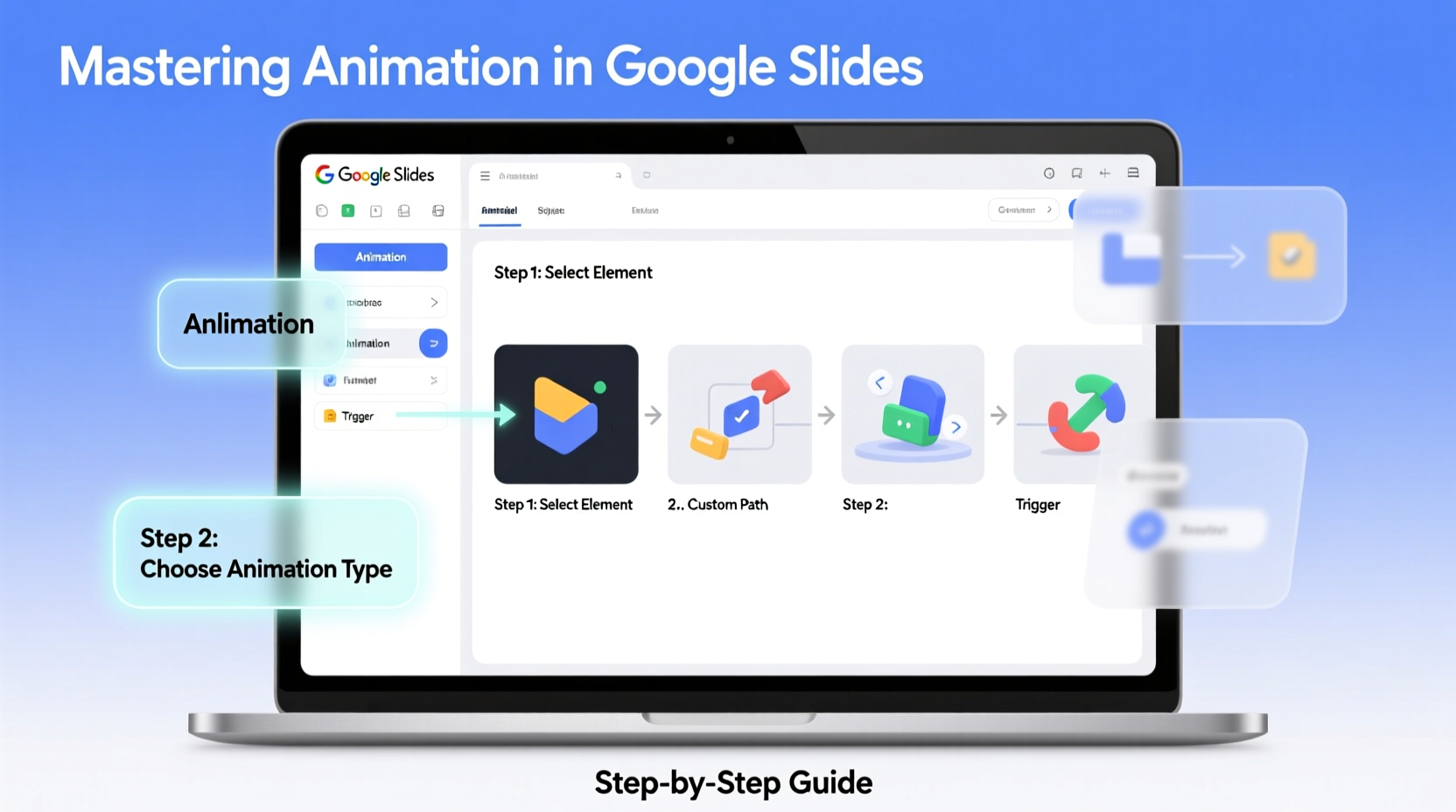
Google Slides supports two main categories of animation: object animations and transition effects. Both play distinct roles in shaping the flow of your presentation.
- Object Animations: These are applied to individual elements such as text boxes, images, shapes, or charts. They control how and when each item appears, moves, or disappears on a slide.
- Slide Transitions: These define how one slide flows into the next—whether it fades, pushes, or dissolves into view.
Within object animations, Google Slides currently offers four core types:
| Animation Type | Purpose | Best Use Case |
|---|---|---|
| Appear | Makes an element suddenly visible | Revealing final punchlines or conclusions |
| Disappear | Hides an element from view | Removing distractions after discussion |
| Grow & Turn | Elements scale up and rotate slightly into place | Highlighting key statistics or icons |
| Zoom | Items fly in from off-screen with scaling effect | Drawing attention to new sections or visuals |
| Drop | Elements fall into position from above | Adding a playful but clear reveal for lists |
Step-by-Step Guide to Adding and Timing Animations
Applying animations effectively requires more than just selecting an effect—it’s about sequencing and timing. Follow this workflow to build polished animated slides.
- Select the Object: Click on any text box, image, or shape you want to animate.
- Open the Animator Panel: Go to Insert > Animation or click the sparkle icon in the toolbar.
- Choose an Animation: Pick from the available entrance effects (e.g., Appear, Zoom).
- Set Trigger and Order: By default, animations trigger on click. You can chain multiple animations by adding them in sequence. Each will appear in the timeline on the right side of the panel.
- Adjust Timing: Modify delay and duration using the dropdowns under each animation. For example, add a 0.5-second delay between bullet points to allow time for verbal explanation.
- Preview the Sequence: Click “Play” in the Animation pane to see how the effects unfold.
- Add Exit Effects (Optional): Select the object again and choose a disappearance effect if you want it to vanish later in the slide.
For multi-step reveals—such as a diagram built piece by piece—layer animations carefully. Animate labels only after their corresponding shapes appear. This prevents confusion and keeps the audience synchronized with your narrative.
Common Mistakes That Undermine Professionalism
Even well-intentioned animation can backfire if misused. Over-animation is the most frequent error, turning what should be a supportive tool into a distraction.
- Bouncing titles on every slide
- Using sound effects with each click
- Animating every bullet point with different effects
- Setting automatic delays that rush the speaker
“Animation should enhance understanding, not entertain. If your audience notices the effect more than the content, you’ve gone too far.” — Dr. Lena Patel, Communication Design Researcher, Stanford University
Another overlooked issue is inconsistency. Switching between abrupt “Appear” effects and slow “Zoom” entrances across slides disrupts rhythm. Choose a consistent style—such as all fade-ins—and stick to it unless there’s a deliberate reason to vary.
Real-World Example: Transforming a Sales Pitch Deck
A mid-sized SaaS company was struggling to keep investor attention during funding presentations. Their initial deck listed features rapidly, resulting in glazed expressions and few follow-up questions. After restructuring with intentional animation, they saw a measurable improvement.
Their revised approach:
- Used “Appear” to reveal one product benefit at a time, synced with the speaker’s explanation.
- Applied “Grow & Turn” to highlight customer logos in a social proof section.
- Added a smooth “Fade” transition between problem and solution slides to signal a shift in narrative.
- Removed all bouncing text and eliminated automatic playback in favor of click-triggered control.
In post-presentation feedback, 87% of attendees reported better clarity on the product’s value proposition. One investor noted, “I could actually follow the logic instead of reading ahead.”
Checklist: Building an Animated Slide Like a Pro
- ✅ Does this animation clarify the message or just decorate it?
- ✅ Is the timing aligned with my speaking pace?
- ✅ Are all animations consistent in style and speed?
- ✅ Have I tested the flow on a second screen or projector?
- ✅ Did I remove unnecessary effects that don’t serve the story?
- ✅ Am I using transitions purposefully, not just between every slide?
This checklist ensures that animation remains functional rather than frivolous.
Frequently Asked Questions
Can I make text animate word-by-word in Google Slides?
No, Google Slides does not support per-word or per-letter animation natively. However, you can simulate this by splitting text into separate text boxes and animating them sequentially. While tedious, it works for short phrases when impact matters.
Why won’t my animations play during presentation mode?
Animations only advance when triggered—usually by a mouse click or spacebar press. If nothing happens, check that you’re not stuck on a single animation step. Also ensure you're not viewing in \"Edit\" mode; switch to \"Present\" mode (press F5 or click the slideshow icon) to test properly.
Are there keyboard shortcuts for navigating animated slides?
Yes. During presentation:
- Click or press Spacebar to advance to the next animation or slide.
- Press Backspace or the Left Arrow to go back one step.
- Press Esc to exit presentation mode.
Final Thoughts: Elevate Your Message with Intentional Motion
Animation in Google Slides isn't about spectacle—it's about pacing, emphasis, and guiding your audience through a logical journey. When used with restraint and purpose, even simple effects like a well-timed \"Appear\" can significantly improve comprehension and retention.
Start small. Apply one animation per slide, master the timing, and gradually layer complexity as you gain confidence. Remember, the goal is not to showcase animation skills but to make your ideas unforgettable.




 浙公网安备
33010002000092号
浙公网安备
33010002000092号 浙B2-20120091-4
Comments
No comments yet. Why don't you start the discussion?