
Apple Intelligence is not just another AI feature—it’s a deeply integrated system that transforms how you interact with your iPhone, iPad, and Mac. Designed for privacy, personalization, and practicality, it learns from your habits while keeping your data secure. Unlike cloud-based models that send information to remote servers, Apple Intelligence processes most tasks directly on your device. This means faster responses, better accuracy, and no compromise on security. Setting it up correctly and customizing it to fit your lifestyle unlocks powerful tools for writing, summarizing, organizing, and automating daily tasks.
Understanding Apple Intelligence: What It Is and Why It Matters
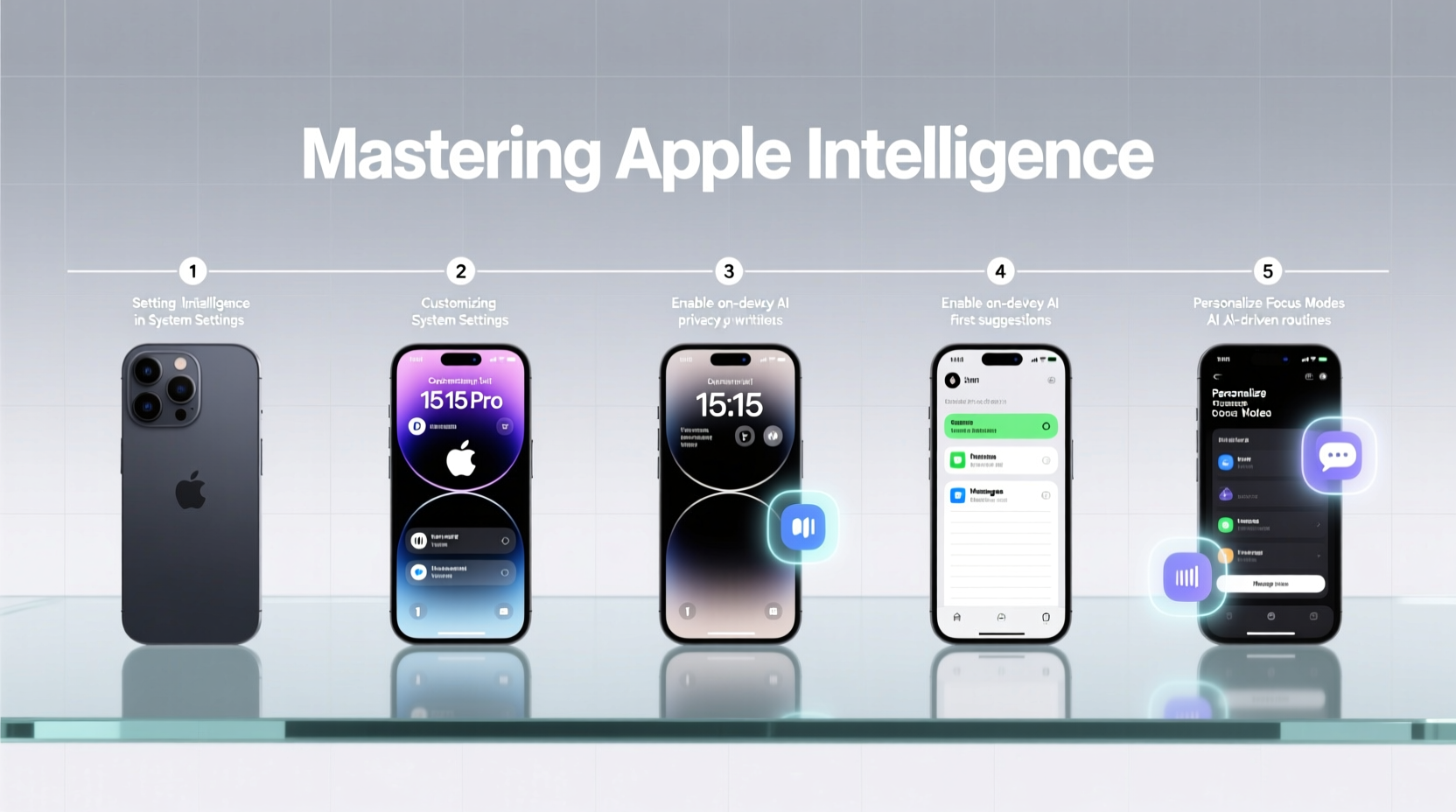
Apple Intelligence combines machine learning with on-device processing to deliver intelligent features across iOS 18, iPadOS 18, and macOS Sequoia. It powers capabilities like natural language writing assistance, photo memory suggestions, proactive reminders, and smart notifications. The system understands context—knowing whether you're at work, commuting, or winding down at home—and adjusts its behavior accordingly.
What sets Apple Intelligence apart is its focus on user intent without sacrificing privacy. When you ask Siri to “Remind me to call Mom when I get home,” the location trigger and contact detail are processed locally. No voice recording or personal data leaves your device unless you explicitly allow it for select cloud-powered tasks (and even then, only after encryption).
“Apple Intelligence isn’t about replacing human decision-making—it’s about reducing friction in everyday digital interactions.” — Dr. Lena Torres, Human-Computer Interaction Researcher at Stanford University
Step-by-Step Setup: Getting Started with Apple Intelligence
Before diving into advanced features, ensure your devices meet the requirements and follow this structured setup process.
- Check Device Compatibility: Apple Intelligence supports iPhone 15 Pro and later, iPad Pro (M1 and newer), iPad Air (M1 and newer), and Macs with M-series chips.
- Update Your Software: Install iOS 18, iPadOS 18, or macOS Sequoia via Settings > General > Software Update.
- Enable Apple Intelligence: Go to Settings > Privacy & Security > Apple Intelligence. Toggle it on.
- Set Up Personal Context: You’ll be prompted to allow access to Messages, Mail, Calendar, and Notes. Grant permissions selectively based on comfort level.
- Train the System: Over the next 48 hours, engage naturally—send messages, schedule events, browse Safari. The system learns patterns silently.
Customizing Apple Intelligence for Maximum Efficiency
Once activated, Apple Intelligence adapts—but you can shape its behavior through deliberate customization.
Adjust Notification Prioritization
In Settings > Notifications > Focus, enable “Smart Delivery.” This delays non-urgent alerts (like newsletters) until downtime ends, while urgent messages (from family or work) come through immediately.
Personalize Writing Tools
In any text field, tap the wand icon to access AI-powered rewriting options: Summarize, Proofread, Simplify, or Expand. To set defaults, go to Settings > Apple Intelligence > Writing Tools and choose preferred tone (e.g., Professional, Friendly, Concise).
Teach Siri Your Preferences
Say, “Siri, I prefer driving directions without tolls,” or “Call me ‘Alex’ in messages.” These preferences are stored locally and used across apps.
| Feature | Customizable Option | Access Path |
|---|---|---|
| Notification Summary | Apps included, delivery time | Settings > Notifications > Scheduled Summary |
| Mail Priority Inbox | Senders prioritized, frequency of updates | Mail > View > Priority Only |
| Photo Memories | Themes, music style, people included | Photos > Settings > Memories |
| Siri Voice Recognition | Voice sensitivity, wake phrase | Settings > Siri > Listen for “Hey Siri” |
Real-World Application: A Day Powered by Apple Intelligence
Consider Maya, a freelance designer balancing client calls, deadlines, and family time. Each morning, her iPhone delivers a concise Notification Summary at 8:30 AM, filtering out social media noise but highlighting an overdue invoice reminder from her calendar and a message from her son’s school about a canceled event. During her commute, she asks Siri, “How do I say ‘thank you for your prompt feedback’ more professionally?”—using the AI writing tool to refine her email draft.
Late afternoon, while editing photos from a weekend trip, Apple Intelligence suggests creating a memory titled “Lake Weekend” with upbeat acoustic music and tags her partner automatically. She approves with one tap. Later, as she starts typing “Can we reschedule…” in Messages, the system predicts the rest: “...our meeting to Thursday? I have a conflict tomorrow,” saving her keystrokes.
This seamless integration doesn’t eliminate effort—it redistributes it, freeing mental space for creative work and personal connection.
Avoiding Common Pitfalls: Do’s and Don’ts
- Do review app permissions monthly to maintain control over data access.
- Don’t disable on-device intelligence if relying on real-time suggestions; cloud-only mode reduces responsiveness.
- Do use Focus modes to train Apple Intelligence on context (e.g., Work vs. Personal).
- Don’t expect perfection from day one—allow two weeks for accurate behavioral modeling.
- Do explore third-party app integrations; many note-taking and productivity apps now support Apple Intelligence extensions.
FAQ: Frequently Asked Questions About Apple Intelligence
Does Apple Intelligence work offline?
Yes, core functions like Siri commands, writing tools, and notification management operate entirely on-device and do not require internet connectivity. Advanced features such as document summarization may use Private Cloud Compute when online, but only with user permission.
Can I turn off Apple Intelligence for specific apps?
Absolutely. Navigate to Settings > Apple Intelligence > App Integration, then toggle individual apps on or off. Disabling access for sensitive apps (e.g., banking or health) is recommended for added privacy.
Is my data sold or shared with advertisers?
No. Apple has a strict policy against selling user data. All processing is anonymized and decentralized. Even when using cloud-based components, your identity is never linked to queries.
Conclusion: Take Control of Your Digital Experience
Mastering Apple Intelligence isn’t about letting AI take over—it’s about teaching your devices to understand you better. With thoughtful setup and ongoing customization, you create a responsive, intuitive ecosystem that anticipates needs rather than demanding attention. Whether streamlining communication, managing time, or preserving memories, the true power lies in subtle, consistent support that fades into the background until needed.
Start today: update your device, walk through the setup, and make one customization—perhaps adjusting your notification summary time or refining your writing tone. Small actions compound into transformative efficiency. As technology becomes more personal, being intentional about how it serves you is the ultimate form of digital mastery.




 浙公网安备
33010002000092号
浙公网安备
33010002000092号 浙B2-20120091-4
Comments
No comments yet. Why don't you start the discussion?