
Elven fashion has long captivated imaginations—flowing silks, delicate embroidery, and garments that seem to move like living forest vines. But true mastery lies in *articulated* elf clothing: pieces designed to enhance movement, follow natural body lines, and adapt to dynamic poses. Whether you're crafting for cosplay, theatrical performance, or high-concept fashion, articulated construction transforms static fabric into wearable magic.
This guide walks through every phase of designing and sewing articulated elf garments—from concept sketches to final stitching. By combining traditional tailoring with innovative pattern engineering, you can create ethereal wearables that are as functional as they are fantastical.
Understanding Articulated Design Principles
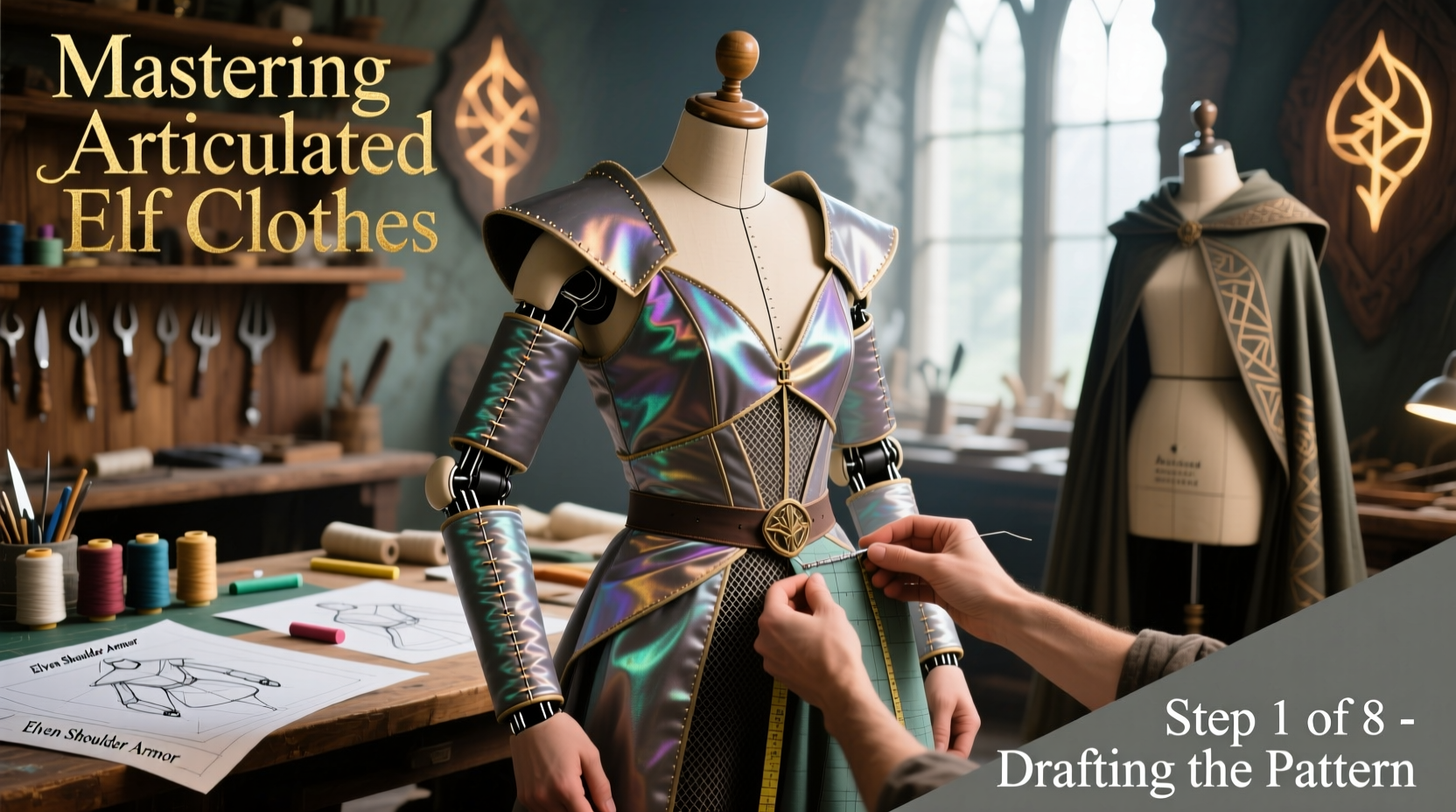
Articulated clothing mimics the way limbs bend and shift. Unlike standard garments that restrict motion at joints, articulated designs incorporate strategic seams, gussets, darts, and stretch zones precisely where the body moves. In elven attire, this means sleeves that extend gracefully when arms rise, hoods that pivot with head turns, and cloaks that drape naturally during motion.
The foundation of articulation is anatomical mapping. Study how shoulders rotate, elbows flex, and knees bend. Then translate those movements into garment structure. For example, a typical sleeve might pull at the shoulder when raised; an articulated version uses an extra panel under the arm (a gusset) or curved seam lines along the bicep to allow expansion.
“Articulation isn’t just about mobility—it’s about preserving aesthetic integrity in motion.” — Lila Montrose, Costume Designer for Fantasy Theatre Ensemble
Selecting Materials and Tools
Elf clothing demands fabrics that balance elegance with elasticity. Silk charmeuse, lightweight brocade, and bamboo blends offer fluid drape while maintaining structural dignity. For hidden articulation zones, integrate performance textiles like 4-way stretch mesh or spandex-lined linings.
Choose threads based on fabric weight—silk thread for delicate silks, polyester for durability in high-stress areas. Use ballpoint needles for knits and microtex for tightly woven fabrics to prevent snags.
| Fabric Type | Best For | Articulation Use |
|---|---|---|
| Silk Habotai | Lining, flowing skirts | Lightweight underlayers |
| Stretch Velvet | Capes, fitted bodices | Dynamic shaping panels |
| Nylon-Spandex Blend | Hidden support zones | Underarm gussets, knee bends |
| Linen-Cotton Mix | Tunic bases, peasant sleeves | Stable foundation layers |
Essential Tools Checklist
- Adjustable dress form (preferably with articulated arms)
- French curves and hip curves for organic seam drafting
- Rotary cutter and self-healing mat
- Washable fabric marker
- Elastic tape or bias binding for stress relief
- Walking foot for sewing slippery fabrics
Step-by-Step Guide to Constructing Articulated Elf Sleeves
Sleeves are often the first place where poor articulation becomes obvious. A well-designed elf sleeve should allow full overhead reach without distorting the cuff or shoulder seam. Follow this process to build one:
- Take precise measurements: Arm length, bicep circumference, forearm width, and wrist size. Also measure from neck base to fingertip with arm raised at 90 degrees.
- Create a base sleeve pattern: Draft a standard set-in sleeve on paper, then extend the cap height slightly for added mobility.
- Add a diamond gusset: Cut a 3” x 3” diamond-shaped piece to insert under the arm. This allows lateral expansion without altering the outer silhouette.
- Incorporate elbow darts: Add two soft darts above and below the elbow line that converge toward the back seam. These compress when bending, preventing bunching.
- Use curved seam lines: Instead of straight side seams, curve them inward at the bicep and outward at the forearm to match muscle movement.
- Test with muslin: Sew a prototype, wear it, and mark any pulling or excess fabric. Adjust pattern accordingly.
- Finish with bias binding: Apply bias tape along inner seams to reduce friction and increase longevity.
Designing Elven Hoods and Cloaks with Motion Integrity
A cloak may look enchanting hanging still, but it must behave beautifully in motion. The key is balancing weight distribution and pivot points. Start with a hood pattern shaped to the wearer’s head, then extend the back capelet into a weighted fall that anchors near the shoulder blades.
To articulate the hood:
- Insert a horizontal dart across the crown to allow nodding motions.
- Line the front edges with thin wire encased in silk piping so the brim holds shape yet bends gently.
- Attach the hood via concealed snaps along a curved neckline seam, allowing slight rotation.
For cloaks, avoid single-center closures. Instead, use dual clasps offset from the midline—one at the right shoulder, another at the left chest. This creates asymmetrical drape and prevents gaping when moving.
Real Example: The Wind Dancer Performance Coat
A performer in a seasonal fantasy show needed a floor-length elven coat that wouldn’t tangle during spins and leaps. The designer used a hybrid approach: a rigid yoke across the upper back maintained posture, while segmented panels from armpit to hem allowed independent leg movement. Hidden elastic channels at the hips let the lower skirt expand during jumps. After three weeks of adjustments, the final piece enabled full aerial choreography without compromising its woodland aesthetic.
Common Pitfalls and How to Avoid Them
Even experienced sewers stumble when venturing into articulated design. Here are frequent errors and their solutions:
| Pitfall | Why It Happens | Solution |
|---|---|---|
| Restricted shoulder movement | Sleeve cap too tight or shoulder seam too far back | Redraft sleeve with deeper armhole and forward shoulder alignment |
| Hood tilts forward during motion | Center of gravity too low | Add light stiffening wire at brow line; shorten front edge |
| Excessive fabric bunching at elbows | No compression allowance | Introduce elbow darts or pleats facing downward |
| Asymmetry after sewing | Uneven grain alignment | Always align patterns with fabric grain; pin meticulously |
“The difference between costume and craft is in the details. If it doesn’t move like magic, it won’t feel like magic.” — Rafael Voss, Wearable Art Curator
FAQ
Can I make articulated clothes without a serger?
Yes. While a serger helps finish edges quickly, you can achieve clean seams using French seams for lightweight fabrics or zigzag stitches followed by pressing open. A walking foot prevents layer slippage on tricky materials.
How do I scale these designs for different body types?
Begin with accurate measurements and adjust proportions accordingly. Broad shoulders may need wider gussets; longer torsos benefit from extended yokes. Always fit-test on a live model or adjustable mannequin before finalizing.
Are there historical precedents for articulated clothing?
Absolutely. Medieval gambesons, samurai armor underlayers, and 18th-century riding coats all used articulation principles. Studying these can inspire functional elegance in fantasy designs.
Final Thoughts and Call to Creation
Mastering articulated elf clothes is not merely technical—it’s poetic engineering. Each seam, dart, and fabric choice contributes to a garment that breathes, bends, and enchants. You’re not just sewing fabric; you’re weaving motion into myth.
Start small: modify a simple tunic with a gusseted sleeve. Test it, refine it, then expand to full ensembles. Document your progress, share your patterns, and push the boundaries of what wearable art can do.




 浙公网安备
33010002000092号
浙公网安备
33010002000092号 浙B2-20120091-4
Comments
No comments yet. Why don't you start the discussion?