
Basketball is more than just running up and down the court—true excellence comes from mastering the foundational skills that form the backbone of every elite player’s game. Whether you're a beginner learning to dribble or an intermediate player aiming to refine your shooting mechanics, consistent focus on fundamentals separates good players from great ones. This guide breaks down the essential components of basketball mastery into actionable steps, supported by expert insights, structured practice methods, and real-world application.
The Foundation: Mindset and Consistency
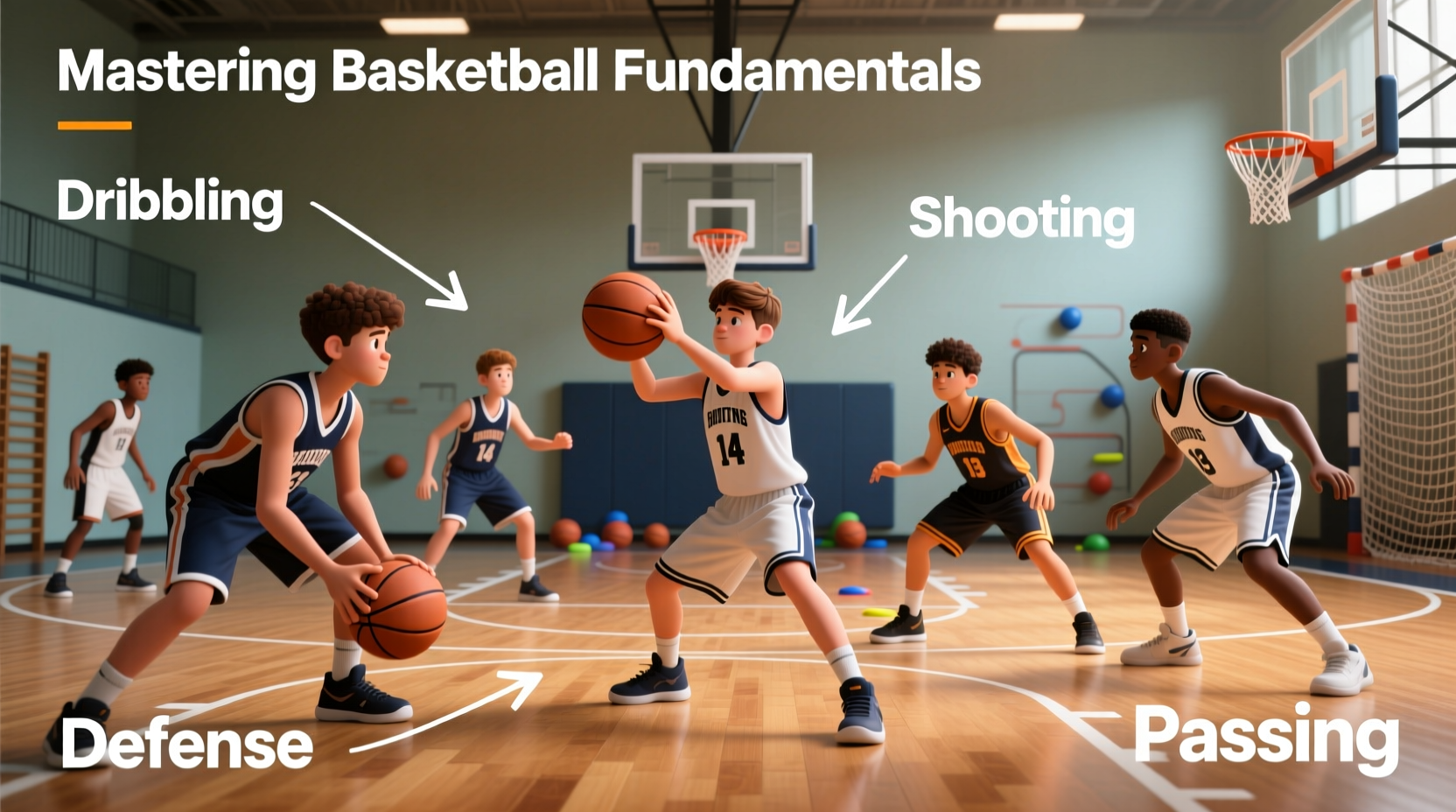
Before touching a ball, the most important skill a player can develop is discipline. Great basketball players aren’t born—they’re made through deliberate, focused repetition. The journey begins with cultivating a growth mindset: embracing mistakes as part of progress, staying committed during setbacks, and valuing effort over immediate results.
Legendary coach John Wooden once said:
“Success is never final, failure is never fatal. It's courage that counts.” — John Wooden, 10-time NCAA Championship Coach
This philosophy underpins long-term development. Progress in basketball isn’t linear. Some days will feel stagnant. But daily engagement—even 30 minutes of focused work—builds muscle memory and confidence over time.
Step-by-Step Skill Development Plan
Mastery comes not from random practice but from a structured progression. Follow this six-phase timeline to build a complete foundation over 12 weeks.
- Weeks 1–2: Ball Handling & Body Control – Focus on stationary dribbling, hand switches, and coordination.
- Weeks 3–4: Passing & Court Awareness – Learn chest, bounce, and overhead passes while developing spatial awareness.
- Weeks 5–6: Shooting Mechanics – Break down stance, grip, release, and follow-through using form shooting drills.
- Weeks 7–8: Defensive Stance & Footwork – Practice slides, closeouts, and positioning without gambling.
- Weeks 9–10: Offensive Moves & Finishing – Add crossovers, euro steps, and layup variations under control.
- Weeks 11–12: Game Simulation & Decision Making – Combine skills in 1-on-1, 2-on-2 scenarios with increasing pressure.
This phased approach ensures no critical element is skipped. Rushing ahead leads to bad habits; patience builds precision.
Core Fundamentals Breakdown
Dribbling: Control Over Flash
Effective dribbling isn’t about tricks—it’s about maintaining control while keeping your head up. Use finger pads (not palms), stay low in an athletic stance, and alternate hands daily.
- Stationary pound dribbles (each hand, 2 sets of 1 minute)
- Two-ball dribbling (improves coordination)
- Figure-eight cone drills (builds agility and control)
Shooting: Repetition with Purpose
Great shooters don’t just shoot—they shoot correctly. Start close to the basket and prioritize form before range.
Key elements of sound shooting:
- Balanced stance: Feet shoulder-width apart, shooting foot slightly ahead
- Ball placement: Elbow under the ball, guide hand on the side
- Release: Wrist snap, fingertip finish (“gooseneck” follow-through)
Passing: Precision and Timing
A player who passes well elevates their entire team. Avoid telegraphing passes and lead receivers toward open space.
| Pass Type | Best Used When | Common Mistake |
|---|---|---|
| Chest Pass | Quick outlet or entry pass | Not stepping into it = weak delivery |
| Bounce Pass | Defender has arms up | Bouncing too far from receiver |
| Overhead Pass | Skipping across the court | Predictable trajectory |
| Baseball Pass | Long transition opportunities | High turnover risk if overused |
Real Example: From Benchwarmer to Starter
Jalen, a high school sophomore, averaged only 3 points per game in his first season. Frustrated, he committed to a 90-day fundamentals challenge. Each day after school, he spent 45 minutes on:
- 200 makes from five spots around the key (form shooting)
- 10 minutes of full-court dribbling with both hands
- Defensive slide ladder drill for endurance
By summer league, coaches noticed sharper cuts, tighter handles, and confident drives. In his junior year, Jalen started all season, averaging 14 points and 5 assists. His transformation wasn’t due to genetics—it was consistency with basics.
“Skill development is invisible until it isn’t. Then everyone wonders how you improved so fast.” — Coach Maria Tran, High School Varsity Head Coach
Essential Practice Checklist
To ensure balanced growth, use this checklist weekly. Mark off completed items and revisit weak areas.
- ✅ 500+ controlled dribbles (both hands, various surfaces)
- ✅ 200 made shots (emphasize form, not volume alone)
- ✅ 50 catch-and-shoot reps (simulate game rhythm)
- ✅ 10 minutes of defensive sliding and closeout drills
- ✅ 30 minutes of live action (pickup games, 1-on-1, scrimmages)
- ✅ Film review: Watch 10 minutes of pro play, focusing on movement without the ball
- ✅ Record one skill session monthly to track mechanical progress
Common Mistakes and How to Fix Them
Even dedicated players fall into traps that slow development. Recognizing these early prevents years of wasted effort.
| Mistake | Why It Hurts | Solution |
|---|---|---|
| Only practicing when playing well | Inconsistent skill retention | Train regardless of game performance |
| Ignoring weak hand | Limited offensive options | Dedicate 40% of ball work to off-hand |
| Shooting immediately after catching | Poor balance and timing | Practice “catch, set, rise” rhythm |
| Skipping warm-up and cool-down | Increased injury risk | Include dynamic stretches and mobility work |
Frequently Asked Questions
How many hours a day should I practice?
Quality trumps quantity. 45–90 minutes of focused, intentional practice daily is more effective than three unfocused hours. Include rest days to allow muscle recovery and mental reset.
Can I improve without a coach?
Yes—but you must be self-aware. Use mirrors, record video, and compare your mechanics to proven models (e.g., Steve Nash’s shooting form). Seek feedback whenever possible, even from experienced peers.
When should I start strength training?
Begin bodyweight exercises (push-ups, lunges, planks) at any age. Weight training can safely start around ages 14–16 with proper supervision. Focus on form, not load, to build athleticism and prevent injury.
Conclusion: Build Your Legacy One Rep at a Time
There are no shortcuts to becoming a great basketball player. Talent opens doors, but fundamentals keep them open. Every crossover, every free throw, every defensive stop begins with a choice—to show up, to focus, to repeat. The best players aren’t always the most gifted; they’re the ones who respect the process.




 浙公网安备
33010002000092号
浙公网安备
33010002000092号 浙B2-20120091-4
Comments
No comments yet. Why don't you start the discussion?