
Wireless audio has transformed how we experience sound at home, on the go, or during gatherings. At the heart of this convenience is Bluetooth technology—a powerful yet often misunderstood tool. The L20 wireless speaker delivers crisp, dynamic audio, but its full potential is unlocked only when paired correctly. Whether you're new to Bluetooth or have struggled with inconsistent connections in the past, this guide walks you through every stage of pairing your L20 speaker with confidence and ease.
Understanding Bluetooth: The Foundation of Wireless Audio
Before diving into device-specific steps, it's essential to understand what Bluetooth actually does. It’s a short-range wireless communication protocol that allows devices like smartphones, tablets, laptops, and speakers to exchange data over distances of up to 30 feet (10 meters), depending on the environment and version used.
The L20 wireless speaker typically uses Bluetooth 5.0 or higher, offering improved range, faster connection speeds, and better resistance to interference compared to older versions. This means fewer dropouts and quicker reconnections when moving between rooms or using multiple devices.
Bluetooth operates on the 2.4 GHz frequency band, which is shared with Wi-Fi routers, microwaves, and other electronics. While modern devices are designed to minimize interference, physical obstructions like walls or metal objects can still weaken signals. Keeping your speaker within line of sight and minimizing competing devices nearby enhances performance.
“Bluetooth isn’t magic—it’s engineering. Knowing your device’s capabilities helps avoid frustration.” — Dr. Marcus Lin, Wireless Technology Researcher at MIT Media Lab
Step-by-Step Guide to Pairing Your L20 Wireless Speaker
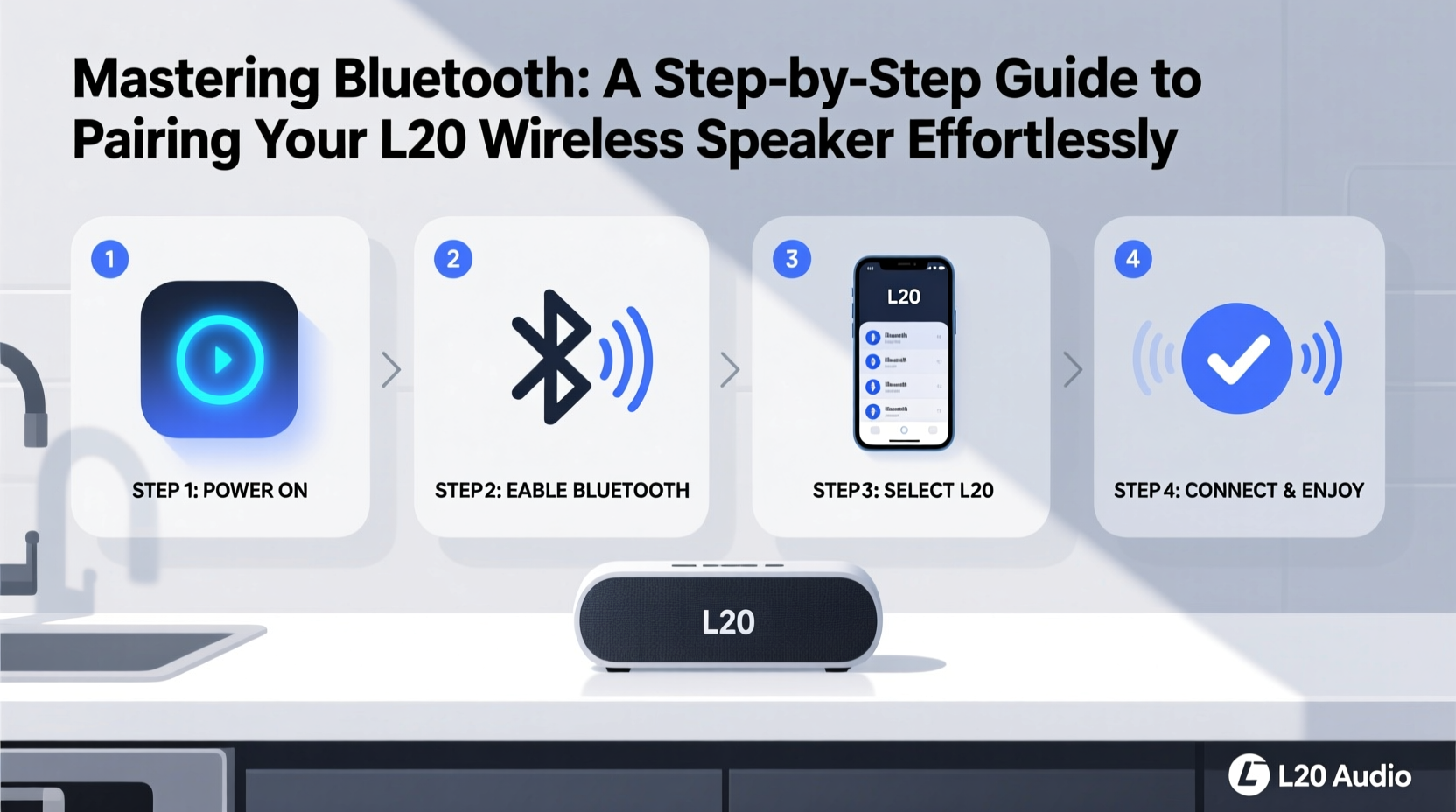
Follow these clear, tested steps to establish a reliable connection between your L20 speaker and any compatible source device. This process works for iOS, Android, Windows, and macOS systems.
- Power On the L20 Speaker: Press and hold the power button until the LED indicator flashes blue and red alternately. This signals that the speaker is powered on and in pairing mode.
- Enable Bluetooth on Your Device: Go to Settings > Bluetooth and ensure it’s turned on. For smartphones and tablets, swipe down from the top of the screen to access the quick settings panel.
- Initiate Pairing Mode (if not automatic): If the lights aren’t flashing after powering on, press and hold the “Play/Pause” or dedicated Bluetooth button for 3–5 seconds until the dual-color blinking begins.
- Select the L20 from Available Devices: In your device’s Bluetooth menu, look for “L20” or “L20 Speaker” under “Available Devices.” Tap to connect.
- Confirm Connection: Once connected, the LED will turn solid blue. You may hear a confirmation tone from the speaker.
- Test Audio Output: Play a song, podcast, or video to verify sound is coming through the speaker and not your device’s internal speakers.
Common Issues and How to Resolve Them
Even with careful setup, occasional hiccups occur. Below are frequent problems users encounter—and their solutions.
| Issue | Possible Cause | Solution |
|---|---|---|
| L20 not showing in device list | Not in pairing mode or out of range | Restart speaker; ensure LED is blinking blue/red |
| Connection drops frequently | Signal interference or distance | Reduce obstacles; keep within 30 feet; disable unused Bluetooth devices |
| No sound after pairing | Audio output not routed to speaker | Check device’s audio settings; select L20 as output |
| Speaker won’t charge | Faulty cable or power source | Use original charging cable; test different outlet or USB port |
If none of these resolve the issue, perform a factory reset by pressing and holding both volume up and down buttons simultaneously for 10 seconds. The LED will flash rapidly, indicating reset completion. Afterward, repeat the pairing process.
Best Practices for Long-Term Bluetooth Performance
To maintain seamless connectivity and extend the life of your L20 speaker, adopt these habits:
- Limit Active Paired Devices: The L20 can remember up to eight previously paired devices, but having too many active connections can cause switching conflicts. Remove old or unused devices via your phone’s Bluetooth settings.
- Update Firmware Regularly: Check the manufacturer’s website or app (if available) for firmware updates that improve stability and compatibility.
- Avoid Overcharging: Unplug the speaker once fully charged to preserve battery health. Lithium-ion batteries degrade faster when kept at 100% charge for extended periods.
- Store Properly When Not in Use: Keep the speaker in a dry, room-temperature environment. Extreme heat or cold affects both battery and Bluetooth module efficiency.
Real-World Example: Sarah’s Backyard Setup
Sarah recently purchased an L20 speaker for her weekend backyard barbecues. Initially frustrated because her iPhone wouldn’t detect the speaker, she followed the steps above methodically. She realized she had skipped initiating pairing mode manually—her speaker powered on but didn’t enter discovery mode automatically.
After holding the Bluetooth button until the lights blinked, her phone detected “L20” immediately. She connected successfully and even paired her husband’s Android tablet afterward. Now, they switch between devices seamlessly, playing music throughout the afternoon without interruptions. A simple misunderstanding resolved with precise knowledge made all the difference.
Frequently Asked Questions
Can I pair two L20 speakers together for stereo sound?
Yes, if your model supports TWS (True Wireless Stereo). Enable pairing mode on both speakers—one will act as the master, the other as the slave. Then connect the master unit to your device. Both will play synchronized audio in left/right configuration.
How do I know when my L20 battery is low?
The LED will flash red when the battery drops below 15%. Most models also emit a voice alert saying “Battery low” or a warning tone every few minutes until charged.
Why does my speaker disconnect when I lock my phone?
This usually happens due to aggressive power-saving settings. On Android, disable battery optimization for your Bluetooth service. On iOS, ensure Background App Refresh is enabled for Music or relevant apps.
Final Checklist Before You Begin
Before attempting to pair your L20 speaker, run through this quick checklist to ensure success:
- ✅ Charge the speaker to at least 50%
- ✅ Confirm Bluetooth is enabled on your device
- ✅ Ensure no other speakers or headphones are actively connected
- ✅ Place the speaker within 3 feet of your device during initial pairing
- ✅ Verify the LED is blinking blue and red (pairing mode)
- ✅ Disable airplane mode and Wi-Fi if experiencing interference
Conclusion: Take Control of Your Listening Experience
Mastering Bluetooth isn't about technical expertise—it's about understanding the rhythm between your devices. With the right approach, pairing your L20 wireless speaker becomes second nature. From backyard parties to quiet evenings indoors, consistent, high-quality sound should never be interrupted by avoidable glitches.
You now have everything needed: a clear procedure, troubleshooting insights, real-world context, and best practices. Apply this knowledge today, enjoy uninterrupted audio, and share your experience with others who might still be fumbling with failed connections.




 浙公网安备
33010002000092号
浙公网安备
33010002000092号 浙B2-20120091-4
Comments
No comments yet. Why don't you start the discussion?