
A brooch is more than a decorative accent—it’s a statement of personality, elegance, and intention. When properly coordinated, it can elevate even the simplest ensemble into something memorable. Yet, one of the most overlooked aspects of brooch styling is color harmony. Choosing a brooch that complements rather than clashes with your outfit requires an understanding of color theory, fabric tone, and occasion appropriateness. Whether you're dressing for a formal event or adding flair to a casual look, mastering brooch color coordination ensures your accessory enhances, not distracts from, your overall aesthetic.
The Role of Color in Brooch Styling
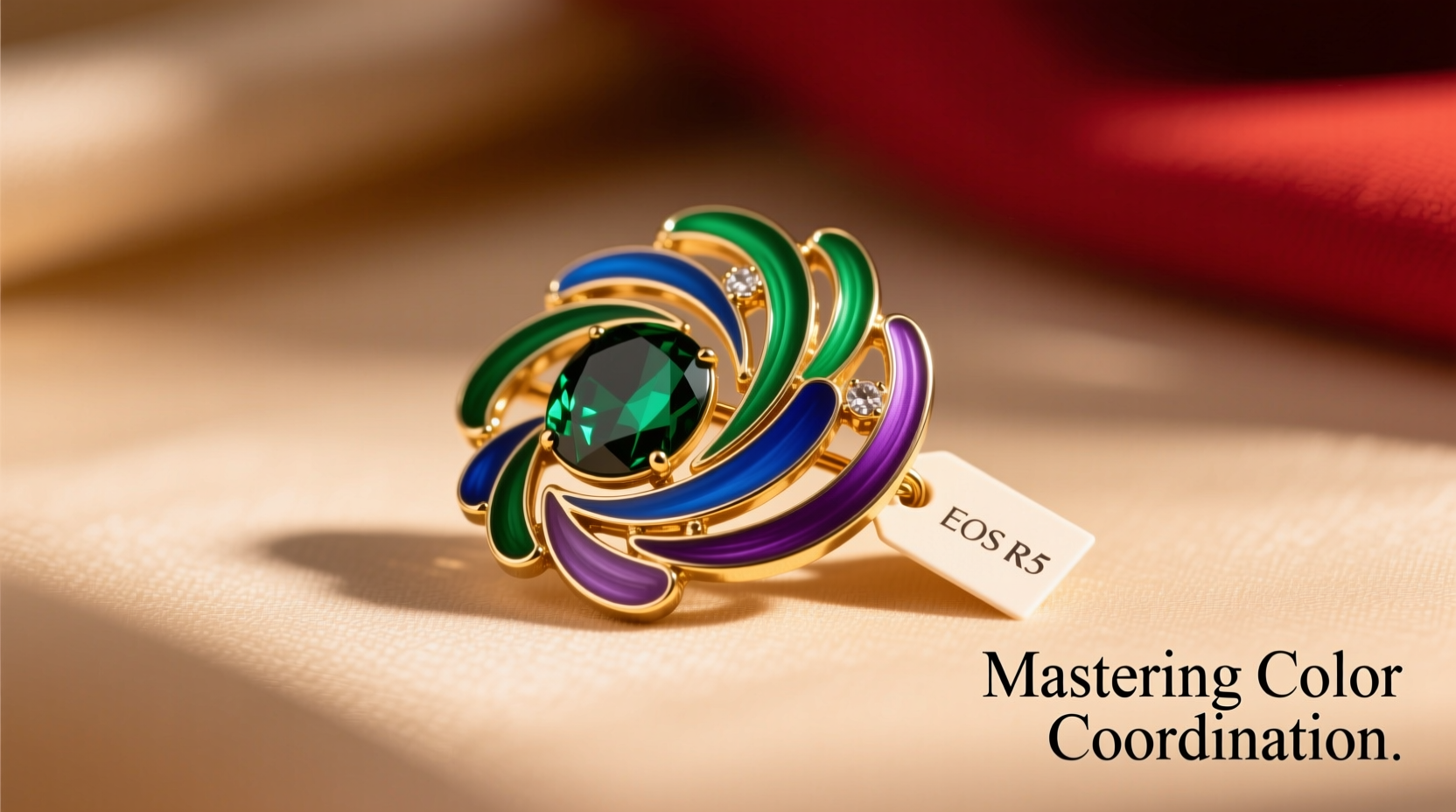
Color sets the mood of any outfit. A vibrant red evokes confidence, while soft lavender suggests subtlety and grace. The same principles apply to brooches. Their color interacts with your clothing, skin tone, and surroundings. Unlike larger accessories like scarves or handbags, brooches are focal points—often placed near the face or heart—so their color must be intentional.
Consider the psychological impact of hues: warm tones like coral, gold, and terracotta radiate energy and warmth, making them ideal for daytime events or social gatherings. Cool tones such as sapphire, emerald, or silver-gray convey calmness and sophistication, perfect for professional or evening settings. Neutral-toned brooches—ivory, taupe, or gunmetal—offer versatility across seasons and palettes.
“Color coordination isn’t about matching exactly—it’s about creating balance. A brooch should converse with your outfit, not shout over it.” — Lila Monroe, Fashion Stylist & Accessory Consultant
Understanding Your Outfit's Base Hue
Before selecting a brooch, identify the dominant color family of your outfit: warm (reds, oranges, yellows), cool (blues, purples, greens), or neutral (black, white, gray, beige). This classification guides which brooch colors will harmonize best.
For example, a navy blue dress belongs to the cool spectrum. Pairing it with a brooch in deep amethyst or icy silver creates tonal unity. Conversely, placing a bright tangerine brooch on the same dress introduces contrast, drawing attention and injecting vibrancy. Both approaches work—but serve different purposes.
Complementary vs. Analogous Color Schemes
In color theory, complementary colors sit opposite each other on the color wheel (e.g., purple and yellow), creating high contrast and visual interest. Use this pairing when you want your brooch to stand out boldly. However, ensure one color dominates the outfit while the other appears subtly in the accessory to avoid imbalance.
Analogous schemes use adjacent colors (e.g., blue, blue-green, green) for a cohesive, soothing effect. These are ideal for formal occasions where subtlety is key. A seafoam green brooch on a teal blouse blends seamlessly, enhancing elegance without overpowering.
Matching Metals and Gem Tones to Fabric
The material and finish of a brooch—gold, silver, rose gold, enamel, or gemstone—play a critical role in color coordination. Metallic finishes interact differently with various fabrics and lighting conditions.
| Fabric Type | Suitable Brooch Metals | Colors That Enhance |
|---|---|---|
| Wool, Tweed | Antique gold, brass, oxidized silver | Rust, forest green, burgundy |
| Silk, Satin | Polished silver, platinum, rhodium | Icy blue, pearl white, lavender |
| Cotton, Linen | Matte gold, copper, enamel accents | Terracotta, mustard, sky blue |
| Velvet, Brocade | Rose gold, vintage silver, jewel tones | Emerald, ruby, sapphire |
For instance, a silk blouse in champagne pairs beautifully with a rose gold brooch featuring pale pink crystals. The warmth of the metal echoes the fabric’s undertone, while the gemstones add dimension without clashing.
Step-by-Step Guide to Perfect Brooch Coordination
Follow this five-step process to ensure your brooch enhances any outfit:
- Assess the outfit’s dominant color and texture. Is it a solid black wool coat or a patterned floral dress? Identify the base and secondary hues.
- Determine the occasion and desired impact. Do you want subtle refinement or bold emphasis?
- Select a color strategy: complementary for contrast, analogous for harmony, or monochromatic for sophistication.
- Test metallic compatibility. Match warm metals (gold, copper) with warm outfits; cool metals (silver, platinum) with cool tones.
- Position and evaluate. Place the brooch on the garment and view it in full-length mirror under natural light. Adjust if needed.
Real Example: The Office to Evening Transition
Maria wears a charcoal gray tailored blazer to work. During the day, she accessorizes minimally. For an after-work dinner, she adds a brooch to transform her look. She selects a deep plum enamel piece with silver detailing. Charcoal is a cool-neutral, and plum lies adjacent to it on the color wheel—making this an analogous, elegant pairing. The silver complements her watch and glasses, unifying her accessories. The result? A polished transition from professional to refined evening wear without changing clothes.
Common Mistakes and How to Avoid Them
- Over-matching: Wearing a red brooch with a red dress can look costumey unless there’s variation in shade or texture.
- Ignoring undertones: A cool silver brooch may clash with a warm camel coat due to conflicting undertones.
- Neglecting skin tone: Bright yellow gold can wash out cool skin tones; opt for white or rose gold instead.
- Clustering too many colors: In a patterned outfit, choose a brooch that pulls one accent color rather than introducing a new one.
Checklist: Brooch Color Coordination Quick Reference
- ✅ Identify the main color family of your outfit (warm, cool, neutral)
- ✅ Decide whether you want harmony (analogous) or contrast (complementary)
- ✅ Match metal tones to fabric and skin undertones
- ✅ Test the brooch near your face in natural light
- ✅ Ensure the brooch doesn’t compete with other accessories
- ✅ Consider the formality of the event when choosing color intensity
FAQ
Can I wear a colorful brooch with a black outfit?
Absolutely. Black is a neutral canvas that allows any color to shine. A ruby red or cobalt blue brooch adds striking contrast. For a softer look, try pearls with pastel enamel accents.
What if my outfit has multiple colors?
Select a brooch that matches one of the secondary or accent colors in the pattern. This creates cohesion without overwhelming the eye. Avoid introducing a completely new color unless it’s very subtle.
Are neutral-colored brooches boring?
Not at all. Ivory, gunmetal, or crystal-clear brooches offer timeless elegance. They work across seasons and pair well with both bold and muted outfits, making them essential staples.
Conclusion: Elevate Every Ensemble with Intentional Color Choices
Brooches are small in size but immense in impact. By mastering color coordination, you turn a simple pin into a deliberate design element that reflects thoughtfulness and personal style. Whether you’re accentuating a winter coat or refining a summer shawl, the right brooch—chosen with attention to hue, tone, and context—can complete your look with grace.




 浙公网安备
33010002000092号
浙公网安备
33010002000092号 浙B2-20120091-4
Comments
No comments yet. Why don't you start the discussion?