
A wristwatch is more than a tool for telling time—it’s a silent ambassador of your professionalism, attention to detail, and personal brand. In the world of business, subtle cues matter. The right watch, worn correctly, can project competence, punctuality, and refinement without saying a word. Yet many professionals overlook the nuances of business watch etiquette, either wearing inappropriate styles or failing to align their timepiece with their role, environment, and wardrobe.
This guide breaks down the essential principles of selecting and wearing a business watch with purpose. From case size and material to strap selection and occasion-based pairing, you’ll learn how to make your watch work for you—quietly but powerfully.
The Role of a Watch in Professional Perception
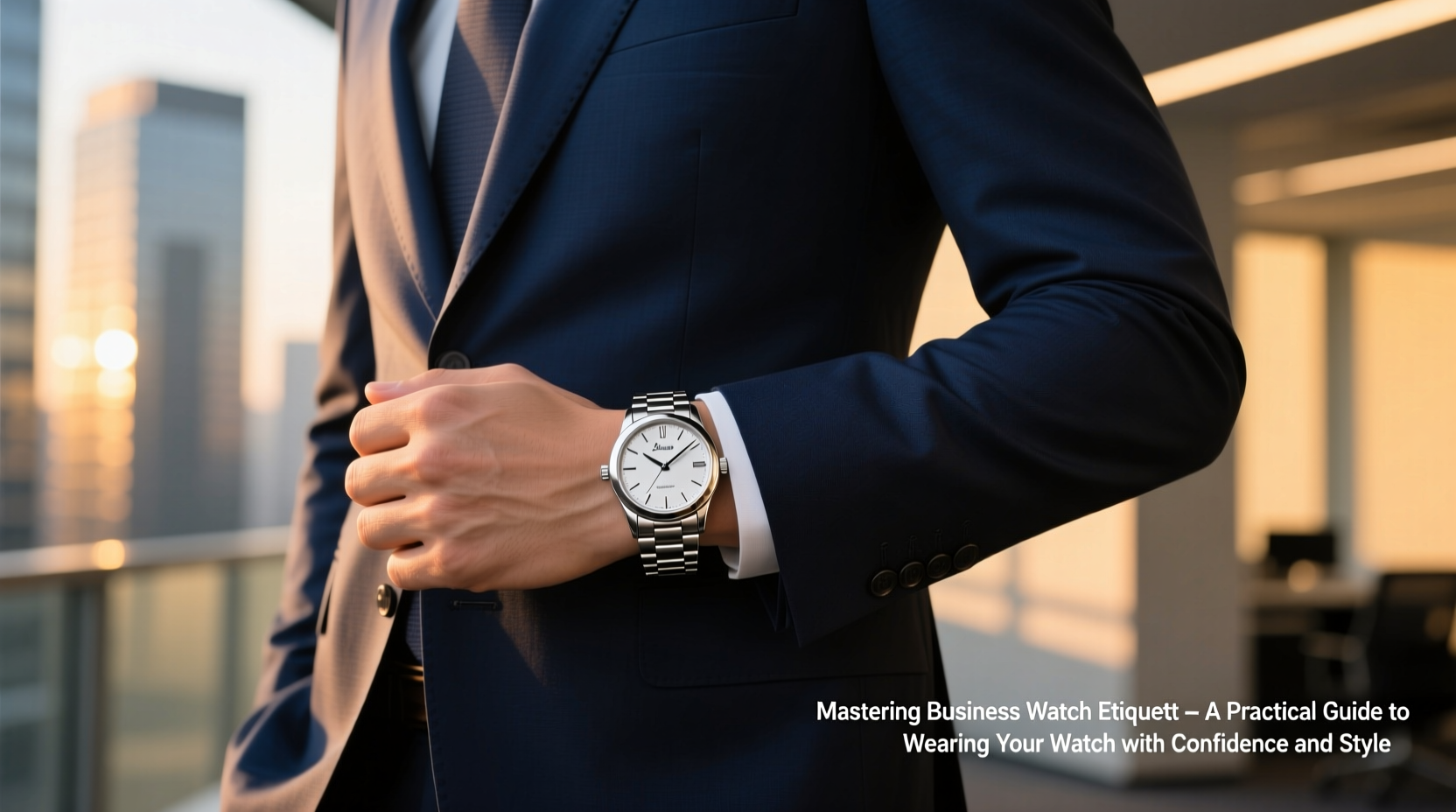
In boardrooms and client meetings, first impressions are shaped by micro-decisions: posture, handshake, grooming—and accessories. A well-chosen watch signals respect for time, an appreciation for craftsmanship, and a commitment to presentation. As fashion historian Dr. Lydia Chen notes:
“Timepieces have long served as markers of status and discipline. In modern business, they function as both functional tools and symbols of reliability.” — Dr. Lydia Chen, Fashion & Culture Historian
Unlike flashy jewelry or loud branding, a business watch should enhance, not distract. It should complement your attire and demeanor, reinforcing a sense of understated authority. Whether you're negotiating a contract or leading a team meeting, your watch subtly reinforces that you are precise, prepared, and polished.
Selecting the Right Business Watch: Key Criteria
Not all watches belong in a professional setting. The ideal business watch balances form, function, and appropriateness. Consider these factors when choosing one:
- Case Diameter: 36–40mm is optimal for most men; 32–36mm for women. Oversized cases (42mm+) lean toward sport or casual use.
- Thickness: Thinner profiles (under 10mm) suggest elegance and fit neatly under shirt cuffs.
- Dial Simplicity: Stick to clean dials with minimal complications—avoid chronographs, digital displays, or excessive text.
- Material: Stainless steel is standard. Precious metals (e.g., rose gold) are acceptable in conservative tones for senior executives.
- Strap Options: Leather (black, dark brown), metal bracelets (Oyster, Jubilee), or NATO straps in subdued colors.
Matching Your Watch to the Work Environment
Business culture varies widely—from finance firms where tradition reigns to tech startups embracing casual norms. Your watch should reflect the tone of your workplace.
| Industry | Recommended Style | Examples |
|---|---|---|
| Finance, Law, Consulting | Classic dress watch: thin, leather strap, white/silver dial | Patek Philippe Calatrava, Jaeger LeCoultre Master Control |
| Tech, Creative Agencies | Minimalist or heritage-inspired with modern details | Omega Seamaster Aqua Terra, Nomos Tangente |
| Corporate (General Office) | Stainless steel bracelet or black leather strap | Rolex Datejust, Tissot Le Locle |
| Field-Based or Active Roles | Durable, water-resistant with legible dial | Longines HydroConquest, Hamilton Khaki Field Auto |
In conservative sectors, avoid bright colors, rubber straps, or smartwatches during formal engagements. Even Apple Watches should be paired with leather bands and classic watch faces in high-stakes settings.
Wearing Your Watch Correctly: Practical Etiquette
How you wear your watch matters as much as what you wear. Follow these guidelines to ensure your timepiece enhances rather than undermines your professionalism.
- Position on the Wrist: Wear the watch slightly above the wrist bone, allowing it to rest comfortably without sliding. It should sit just under the shirt cuff when arms are at your sides.
- Cuff Clearance: Ensure your shirt sleeve covers about 1/8 to 1/4 inch of the watch face. Too much exposure looks sloppy; no visibility defeats the purpose.
- Hand Placement: Adjust the band so the watch doesn’t rotate or flip during movement. A secure fit prevents distraction during handshakes or presentations.
- Daytime vs. Evening: For after-hours events, consider upgrading to a more refined piece—perhaps with a Milanese mesh band or precious metal case.
- Smartwatch Mode: If using a smartwatch, disable notifications during meetings and switch to a minimalist analog-style face.
Mini Case Study: Daniel’s Promotion Interview
Daniel, a mid-level manager in investment banking, prepared for a promotion interview. He typically wore a rugged diver-style watch daily. His mentor advised him to switch to a thinner, white-dialed dress watch with a black alligator strap. During the interview, a senior partner remarked, “You carry yourself like someone ready for the next level.” While skills mattered most, Daniel later realized his updated accessory signaled maturity and alignment with leadership expectations. He got the role—and kept the new watch in rotation for key meetings.
Maintenance and Longevity: Caring for Your Investment
A quality watch can last decades, but only with proper care. Regular maintenance preserves accuracy and appearance, especially for mechanical timepieces.
- Polish metal cases and bracelets every 12–18 months to remove fine scratches.
- Replace leather straps every 1–2 years or sooner if cracking occurs.
- Service automatic movements every 5–7 years to maintain performance.
- Keep your watch away from magnets, extreme temperatures, and strong chemicals.
- For water resistance, verify seals annually if exposed to moisture.
“A well-maintained watch reflects self-respect. It shows you value longevity over trends.” — Marcus Reed, Master Watchmaker, Geneva Institute of Horology
Business Watch Checklist
Before wearing your watch to a professional event, run through this checklist:
- ✅ Is the crystal free of scratches?
- ✅ Is the strap/band clean and intact?
- ✅ Does the time display match atomic precision (within seconds)?
- ✅ Is the style appropriate for the occasion?
- ✅ Can the dial be read easily under indoor lighting?
- ✅ Is the watch set to the correct time zone if traveling?
- ✅ Are there any loose links or wobbling components?
Frequently Asked Questions
Can I wear a gold watch in a corporate office?
Yes, but with restraint. Yellow gold is best reserved for senior roles or conservative financial institutions. Opt for two-tone or rose gold in mixed environments. Avoid oversized gold pieces unless they align with cultural norms in your region.
Is it unprofessional to wear a smartwatch to work?
It depends on context. In creative or tech fields, smartwatches are common. In traditional sectors, they may seem informal. If worn, keep the design discreet—use a leather band, disable vibrations, and avoid fitness tracking displays during meetings.
Should my watch match my belt and shoes?
Ideally, yes. Coordinate metal tones (silver, gold, gunmetal) across buckle, watch case, and accessories. Similarly, pair brown leather straps with brown belts and black straps with black shoes for visual harmony.
Final Thoughts: Let Your Watch Speak for You
Mastering business watch etiquette isn’t about luxury or price tags—it’s about intentionality. The right watch, worn with awareness, becomes an extension of your professional identity. It communicates that you honor time, appreciate quality, and understand the unspoken codes of influence.
Start today: evaluate your current timepiece against these principles. Is it helping or hindering your image? Make one thoughtful change—swap the strap, adjust the fit, or invest in a classic model. Small details compound into lasting credibility.




 浙公网安备
33010002000092号
浙公网安备
33010002000092号 浙B2-20120091-4
Comments
No comments yet. Why don't you start the discussion?