
On a Chromebook, the CAPS LOCK key functions differently than on traditional laptops. Instead of a dedicated physical key labeled “Caps Lock,” many Chromebooks use a modified approach—often requiring a function key combination or system-level adjustment. This can be confusing, especially for users transitioning from Windows or macOS devices. However, once understood, Chromebook’s CAPS LOCK behavior offers flexibility and customization that can enhance typing efficiency in academic, professional, and creative environments.
Whether you're filling out online forms, coding, or drafting documents where uppercase letters are required, knowing how to activate, deactivate, and manage CAPS LOCK effectively is essential. This guide breaks down every method available, including built-in settings, keyboard shortcuts, accessibility features, and best practices for consistent use.
Understanding Chromebook's Unique CAPS LOCK Behavior
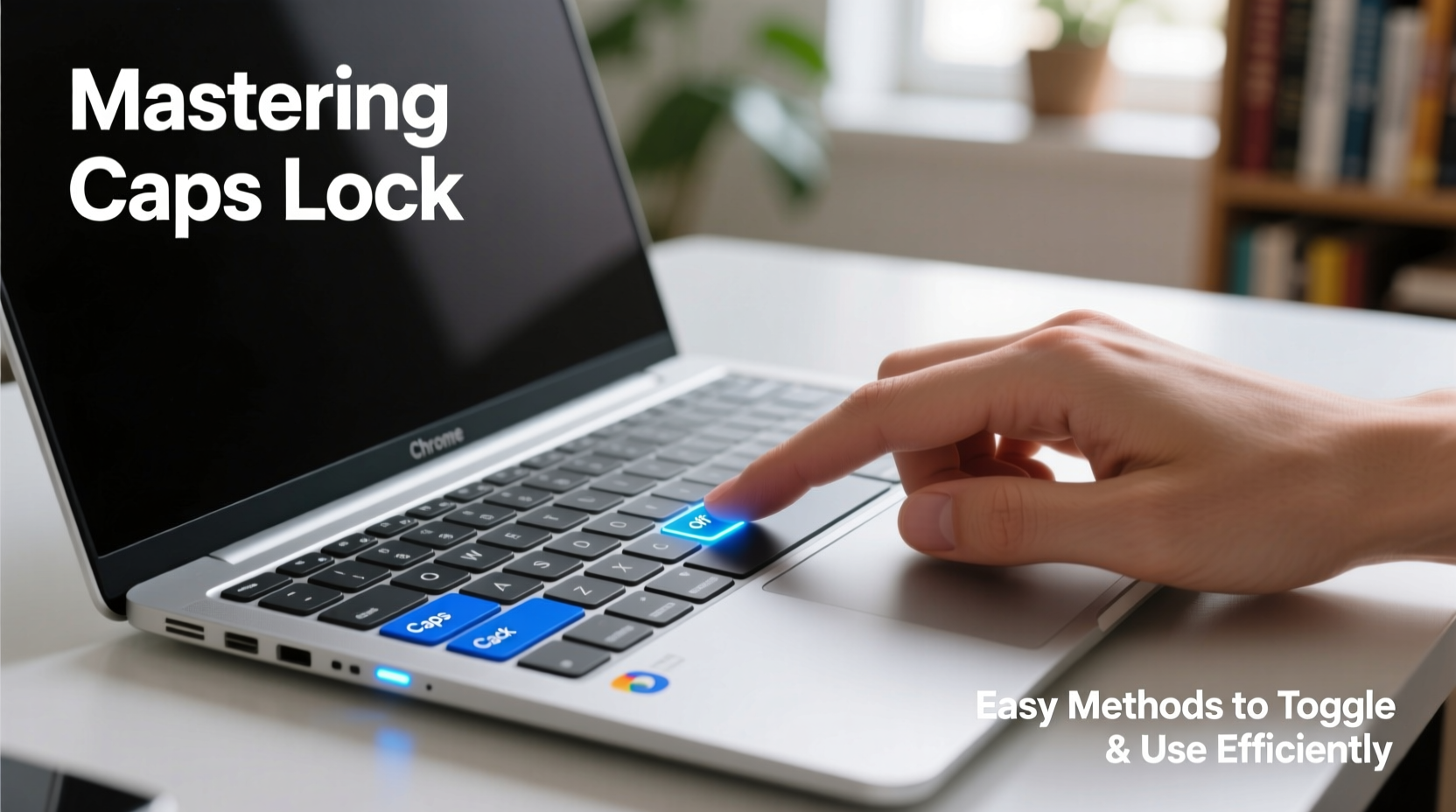
Unlike conventional keyboards, most Chromebooks don’t have a dedicated Caps Lock key. Instead, they repurpose the Search (🔍) or Launcher key—typically located where the Caps Lock key would be on other laptops—as the default trigger for enabling uppercase input. When pressed, this key toggles CAPS LOCK mode, indicated by a small notification in the lower-right corner of the screen.
This design choice aligns with Chrome OS’s minimalist philosophy but often catches new users off guard. The Search key serves dual purposes: launching the app drawer and acting as the primary access point for CAPS LOCK. Pressing it once activates CAPS LOCK; pressing it again disables it.
“Chrome OS reimagines keyboard functionality around simplicity and speed. The integration of CAPS LOCK into the Search key reduces clutter while maintaining utility.” — David Lin, UX Designer at Chrome OS Partner Program
Step-by-Step Guide to Enable and Disable CAPS LOCK
Follow these clear steps to toggle CAPS LOCK on any modern Chromebook:
- Locate the Search Key: Find the magnifying glass icon (🔍) on the left side of your keyboard, usually above the Ctrl key.
- Press Once: Tap the Search key to turn on CAPS LOCK. You’ll see an on-screen message saying “Caps Lock On.”
- Type in Uppercase: All subsequent letters will appear in uppercase until disabled.
- Turn Off: Press the Search key again. The notification will change to “Caps Lock Off.”
If you prefer not to use the Search key for this purpose, Chrome OS allows remapping through system settings—a useful option for power users or those accustomed to standard keyboard layouts.
Customizing CAPS LOCK Settings for Better Control
Chrome OS provides options to modify how CAPS LOCK behaves. This level of control ensures the feature adapts to your workflow rather than disrupting it.
To customize CAPS LOCK:
- Click the clock in the bottom-right corner to open the system tray.
- Select the gear icon to enter Settings.
- Navigate to Device > Keyboard.
- Look for the option labeled \"Treat Top Row Keys as Function Keys\" if needed, though this affects media keys more directly.
- Find Caps Lock under the \"Keyboard shortcuts\" or \"Advanced keyboard settings\" section.
- Choose one of the following behaviors:
- Search Key Toggles Caps Lock – Default setting.
- Disabled – Turns off CAPS LOCK completely.
- Alt + Search – Requires both keys to activate CAPS LOCK, reducing accidental triggers.
This customization is particularly helpful for programmers or writers who frequently use the Search key for navigation and want to avoid unintended capitalization.
Alternative Methods to Use CAPS LOCK Efficiently
Beyond the default toggle, several alternative techniques allow precise control over uppercase text without relying solely on CAPS LOCK.
Using Shift Key for Temporary Uppercase
Holding down the Shift key while typing individual letters remains the most reliable way to type single uppercase characters. This method prevents the risk of forgetting CAPS LOCK is active and accidentally typing entire paragraphs in all caps.
On-Screen Keyboard for Touch-Based Control
For touchscreen Chromebooks or situations where keyboard use is limited:
- Open the on-screen keyboard via Settings > Accessibility > Manage on-screen keyboard.
- Click the upward arrow (⇧) to enable uppercase mode temporarily.
- Use the interface just like a smartphone keyboard.
Enable Sticky Keys for One-Handed Typing
In accessibility settings, Sticky Keys allows users to press modifier keys (like Shift or Search) one at a time instead of simultaneously. This helps when using combinations such as Alt + Search to trigger CAPS LOCK without strain.
| Method | Activation | Best For | Drawbacks |
|---|---|---|---|
| Search Key Toggle | Single press of 🔍 | Quick all-caps entry | Easy to trigger accidentally |
| Alt + Search Combo | Two-key press | Preventing mistakes | Slightly slower activation |
| Shift Key Hold | Hold ⇧ + letter | Precise capitalization | Not efficient for long stretches |
| On-Screen Keyboard | Tap interface button | Touchscreen or accessibility needs | Slower than physical input |
Real-World Example: A Student’s Experience with CAPS LOCK
Jamal, a college freshman using a Chromebook for note-taking and online exams, initially struggled with accidental CAPS LOCK activation during timed quizzes. He’d press the Search key intending to look up course material, only to begin typing answers in all caps—an issue flagged by some learning platforms as potential misconduct.
After discovering the settings menu, he changed his configuration so that CAPS LOCK required Alt + Search to activate. This simple adjustment eliminated accidental triggers. Additionally, he began using the Shift key for proper nouns and sentence starts, reserving full CAPS for emphasis in personal notes. Over time, his typing accuracy improved, and he reported feeling more confident during digital assessments.
Checklist: Optimizing Your CAPS LOCK Workflow
Use this checklist to ensure you're using CAPS LOCK safely and efficiently:
- ✅ Locate the Search (🔍) key on your Chromebook keyboard.
- ✅ Test CAPS LOCK by pressing the Search key once and typing a few words.
- ✅ Confirm visual feedback (“Caps Lock On”) appears in the system tray.
- ✅ Adjust settings to require Alt + Search if accidental activation is frequent.
- ✅ Practice using Shift for single uppercase letters to reduce reliance on CAPS LOCK.
- ✅ Consider turning off CAPS LOCK entirely if you rarely use it.
- ✅ Explore on-screen keyboard options for hybrid touch-typing scenarios.
Frequently Asked Questions
Can I disable CAPS LOCK completely on my Chromebook?
Yes. Go to Settings > Device > Keyboard, and look for the CAPS LOCK option. Select “Disabled” to turn it off permanently. This prevents any accidental activation and frees the Search key for its primary function.
Why does my Chromebook use the Search key for CAPS LOCK?
Chromebooks prioritize minimalism and speed. By combining the Search launcher and CAPS LOCK functions, Google reduces the number of dedicated keys while maintaining core functionality. It also encourages faster access to search tools, which are central to the Chrome OS experience.
Is there a keyboard shortcut to lock CAPS LOCK without using the Search key?
No native shortcut bypasses the Search key, but you can remap keys using third-party extensions or Linux terminal commands (if Linux is enabled). However, for most users, adjusting the existing behavior through settings is safer and more stable.
Conclusion: Take Control of Your Chromebook Typing Experience
Mastering CAPS LOCK on a Chromebook isn’t about memorizing obscure shortcuts—it’s about understanding how the system works and tailoring it to your habits. Whether you’re a student taking notes, a professional drafting emails, or someone managing accessibility needs, having precise control over capitalization improves clarity, professionalism, and efficiency.
Now that you know how to toggle, customize, and optimize CAPS LOCK usage, take a moment to review your current settings. Make one small adjustment today—whether remapping the key or simply practicing better shift discipline—and notice the difference in your daily workflow.




 浙公网安备
33010002000092号
浙公网安备
33010002000092号 浙B2-20120091-4
Comments
No comments yet. Why don't you start the discussion?