
In a world that glorifies constant motion, productivity, and emotional reactivity, there’s an unexpected model of balance hiding in plain sight: the domestic cat. Cats don’t strive to be cool—they simply are. Their grace, self-possession, and instinctual wisdom offer a blueprint for mindful living. This isn’t about mimicking whiskers or napping in sunbeams (though those help). It’s about adopting the core principles of feline behavior—awareness, patience, boundaries, and presence—to cultivate a calmer, more intentional human life.
Cats operate from a place of deep internal alignment. They don’t apologize for resting, they don’t perform for approval, and they rarely act without purpose. By studying their habits and mindset, we can reclaim focus, reduce anxiety, and make decisions rooted in clarity rather than reaction.
The Feline Mindset: Awareness Before Action
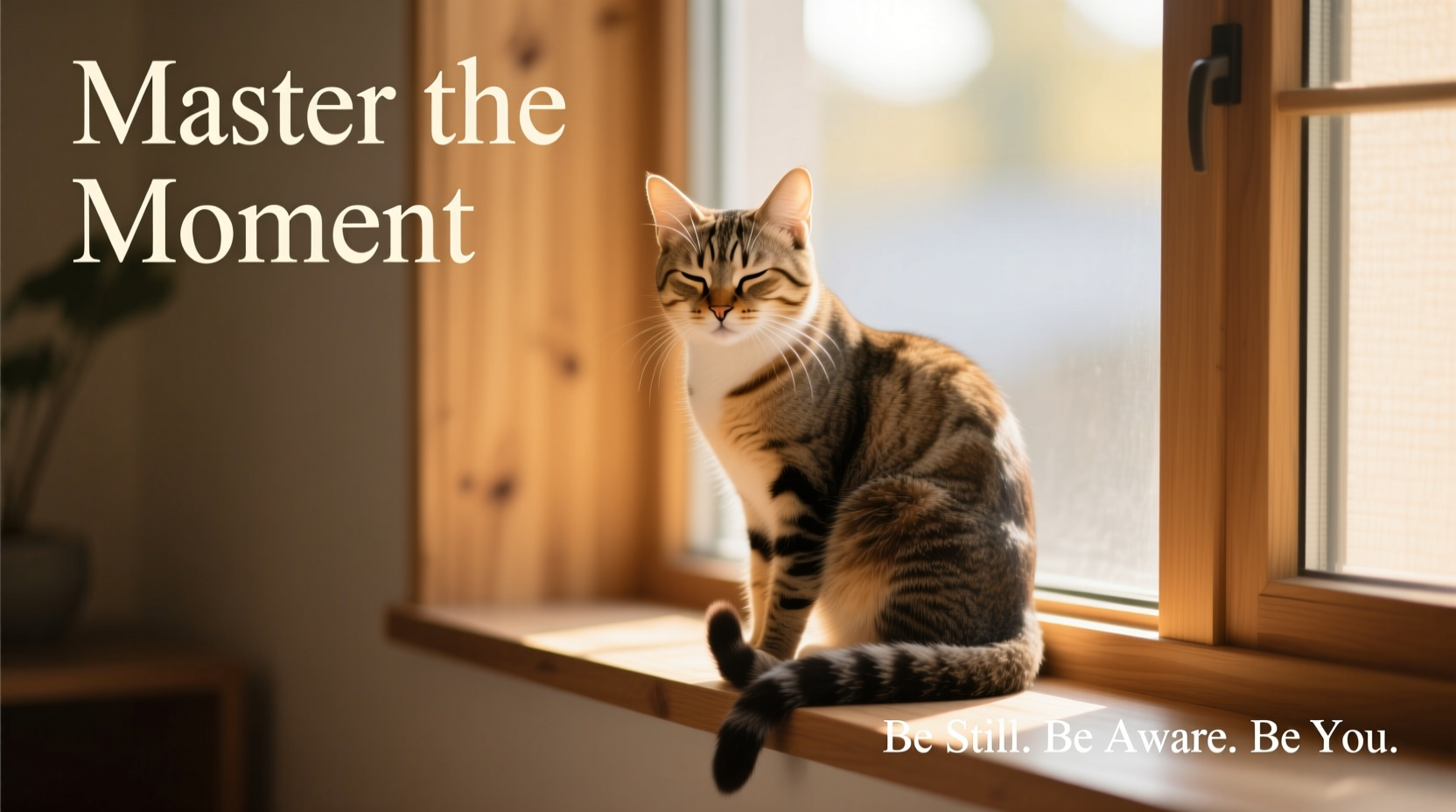
Cats spend an extraordinary amount of time observing before moving. A housecat perched by the window isn’t just “being lazy”—it’s assessing wind direction, bird movement, potential threats, and escape routes. This deliberate pause is not hesitation; it’s strategy. Humans, by contrast, often react impulsively—sending emails in anger, making purchases under stress, or committing to obligations without reflection.
Adopting a cat-like awareness means building space between stimulus and response. Before speaking in a meeting, ask: *What would a cat do?* She’d listen first, assess the energy, then decide whether to engage—or leave entirely.
Emotional Regulation: The Art of Controlled Response
Cats rarely lose control. Even when startled, their reactions are precise and proportional. They hiss only when necessary, retreat when overwhelmed, and return to calm quickly. This emotional regulation stems from an absence of ego-driven need to win, prove, or dominate.
Humans can learn from this by identifying emotional triggers and creating response protocols. For instance, instead of replying immediately to a frustrating message, adopt the \"5-Minute Rule\": wait five minutes, breathe deeply, and re-read the message with detached curiosity—like a cat watching birds through glass.
“Cats live in the present because they don’t carry grudges or hypothetical fears. That’s not ignorance—it’s emotional intelligence.” — Dr. Lena Patel, Behavioral Psychologist & Animal Cognition Researcher
A Step-by-Step Guide to Becoming More Cat-Like
Becoming more cat-like isn’t about costume or imitation. It’s a gradual shift in behavior and mindset. Follow this seven-day framework to begin integrating feline principles into daily life.
- Day 1: Observe Without Judgment – Spend one hour silently watching people, nature, or your workspace. Do not interpret or plan. Just notice.
- Day 2: Prioritize Rest – Schedule two 20-minute rest breaks. Lie down, close your eyes, and resist the urge to check devices.
- Day 3: Set a Boundary – Say no to one request that doesn’t align with your energy or priorities. Do so calmly and without over-explaining.
- Day 4: Move With Purpose – Choose one routine action (e.g., walking to the kitchen) and perform it slowly, deliberately, and quietly.
- Day 5: Eat Mindfully – Consume a meal without distractions. Chew slowly. Pause between bites.
- Day 6: Retreat When Overwhelmed – At the first sign of mental fatigue, remove yourself from stimulation. Find a quiet corner and reset.
- Day 7: Groom Your Space – Clean and organize one area of your home or desk. Approach it as ritual, not chore.
Do’s and Don’ts: A Feline Behavior Comparison
| Behavior | Human Tendency (Don't) | Cat-Like Alternative (Do) |
|---|---|---|
| Responding to stress | React emotionally, escalate conflict | Withdraw, regroup, return only when ready |
| Daily movement | Rush between tasks without awareness | Move with intention, pause between actions |
| Social interaction | Seek validation, over-explain | Engage selectively, maintain personal space |
| Rest | Feel guilty, multitask while tired | Rest unapologetically, fully disengage |
| Focus | Constantly switch tasks, distracted | Concentrate intensely, then release completely |
Real-Life Example: How Maya Adopted the Cat Mindset at Work
Maya, a project manager in a fast-paced tech startup, was known for her responsiveness—often answering messages at midnight and attending back-to-back meetings. Burnout followed. After observing her cat Leo—who napped after bursts of activity, ignored loud noises, and walked away from confrontations—she began experimenting.
She started blocking 30 minutes daily for silent work, turned off notifications after 7 PM, and stopped attending optional meetings. When pressured to take on extra tasks, she paused, tilted her head slightly (mimicking Leo), and said, “I’ll review my capacity and get back to you.” Within weeks, her team reported she was “calmer and more decisive.” Her productivity didn’t drop—it became more sustainable.
She later admitted, “Leo never tries to impress anyone. He just does what he needs to do. I realized I could too.”
Essential Cat-Like Habits to Cultivate Daily
- Micro-naps: Two 10–15 minute rests during the day improve cognitive function and emotional resilience.
- Selective engagement: Not every conversation requires your input. Listen more, speak only when it adds value.
- Body awareness: Notice tension in your shoulders, jaw, or hands. Release it consciously, like a cat stretching after sleep.
- Controlled exposure: Limit time in high-stimulus environments (open offices, social media) and retreat to low-sensory spaces regularly.
- Purposeful grooming: Develop a short ritual—washing your face, combing your hair, tidying your desk—as a signal of self-respect.
Frequently Asked Questions
Isn’t being “cat-like” passive or aloof?
Not at all. Cats are highly active when motivated—they hunt, explore, and defend territory. The difference is they act from choice, not obligation. Being cat-like means choosing engagement wisely, not avoiding it altogether.
Can introverts benefit more from this approach?
While introverts may find these behaviors more natural, extroverts can benefit greatly by learning to regulate energy. Cat-like behavior balances action with recovery, which everyone needs regardless of personality type.
How do I stay productive while embracing stillness?
True productivity isn’t measured by busyness but by impact. Cats expend energy efficiently—short bursts of intense focus followed by recovery. Apply this rhythm: 25 minutes of deep work, 5 minutes of stillness. Repeat.
Conclusion: Embody the Calm, Carry the Claws
To be more cat-like is not to abandon ambition, but to pursue it with greater clarity and less noise. It’s understanding that silence can be powerful, rest can be strategic, and boundaries can be firm yet graceful. In a culture that equates speed with success, the cat reminds us that presence, precision, and self-trust are the ultimate forms of strength.
You don’t need to purr or climb curtains. But you can choose to move with purpose, protect your peace, and act only when ready. Start small: pause before reacting, rest without guilt, observe before speaking. These aren’t quirks of pet behavior—they’re timeless principles of centered living.




 浙公网安备
33010002000092号
浙公网安备
33010002000092号 浙B2-20120091-4
Comments
No comments yet. Why don't you start the discussion?