
Layering charm necklaces is more than a trend—it’s a form of self-expression. When done well, a curated stack of delicate chains and meaningful pendants adds depth, personality, and elegance to any outfit. But without thoughtful coordination, even the most beautiful pieces can clash or overwhelm. The secret lies in balance: combining lengths, textures, metals, and symbolism in a way that feels intentional rather than chaotic. Whether you're building a daily signature look or styling for a special event, mastering charm necklace layering transforms your jewelry from accessory to art.
Understanding the Foundations of Necklace Layering
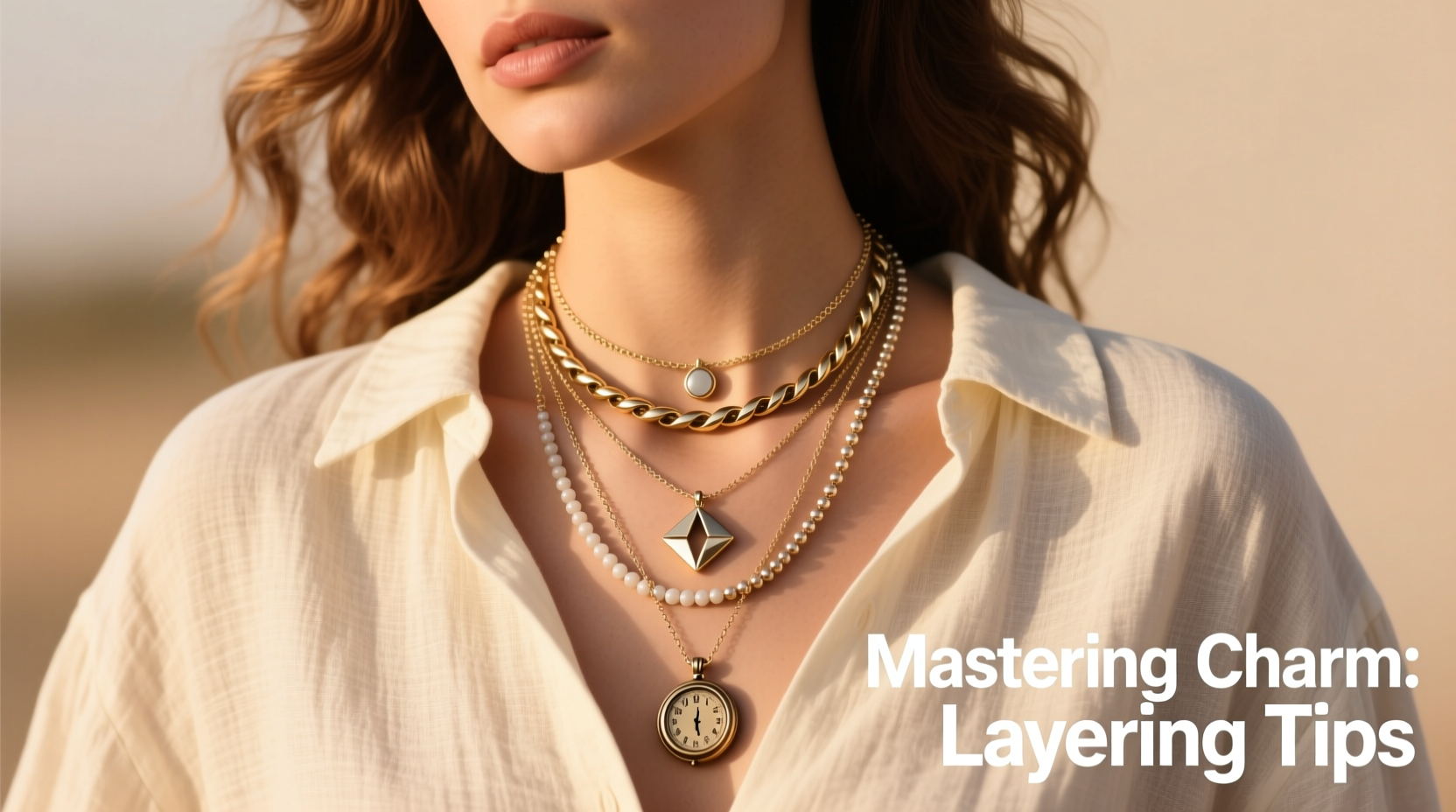
The first step in successful layering is understanding the key elements that influence how necklaces interact when worn together. These include chain length, pendant size, metal tone, and overall design aesthetic. Each plays a role in determining whether your stack looks harmonious or disjointed.
Chain length dictates where a necklace rests on the body—common lengths range from 14 inches (choker) to 30 inches (matinee or opera). A well-layered set typically spans three or more lengths to create visual interest. For example, pairing a 16-inch pendant with an 18-inch chain and a 22-inch lariat allows each piece to occupy its own space without tangling.
Pendant size should scale with chain length. Delicate charms work best on shorter, finer chains, while larger focal pendants anchor longer layers. Mixing miniature charms with bold statement pieces can work—but only if they share a unifying theme, such as nature motifs or vintage-inspired designs.
Choosing Complementary Metals and Finishes
Mixing metals has moved from controversial to chic, but it still requires intentionality. While gold, silver, rose gold, and gunmetal can coexist beautifully, random combinations often appear mismatched. The trick is to anchor your stack with a dominant metal and use others as accents.
If your skin tone leans warm, yellow or rose gold may be your primary tone; cooler undertones pair better with white gold or silver. That said, personal preference matters most. Some women prefer the edgy contrast of blackened silver with polished brass, while others favor the soft cohesion of mixed gold tones.
| Metal Type | Best Paired With | Avoid Pairing With |
|---|---|---|
| Yellow Gold | Rose gold, antique bronze | Bright chrome, matte black steel |
| Sterling Silver | White gold, platinum | Warm copper without transition tones |
| Rose Gold | Yellow gold, champagne hues | Cool-toned stainless steel |
| Mixed Metals | Intentional ratios (e.g., 2:1) | Equal amounts of clashing finishes |
“Layering isn’t about following rules—it’s about creating rhythm. Think of each necklace like a note in a melody. Even dissonant tones work if they’re part of a deliberate composition.” — Lena Torres, Jewelry Stylist & Curator at Atelier Adorn
Step-by-Step Guide to Building Your Perfect Stack
Creating a cohesive layered look doesn’t have to be overwhelming. Follow this six-step process to build a combination that reflects your style and enhances your wardrobe.
- Define your purpose. Is this a casual everyday stack or something bolder for evening wear? Purpose guides complexity.
- Select a base necklace. Choose one meaningful piece—perhaps a locket, birthstone, or initial charm—that will serve as the emotional center of your stack.
- Add supporting layers. Introduce two additional chains: one slightly shorter and one longer than your base. Keep styles simple—a cable chain or box chain works well as filler.
- Incorporate texture. Add movement with a chain that has a different weave (like a snake chain or figaro) or a subtle sparkle (tiny pavé beads).
- Balance charm placement. Avoid clustering all pendants at the same level. Space them vertically so each can be seen.
- Test and adjust. Wear the stack with a V-neck or scoop neckline to see how it drapes. Remove any piece that gets lost or causes tangling.
Real-Life Example: From Cluttered to Cohesive
Sophie, a graphic designer in Portland, loved her growing collection of charm necklaces—one inherited from her grandmother, another marking her daughter’s birth year, and several picked up during travels. Worn individually, each felt special. Together, they tangled into a confusing jumble around her neck.
After consulting a local stylist, she restructured her stack using three principles: length variation, thematic unity, and metal consistency. She kept her grandmother’s locket on a 20-inch rose gold chain, added a tiny airplane charm on a 16-inch chain, and finished with a minimalist bar pendant at 24 inches—all in matching rose gold. The result was balanced, sentimental, and effortlessly elegant. “It finally feels like *me*,” she said. “Not just a pile of pretty things.”
Do’s and Don’ts of Charm Necklace Layering
To help you avoid common pitfalls, here’s a quick-reference guide summarizing what works—and what doesn’t—when mixing and matching.
| Do | Don't |
|---|---|
| Vary chain lengths by at least 2 inches | Wear three identical-length pendants |
| Mix no more than three charm types per stack | Overload with competing symbols (heart, star, cross, animal, etc.) |
| Use a unifying element (metal, theme, or color) | Combine overly thick chains with ultra-fine ones |
| Store layered sets together to preserve pairings | Leave necklaces dangling loosely in drawers |
| Adjust layers based on neckline | Wear heavy stacks with high collars |
Frequently Asked Questions
Can I layer charm necklaces with a statement collar or pendant?
Yes, but treat the statement piece as the centerpiece. Build simpler, thinner layers around it. For example, pair a bold geometric pendant at 18 inches with two fine chains—one at 14 inches (no pendant) and one at 22 inches (small charm)—to frame it without competition.
How do I keep my necklaces from tangling?
Tangling is the enemy of layering. Prevent it by clasping all necklaces together when storing, using anti-tangle pads, or investing in a vertical jewelry organizer. Alternatively, consider magnetic closures or adjustable slider chains that let you customize fit and reduce friction.
Is there a limit to how many necklaces I should wear?
While there’s no hard rule, most stylists recommend starting with three and adding only if each new piece serves a clear purpose. Beyond five, even expertly curated stacks risk looking cluttered unless worn for editorial or fashion-forward contexts.
Final Thoughts: Make It Meaningful, Not Just Trendy
The most compelling layered necklaces aren’t those that follow every trend perfectly—they’re the ones that tell a story. A charm for a milestone, a symbol of heritage, a souvenir from a transformative trip—these details turn jewelry into narrative. When you layer with intention, you’re not just accessorizing; you’re curating a wearable memoir.
Start small. Refine over time. Let your stack evolve as you do. And remember: confidence is the final finishing touch. No combination is truly complete until it’s worn with pride.




 浙公网安备
33010002000092号
浙公网安备
33010002000092号 浙B2-20120091-4
Comments
No comments yet. Why don't you start the discussion?