
Despite the rise of digital payments, checks remain a reliable method for paying rent, settling invoices, or making large purchases where electronic transfers aren’t accepted. However, writing a check incorrectly can result in delays, fees, or even legal complications. Whether you're balancing your first checking account or managing business finances, mastering the art of check writing is still a valuable skill. A single mistake—like an incorrect date or missing signature—can invalidate the payment. This guide breaks down the process into clear, actionable steps and highlights the most frequent errors so you can write checks confidently and accurately.
The Anatomy of a Check: Know What Goes Where
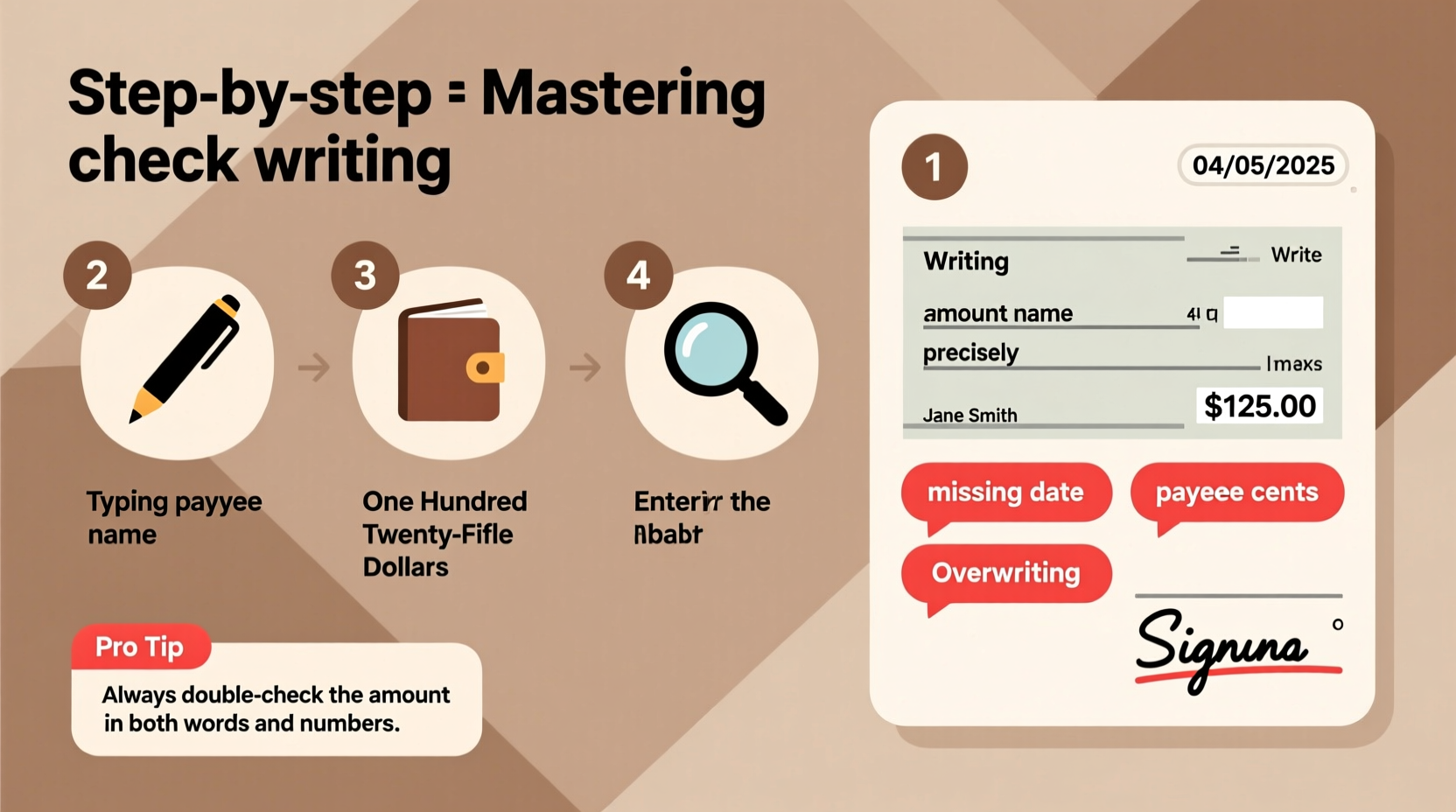
Before writing a check, it's essential to understand its structure. Each field serves a specific purpose and must be completed correctly. Here’s a breakdown of the key components:
- Date line: The day you issue the check. Use the current date unless post-dating (rare and not always honored).
- Payee line: The full name of the person or organization receiving the funds.
- Amount box: Numeric value of the payment (e.g., 150.75).
- Amount in words: The same amount written out in words, including cents as a fraction over 100.
- Memo line: Optional note about the purpose of the payment (e.g., “Rent – June” or “Invoice #1045”).
- Signature line: Your authorized signature. Without it, the check is invalid.
- Routing and account numbers: Located at the bottom, these identify your bank and account but are pre-printed.
Step-by-Step Guide to Writing a Check Correctly
- Fill in the date. Write today’s date in the top right corner. Avoid leaving this blank, as it increases the risk of someone altering it later.
- Write the payee’s name. Be precise. If paying a company, use the exact legal name as shown on their invoice or website.
- Enter the amount numerically. In the small box next to the dollar sign, write the amount using numbers (e.g., 234.50).
- Write the amount in words. On the longer line below, spell out the amount. For example, “Two hundred thirty-four and 50/100.” This prevents tampering.
- Add a memo (optional but helpful). Note what the check is for. This helps both you and the recipient track the payment.
- Sign the check. Use the same signature on file with your bank. An unsigned check cannot be cashed.
- Record the transaction. Log the check number, date, payee, and amount in your check register or budgeting app to avoid overdrafts.
“Accuracy in both numeric and written amounts is critical. Banks often rely on the written amount if there’s a discrepancy.” — Linda Tran, Senior Bank Teller, First National Trust
Common Mistakes That Invalidate Checks
Even experienced check writers make errors. Some are minor and correctable; others can lead to rejection or fraud exposure. Below are the most common pitfalls:
| Mistake | Why It’s a Problem | How to Fix It |
|---|---|---|
| Leaving the payee line blank | Anyone can fill in their name and cash it | Never issue a blank payee check; always specify recipient |
| Mismatch between written and numerical amounts | Banks may reject the check or use the written amount | Double-check both fields before signing |
| Forgetting to sign | Check is invalid without a signature | Always sign before handing it over |
| Using correction fluid or erasures | Considered suspicious; many banks reject altered checks | Void and rewrite the check |
| Post-dating checks without agreement | Legally, banks can cash them immediately | Only post-date with prior understanding from recipient |
Best Practices for Security and Accuracy
Checks contain sensitive financial information. Protect yourself and your recipients by following these guidelines:
- Use checks with security features: Opt for checks with watermarks, thermochromic ink, or microprinting to deter fraud.
- Write clearly and completely: Illegible handwriting can delay processing or cause misinterpretation.
- Keep your checkbook secure: Store unused checks in a locked drawer, just like cash.
- Review your bank statements monthly: Confirm all checks cleared match your records and report any discrepancies immediately.
- Shred old check stubs: They contain personal data that could be used for identity theft.
Real-Life Example: When a Small Error Cost Big
Sarah, a freelance designer, mailed a rent check to her landlord. She wrote \"$850\" in the box but accidentally wrote \"Eight hundred fifty and 00/100\" instead of \"and 50/100.\" While the amounts were consistent, she left the cents portion incomplete. Her bank processed the check as $850.00, but the landlord’s bank flagged the inconsistency in the written amount. The deposit was delayed by three days, resulting in a late fee. Sarah had to explain the error and provide proof of the correct amount. Though resolved, the incident caused unnecessary stress and cost.
This case shows how precision matters—even minor formatting issues can trigger scrutiny. Always ensure fractions are complete and aligned with the numeric entry.
Frequently Asked Questions
Can I correct a mistake on a check?
It’s best to void and rewrite the check. Crossing out information or using correction fluid raises red flags. If you must correct an error, initial the change and have the recipient confirm acceptance—but know that many banks will still reject it.
What happens if I write a check with insufficient funds?
You’ll likely incur an overdraft or non-sufficient funds (NSF) fee from your bank, typically $25–$40. The recipient may also charge a returned check fee. Repeated incidents can damage your banking relationship and creditworthiness.
Is it safe to mail checks?
Mailing checks is generally safe if done through official postal services. To reduce risk, send checks via tracked mail and keep the receipt. Never include sensitive information like your Social Security number on the memo line.
Essential Checklist Before Mailing or Handing Over a Check
- ✅ Date is filled in and current
- ✅ Payee name is accurate and spelled correctly
- ✅ Amount matches in numbers and words
- ✅ Cents are expressed as a fraction over 100 (e.g., 75/100)
- ✅ Check is signed with matching bank signature
- ✅ Memo includes reference details (optional but recommended)
- ✅ Transaction recorded in your register or app
- ✅ No erasures, white-out, or smudges
Conclusion: Confidence Comes From Clarity
Writing a check may seem outdated, but it remains a necessary tool in many financial transactions. By understanding each part of the check, following a disciplined process, and avoiding common errors, you protect yourself from fees, delays, and fraud. Accuracy isn’t just about correctness—it’s about responsibility. Whether you're paying a contractor, sending a gift, or covering monthly bills, a well-written check reflects attention to detail and financial maturity.




 浙公网安备
33010002000092号
浙公网安备
33010002000092号 浙B2-20120091-4
Comments
No comments yet. Why don't you start the discussion?