
Chess is more than just a game—it's a battle of strategy, foresight, and precision. But before any grand plan can unfold, there’s one essential first move every player must master: setting up the board correctly. A misaligned setup can lead to confusion, invalid moves, or even an unfair advantage. Whether you're new to the game or refreshing your knowledge, understanding the proper arrangement of pieces is the foundation of strong play.
The chessboard may look symmetrical, but every square and piece has a designated place. Getting it right ensures fairness, clarity, and sets the stage for a meaningful match. This guide walks through each element of board setup with precision, offering practical tips, common pitfalls, and expert-backed insights to help you build confidence from the very first move.
Understanding the Chessboard Layout
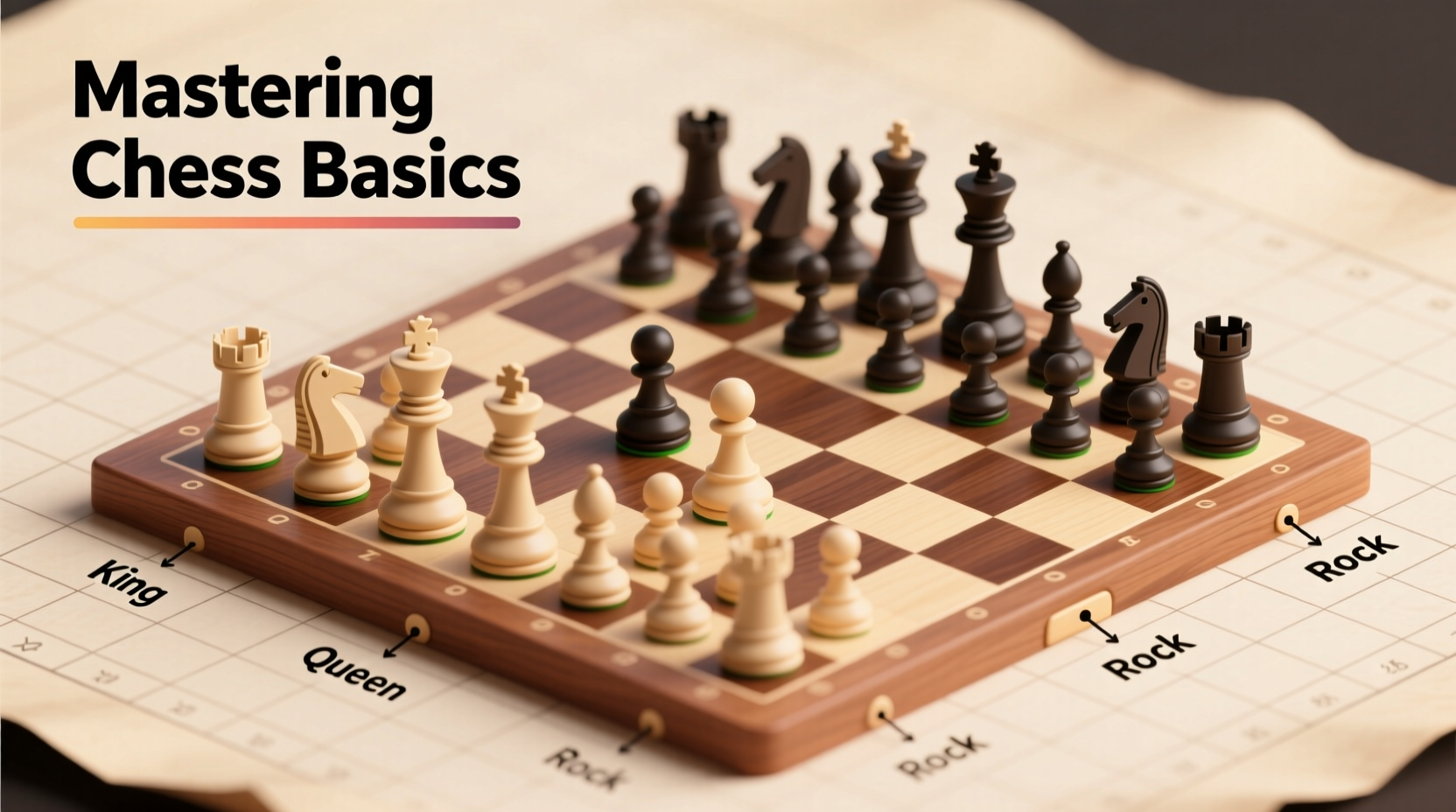
A standard chessboard consists of 64 squares—8 rows (ranks) and 8 columns (files)—arranged in an alternating light and dark pattern. The files are labeled a through h (left to right from White’s perspective), and the ranks are numbered 1 through 8 (from bottom to top for White).
The key rule: the bottom-right corner square (h1) must always be a light-colored square. This simple detail ensures both players have the correct orientation. If this square is dark, the entire board is rotated incorrectly.
Each player controls 16 pieces: one king, one queen, two rooks, two knights, two bishops, and eight pawns. These are placed on the first and second ranks for White, and the seventh and eighth ranks for Black.
Step-by-Step Guide to Placing the Pieces
- Position the board correctly. Sit across from your opponent with the light square at the bottom-right. Both players should see a light square in their right-hand corner.
- Place the rooks in the corners. On White’s side, place rooks on a1 and h1. For Black, place them on a8 and h8.
- Add the knights next to the rooks. White’s knights go on b1 and g1; Black’s on b8 and g8.
- Place the bishops beside the knights. White: c1 and f1. Black: c8 and f8.
- Set the queen on her matching color. The white queen starts on the light square (d1), and the black queen on the dark square (d8). Remember: “Queen on her own color.”
- Place the king on the remaining central square. After placing the queen, the king goes on the adjacent square: e1 for White, e8 for Black.
- Fill the second rank with pawns. White places all eight pawns on the second rank (a2 through h2). Black mirrors this on the seventh rank (a7 through h7).
This sequence ensures that both armies are symmetrically aligned and ready for action. Taking a moment to double-check each piece prevents early-game errors.
Common Setup Mistakes and How to Avoid Them
Even experienced players occasionally make setup errors, especially under time pressure or while teaching beginners. Here are the most frequent mistakes and how to correct them:
| Mistake | Why It Matters | How to Fix |
|---|---|---|
| Queen on the wrong color | Disrupts opening principles and symmetry | Remember: “Queen on her own color”—white queen on light, black queen on dark |
| Board rotated incorrectly | Leads to incorrect file and rank references | Ensure light square is at bottom-right for each player |
| Knight and bishop swapped | Alters development patterns and control | Follow the sequence: rook, knight, bishop, queen, king |
| Pawns missing or misplaced | Causes illegal moves or confusion | Double-check all eight pawns are on the second and seventh ranks |
Real Example: Teaching a Young Beginner
During a local youth chess workshop, a coach noticed that three out of five children had placed the queens on the dark squares. When asked why, one child said, “I thought the queen should be near the king, not caring about color.” The coach used a simple analogy: “Imagine the queen wears a dress that matches the floor she stands on. The white queen likes the light tiles, and the black queen prefers the dark ones.”
After this explanation, all students corrected their boards immediately. Within minutes, they were setting up independently and explaining the rule to others. This real-world scenario shows how a small visual cue or memorable phrase can cement correct setup habits early.
“Proper board setup isn’t just tradition—it’s the first lesson in discipline and attention to detail, both essential for chess mastery.” — Grandmaster Elena Petrov, FIDE Trainer
Checklist: Verify Your Setup Before Play Begins
Use this quick checklist before starting any game to ensure accuracy:
- ✅ Is the board oriented so that the bottom-right square is light?
- ✅ Are rooks in the corners (a1/h1 and a8/h8)?
- ✅ Are knights adjacent to rooks?
- ✅ Are bishops next to knights?
- ✅ Is the queen on her matching color (light for White, dark for Black)?
- ✅ Is the king on the remaining central square (e1/e8)?
- ✅ Are all pawns on the second and seventh ranks?
- ✅ Do both players have identical, mirrored positions?
Going through this list takes less than 30 seconds but prevents disputes and maintains game integrity.
Frequently Asked Questions
Does the direction of the pieces matter (e.g., which way the queen faces)?
No, the orientation of the figurine (like which way the queen’s crown points) does not affect gameplay. However, most sets are designed with a front-facing detail. Consistency helps avoid confusion during tournaments.
Can I start a game if the board is set up wrong?
If discovered before the first move, correct the setup immediately. According to FIDE (the international chess federation), if an illegal position is found during play, the game may be restarted or adjusted depending on tournament rules. In casual games, simply reset and begin again.
Why is the queen placed next to the king?
The queen and king are placed centrally because they are the most powerful and vulnerable pieces. Their placement allows for balanced development and protection during the opening phase. Historically, the queen’s position evolved to reflect her role as the king’s protector and primary attacker.
Build Confidence Through Correct Fundamentals
Mastering the basics of chess begins with something as simple as setting up the board correctly. It’s a small act, but one that reflects respect for the game, attention to detail, and preparation for deeper strategy. Every world champion once placed their first pawn with care—just as you’re doing now.
Take the time to internalize the setup process. Practice it daily without looking at a guide until it becomes second nature. Teach it to a friend or family member. You’ll not only reinforce your own knowledge but also contribute to a stronger, more thoughtful chess community.




 浙公网安备
33010002000092号
浙公网安备
33010002000092号 浙B2-20120091-4
Comments
No comments yet. Why don't you start the discussion?