
Over time, hair accumulates residue from styling products, hard water minerals, pollution, and natural oils. This buildup dulls shine, weighs hair down, and can even block scalp pores, leading to irritation or slower growth. Clarifying shampoo is a powerful yet often misunderstood tool in hair care. When used correctly, it resets the canvas of your scalp and strands, restoring bounce, volume, and receptivity to treatments. Misuse, however, can lead to dryness or overproduction of oil. Understanding how and when to use clarifying shampoo is essential for maintaining balanced, healthy hair.
What Is Clarifying Shampoo and How Does It Work?
Unlike regular shampoos that gently cleanse surface dirt, clarifying shampoos are formulated with stronger surfactants designed to dissolve stubborn residues. These include silicones from serums, waxes from pomades, polymers from hairsprays, and mineral deposits from tap water. They work by lifting away these accumulated layers without stripping the hair’s essential proteins—when chosen and used wisely.
Most clarifying shampoos contain ingredients like sodium lauryl sulfate (SLS), citric acid, or chelating agents such as EDTA, which bind to metals in hard water. While effective, they should not be used daily. Their purpose is periodic deep cleaning—similar to exfoliating the skin—to maintain optimal scalp health and hair performance.
Step-by-Step Guide to Using Clarifying Shampoo Effectively
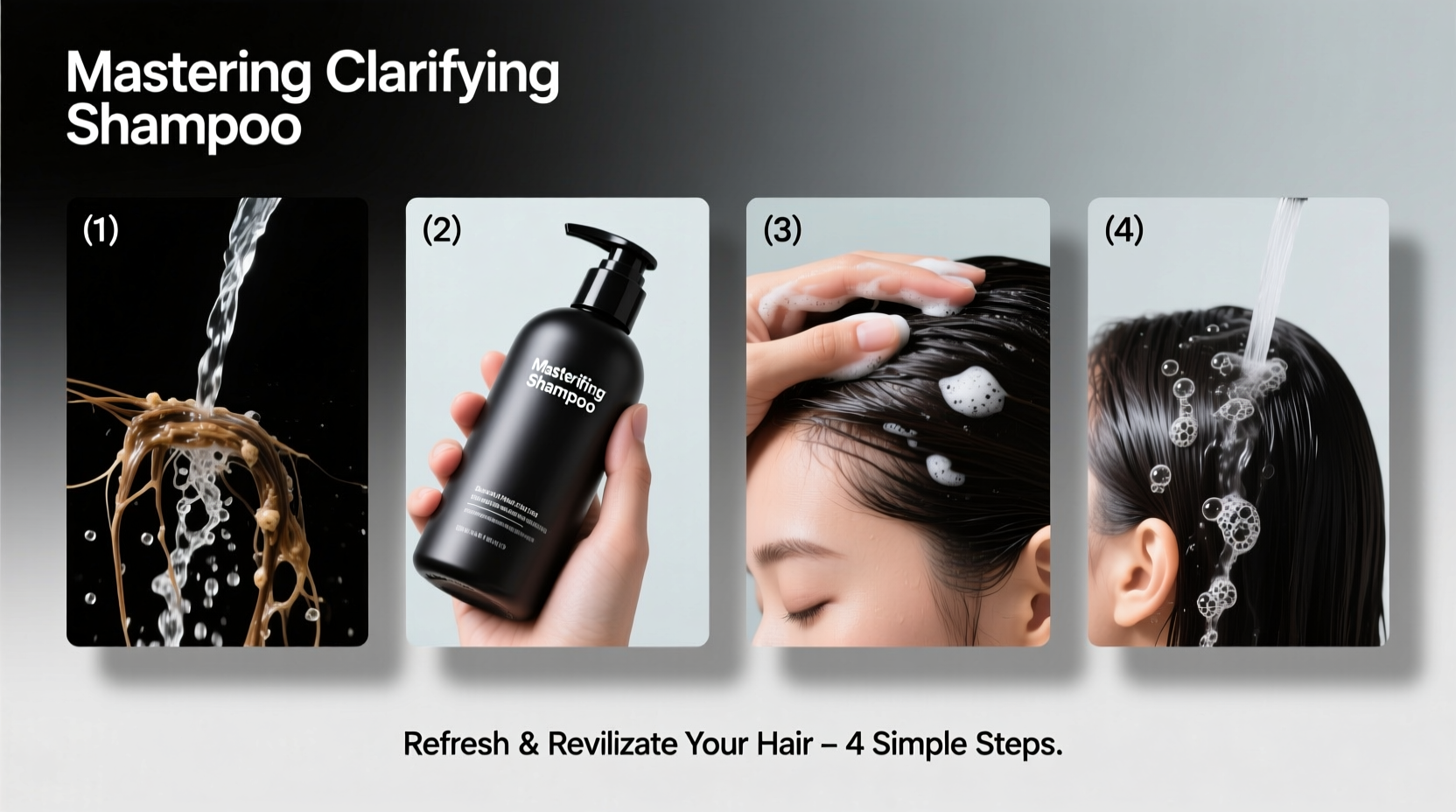
To get the most out of clarifying shampoo while minimizing potential damage, follow this structured routine:
- Assess Your Hair’s Needs: Determine how frequently you’re exposed to buildup sources. Frequent heat styling, swimming, or using multiple products increases the need for clarification.
- Wet Hair Thoroughly: Use warm water to open the cuticle slightly, allowing deeper penetration of the shampoo.
- Apply a Quarter-Sized Amount: Focus on the scalp first, massaging gently for 1–2 minutes to lift debris from follicles.
- Rinse and Repeat if Necessary: For heavily product-laden hair, a second application ensures complete cleansing.
- Follow with Conditioner: Always apply a hydrating conditioner, focusing on mid-lengths to ends. Avoid the scalp to prevent clogging pores.
- Use a Leave-In Treatment (Optional): Especially beneficial for curly or dry textures to restore moisture balance post-wash.
- Wait Before Styling: Allow hair to air-dry partially before applying new products to ensure absorption isn’t hindered by leftover residue.
This process should take no more than 10–15 minutes but delivers long-lasting benefits in texture and manageability.
How Often Should You Clarify? A Hair-Type Guide
The ideal frequency depends on hair type, lifestyle, and environmental exposure. Overuse can compromise the scalp’s natural lipid barrier, triggering excess sebum production. Underuse leads to persistent buildup.
| Hair Type | Recommended Frequency | Notes |
|---|---|---|
| Fine or Oily Hair | Every 1–2 weeks | Buildup shows quickly; prone to greasiness |
| Thick or Coarse Hair | Every 3–4 weeks | More resistant to buildup but needs thorough rinsing |
| Curly or Textured Hair | Every 3–6 weeks | Prioritize moisturizing formulas to avoid dryness |
| Color-Treated Hair | Once every 4–6 weeks | Avoid sulfates that may fade color; opt for gentle clarifiers |
| Swimmers | After each chlorinated pool session | Chlorine binds to hair; immediate clarification prevents brassiness |
Common Mistakes to Avoid
- Using it daily: Leads to stripped strands and irritated scalp.
- Skipping conditioner: Clarifying removes moisture; replenishing it is non-negotiable.
- Applying too much force: Aggressive scrubbing can damage the scalp and cause breakage.
- Ignoring water quality: Hard water reduces shampoo efficacy; consider a filter if buildup recurs rapidly.
- Using on freshly dyed hair: Can prematurely fade semi-permanent or vibrant colors.
“Clarifying is like hitting reset on your scalp. But just like rebooting a computer too often slows it down, overdoing it disrupts your hair’s natural rhythm.” — Dr. Lena Patel, Trichologist and Scalp Health Specialist
Real-Life Example: Sarah’s Journey to Healthier Waves
Sarah, a 32-year-old graphic designer, struggled with flat, lifeless waves despite using high-end volumizing products. Her hair felt sticky at the roots by midday, and her curls lost definition within hours. After consulting a stylist, she discovered that layer upon layer of silicone-based serums had built up over months. She began using a chelating clarifying shampoo every three weeks, followed by a deep conditioning mask. Within two cycles, her hair regained natural bounce, absorbed moisture better, and held styles longer. The key was consistency—not overuse.
This case illustrates how invisible buildup can sabotage even the best routines—and how targeted clarification restores functionality.
Choosing the Right Clarifying Shampoo for Your Hair
Not all clarifying shampoos are created equal. Consider these factors when selecting one:
- Sulfate Strength: SLS is potent but harsh; ammonium laureth sulfate is milder.
- Chelating Agents: Look for EDTA or citric acid if you live in a hard water area.
- pH Balance: Opt for formulas between 4.5 and 5.5 to match natural scalp pH.
- Added Moisturizers: Glycerin or panthenol help offset drying effects.
- Fragrance & Additives: Avoid heavy perfumes if you have a sensitive scalp.
FAQ: Clarifying Shampoo Questions Answered
Can I use clarifying shampoo on colored hair?
Yes, but cautiously. Choose a sulfate-free or color-safe clarifying formula and limit use to once a month. Avoid immediate use after coloring—wait at least 7–10 days to preserve pigment integrity.
Why does my hair feel drier after using clarifying shampoo?
Because it removes oils and residues effectively. Combat this by following with a rich conditioner or hair mask. If dryness persists, reduce frequency or switch to a gentler formula.
Is there a difference between clarifying and dandruff shampoos?
Yes. Dandruff shampoos target fungal or flaking issues with active ingredients like ketoconazole or zinc pyrithione. Clarifying shampoos focus on physical buildup removal. Some overlap exists, but they serve different primary purposes.
Essential Checklist: Preparing for a Clarifying Wash
- Check your last wash date—don’t clarify too soon.
- Gather a hydrating conditioner or mask.
- Have a wide-tooth comb ready for detangling wet hair.
- Ensure warm (not hot) water is available.
- Select the right clarifying shampoo for your hair type.
- Remove any braids or tight styles before washing.
- Set aside 15 minutes for a focused, unhurried routine.
Final Thoughts: Make Clarifying Part of a Balanced Routine
Clarifying shampoo isn’t a cure-all, nor is it meant for everyday use. It’s a strategic tool—a maintenance ritual that keeps your scalp clean, your follicles unobstructed, and your hair receptive to nourishment. When integrated thoughtfully into your regimen, it enhances everything else you do, from conditioning to styling. The goal isn’t to strip, but to refresh. Not to punish oily roots, but to empower them to function naturally.




 浙公网安备
33010002000092号
浙公网安备
33010002000092号 浙B2-20120091-4
Comments
No comments yet. Why don't you start the discussion?