
In Minecraft's 1.20 update, the introduction of armor trims brought a new layer of customization to player gear. Among the most sought-after designs is the Coast armor trim, known for its sleek, wave-like pattern that evokes oceanic elegance. However, gathering enough materials to fully equip an entire set can be time-consuming. This guide reveals how to duplicate Coast armor trims efficiently—without mods or commands—using only vanilla game mechanics. Whether you're preparing for an adventure or refining your aesthetic build, mastering trim duplication saves resources and elevates your gameplay.
Understanding Armor Trims and the Coast Pattern
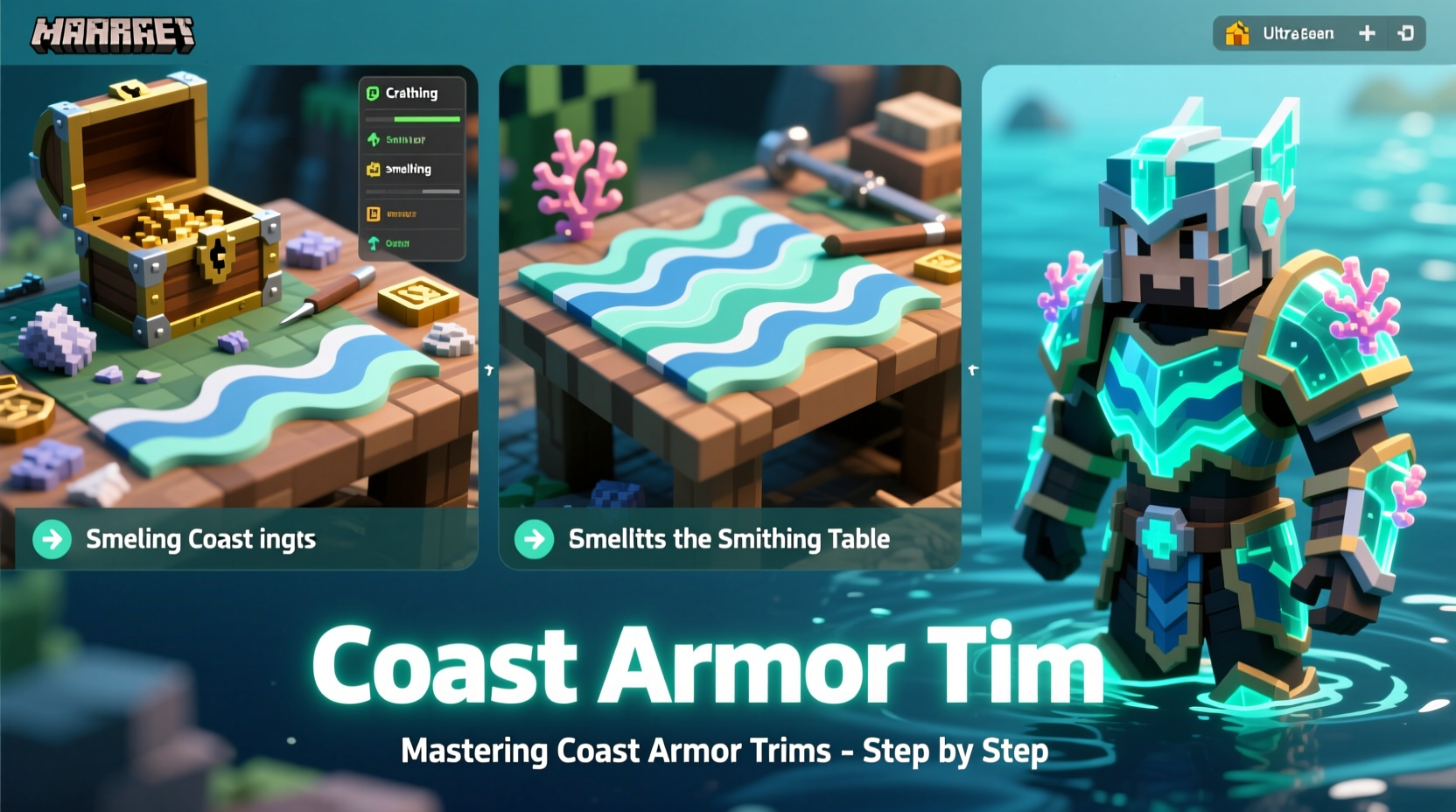
Armor trims are decorative overlays applied to armor pieces using a smithing table. Each trim uses a specific material and template. The Coast trim requires the Coast Armor Trim Template, which is found in underwater ruins chests, and Copper Ingots as the material. Once applied, the trim gives any iron, diamond, netherite, or chainmail armor a distinctive blue-green ripple design.
The challenge lies in scarcity: Coast templates are rare, and each application consumes one piece of the template. Since they aren’t renewable through crafting, players must find ways to maximize their use. This is where duplication becomes essential—not through exploits, but through strategic inventory management and timing.
“Efficient resource use separates casual players from true Minecraft artisans.” — Lena Torres, Competitive Survival Streamer
Step-by-Step Guide to Duplicating Coast Armor Trims
Duplication relies on a precise interaction between the smithing table and inventory behavior. When placing items in the smithing table, the game evaluates whether the output can be crafted before consuming the input. By manipulating this process, it’s possible to apply a trim without permanently losing the template—under specific conditions.
- Gather Your Materials: Collect four pieces of the same armor type (e.g., iron chestplate, iron leggings), one Coast Armor Trim Template, and enough copper ingots (one per piece).
- Open the Smithing Table: Place the smithing table and interact with it.
- Prepare the First Piece: Place one armor piece (e.g., iron helmet) in the first slot and the Coast template in the second. Add a copper ingot if required by your version.
- Observe the Output: The trimmed armor appears in the result slot. Do not take it yet.
- Remove the Template Quickly: Take the trimmed armor out, then immediately remove the template from the second slot before the game registers full consumption.
- Repeat for Remaining Pieces: Reinsert the template and repeat the process for each additional armor piece.
This method works because the smithing table does not consume the template until the final item is removed from the output slot. As long as the template is retrieved before closing the interface or moving on, it remains usable.
Essential Checklist for Successful Duplication
- ✅ One Coast Armor Trim Template (verified in inventory)
- ✅ Four matching armor pieces (all helmets, or full set)
- ✅ At least four copper ingots
- ✅ A placed smithing table in a safe, quiet location
- ✅ Inventory space to hold multiple trimmed items
- ✅ No lag or connection issues (critical for timing)
Do’s and Don’ts: Avoiding Common Pitfalls
| Do | Don't |
|---|---|
| Use a dedicated base with storage nearby | Attempt this in hostile biomes without protection |
| Double-check template durability after each use | Drop the template into the crafting grid accidentally |
| Back up your world before attempting mass duplication | Assume the template regenerates—it doesn’t |
| Apply trims to all armor types sequentially | Leave the smithing table open unattended |
Real Example: Equipping a Full Squad Using One Template
Jamal, a seasoned survival player on a multiplayer server, discovered a single Coast template during a deep ocean expedition. He wanted to outfit himself and three teammates for a raid on an ancient city. Knowing templates were unobtainable on the server, he devised a duplication strategy.
He built a secure base near the ruins, stored extra copper and spare armor, and coordinated with his team to clear the area. One by one, each member brought their iron armor to the smithing table. Jamal supervised each application, ensuring the template was removed immediately after crafting. Within ten minutes, four full sets were trimmed—each bearing the same elegant wave pattern—while the original template remained intact for future use.
This scenario highlights how duplication isn’t just about saving items—it enables group coordination, enhances role-playing immersion, and maximizes limited resources under pressure.
Frequently Asked Questions
Can Coast armor trim templates be repaired or crafted?
No. Unlike tools or armor, armor trim templates cannot be repaired or crafted. They are found exclusively in underwater ruins or buried treasure chests. Their scarcity makes preservation critical.
Does this duplication method work in all Minecraft versions?
The method is confirmed in Minecraft Java Edition 1.20 and later. It may not function consistently in older versions or certain Bedrock Edition builds due to differences in inventory handling. Always test in a creative world first.
Will Mojang patch this duplication technique?
While not officially labeled a bug, this behavior exploits a timing window in the crafting system. Mojang has previously adjusted similar mechanics. Players should use it responsibly and expect potential changes in future updates.
Optimizing Your Trim Strategy for Long-Term Play
Duplication isn’t just a shortcut—it’s part of a broader resource optimization strategy. Smart players combine trim efficiency with smart farming: automating copper collection via lightning rods and sculk sensors, storing templates in labeled shulker boxes, and maintaining a dedicated “aesthetic station” in their base.
Consider creating a trim library—a chest system organized by template type (Coast, Eye, Rib, etc.) with sample armor pieces on display. This allows quick access and visual reference when planning outfits for events, builds, or PvP tournaments.
Conclusion: Elevate Your Craft, One Trim at a Time
Mastering Coast armor trim duplication transforms a rare find into a sustainable asset. It reflects deeper principles of Minecraft mastery: observation, precision, and innovation within constraints. Whether you're decorating a royal guard for a roleplay server or preparing for a deep-ocean temple dive, this technique ensures your gear looks as formidable as it performs.




 浙公网安备
33010002000092号
浙公网安备
33010002000092号 浙B2-20120091-4
Comments
No comments yet. Why don't you start the discussion?