
Codenames is a clever word-based party game that blends deduction, communication, and teamwork. One wrong clue can send your team down a losing path, while a well-crafted hint can turn the tide in seconds. For new players, the game might seem deceptively simple—after all, it’s just about guessing words based on one-word clues. But beneath its minimalist design lies a deep layer of strategic thinking and linguistic finesse. Understanding the core rules and mastering early-stage strategies are crucial to progressing from casual player to skilled operative.
Understanding the Core Rules of Codenames
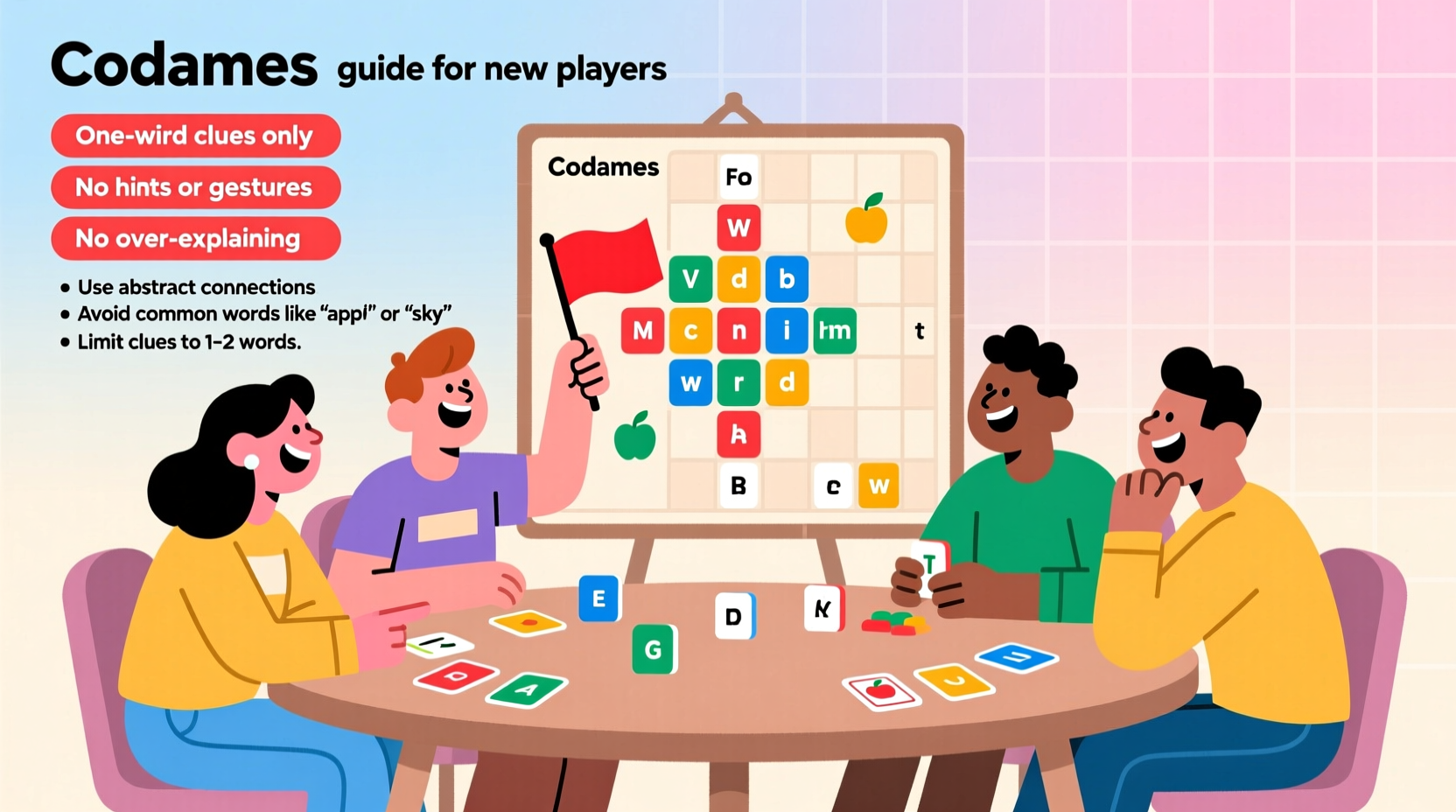
Before diving into strategy, every player must fully grasp how Codenames works. The game is played between two teams—red and blue—each led by a spymaster. A 5x5 grid of 25 words is laid out face-up. Among these words are nine belonging to one team, eight to the other, seven neutral words, and one assassin. The goal is to be the first team to correctly identify all their assigned words without selecting the assassin or the opposing team’s words.
The spymaster gives a one-word clue followed by a number (e.g., “Ocean, 2”), indicating a word related to two of their team’s remaining codenames. Team members then discuss and choose up to the number of words specified—or fewer, if they’re uncertain. If they pick a neutral word, their turn ends. Choosing an opponent’s word passes control to the other team. Selecting the assassin results in an immediate loss.
Building Effective Clues: The Art of Precision and Association
The heart of Codenames lies in the clue-giving phase. A good clue connects multiple target words without risking misinterpretation. The best spymasters think not only about dictionary definitions but also about cultural references, wordplay, and shared knowledge among their teammates.
For example, if the words “Apple,” “Windows,” and “Keyboard” are on the board, a clue like “Computer, 3” seems logical. However, “Apple” could also trigger associations with fruit or music, and “Windows” might make someone think of architecture. A more precise clue might be “Tech, 3,” assuming the team has prior context around tech companies.
“Great clues aren’t just correct—they’re predictable to your team and misleading to your opponents.” — James O’Malley, Board Game Strategist & Tournament Player
Avoid overly creative or obscure connections unless you’re certain your team will follow. In beginner games, clarity trumps cleverness. Use concrete nouns and familiar concepts before experimenting with puns or abstract ideas.
Essential Strategy Tips for New Players
Success in Codenames isn’t just about vocabulary—it’s about discipline, awareness, and collaboration. Here are actionable strategies every new player should adopt:
- Track eliminated words carefully. Once a word is guessed (or revealed as neutral), mentally remove it from possible clue pathways. This helps prevent false assumptions later.
- Think from the spymaster’s perspective. Ask yourself: What would I clue this with? This builds empathy and improves guess accuracy.
- Don’t overguess. Even if your team has made two correct picks, don’t push for a third unless the connection is undeniable. Risking the assassin or an opponent’s word is rarely worth it.
- Use context from previous rounds. If your spymaster used “Cold” earlier to refer to “Ice,” avoid assuming it means “Unfriendly” later unless context supports it.
- Communicate efficiently during guesses. Keep discussions brief and focused. Long debates waste time and increase the chance of error.
Step-by-Step Guide to Your First Game as Spymaster
Becoming a spymaster can be intimidating. Follow this timeline to navigate your first round with confidence:
- Review the key card privately. Identify your team’s words, the assassin, and note any risky overlaps (e.g., your word “Java” next to opponent’s “Indonesia”).
- Scan for natural clusters. Look for 2–3 words that share a strong, unambiguous connection (e.g., “Ham,” “Swiss,” “Cracker” → “Cheese, 3”).
- Select your safest, clearest clue. Prioritize reliability over quantity. “Fruit, 2” for “Banana” and “Apple” is better than forcing “Pie, 3” if one word is weakly related.
- Give the clue clearly: [Word], [Number]. Avoid facial cues or verbal hints—this keeps the game fair and challenging.
- Monitor your team’s discussion. Stay silent, but observe whether they interpret your clue as intended. This feedback helps refine future clues.
- Adjust after each turn. If your team missed the link, consider simpler themes in the next round.
Common Pitfalls and How to Avoid Them
New players often fall into predictable traps. Recognizing these early can dramatically improve performance.
| Pitfall | Why It’s Harmful | How to Avoid It |
|---|---|---|
| Overloading clues (“Movie, 4”) | Increases risk of accidental picks; dilutes focus | Stick to 2–3 unless the connection is rock-solid |
| Using words already on the board | Confusing and against official rules | Always verify your clue word isn’t in the 5x5 grid |
| Ignoring the assassin’s location | Can lead to careless elimination | Mark it mentally and avoid clues that might drift toward it |
| Guessing based on emotion, not logic | Leads to impulsive errors | Require at least two players to agree before selecting |
Real-Game Scenario: Turning Around a Losing Position
In a recent game, Team Red was trailing 6–2 with only four words left to win. Their spymaster had two key words exposed: “Rocket” and “Launch.” The board also included “Saturn,” “Mission,” and “Control”—all neutrals or enemy words. Instead of forcing a risky “Space, 2,” the spymaster gave the clue “NASA, 2.” The team immediately connected “Rocket” and “Mission.” Though “Mission” wasn’t theirs, they stopped after the first correct pick, preserving their turn. On the next round, a simple “Flight, 1” secured the win. The lesson? Sometimes a narrow, accurate clue is more powerful than a broad one.
Frequently Asked Questions
Can the clue word be a form of a word on the board?
No. According to official rules, the clue must not be a derivative (plural, tense, prefix/suffix) of any word currently visible on the board. For example, you cannot use “Running” if “Run” is present.
What happens if we guess the assassin by mistake?
The game ends immediately, and your team loses—regardless of the score. This makes cautious guessing especially important when uncertainty arises.
Can we pass our turn after receiving a clue?
Yes. After hearing the clue, the team may choose to guess zero words and end their turn. This is a smart tactic when the clue feels unclear or dangerous.
Final Checklist for New Codenames Players
- ✔ Understand the roles: spymaster vs. field operatives
- ✔ Memorize the color distribution: 9-8-7-1 (your words, opponent’s, neutral, assassin)
- ✔ Practice giving clean, non-derivative clues
- ✔ Always confirm the clue word isn’t on the board
- ✔ Limit guesses to reduce risk, especially late in the game
- ✔ Review past clues to detect patterns and avoid repetition
- ✔ Play at least three practice rounds to build team chemistry
Master the Mind Game
Codenames rewards patience, precision, and psychological insight. The most successful teams aren’t always the ones with the biggest vocabularies—they’re the ones who communicate effectively, manage risk wisely, and adapt quickly. Whether you're playing casually with friends or aiming for competitive play, the strategies outlined here lay the foundation for consistent improvement. Start small, focus on clear communication, and gradually expand your tactical range. With each game, you’ll develop a sharper intuition for what makes a great clue—and what separates good teams from champions.




 浙公网安备
33010002000092号
浙公网安备
33010002000092号 浙B2-20120091-4
Comments
No comments yet. Why don't you start the discussion?