
Color block tops—garments featuring bold, contrasting panels of solid color—are more than just a passing trend. They’re a statement of confidence, creativity, and sartorial awareness. When styled correctly, they can elevate even the simplest outfit into something memorable. Yet, many hesitate to wear them, fearing clashing tones or overwhelming proportions. The truth is, mastering color block tops isn’t about avoiding risk—it’s about understanding balance, contrast, and intention. With the right approach, you can pair these vibrant pieces with any bottom and look effortlessly polished.
The Foundation: Understanding Color Blocking
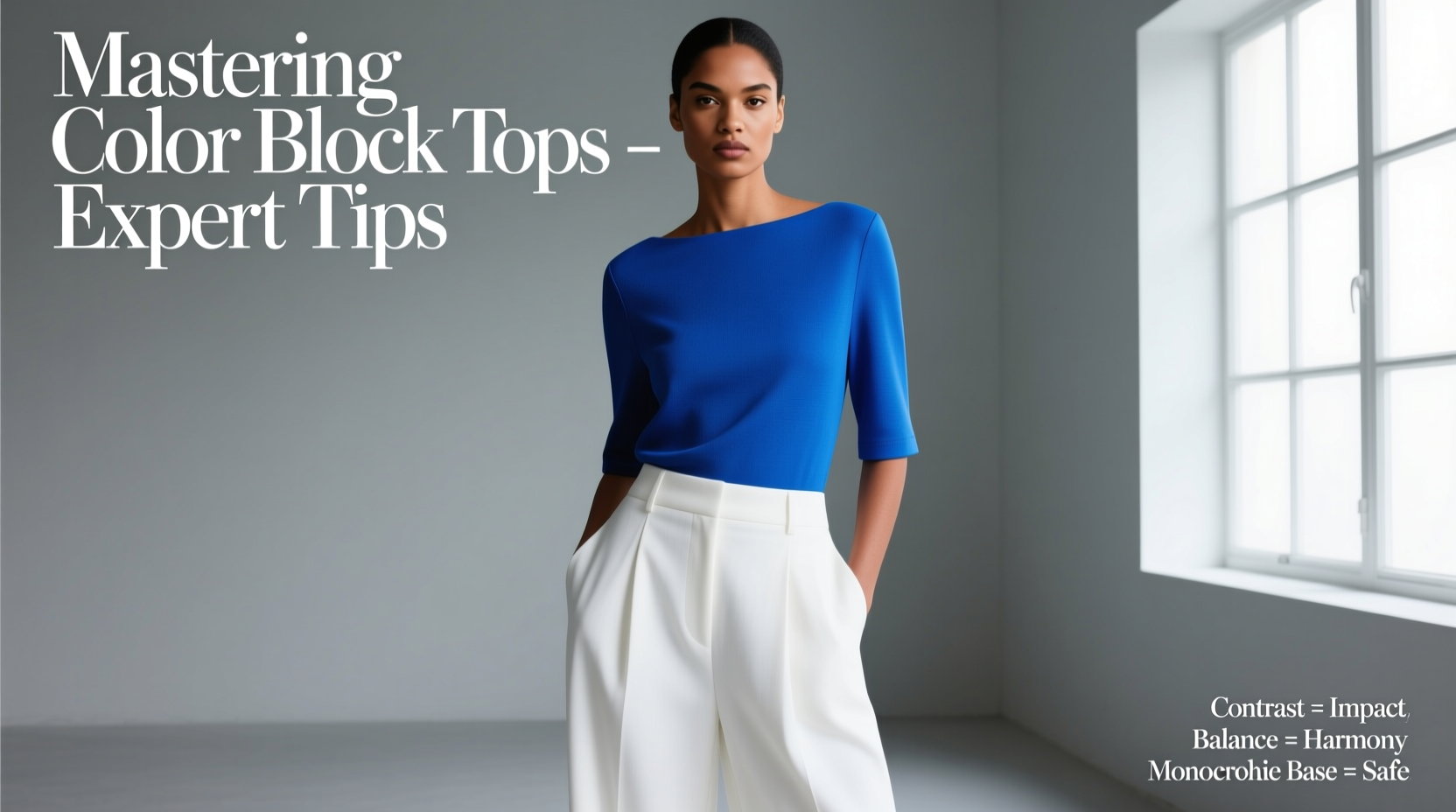
Color blocking in fashion refers to combining large sections of solid, often contrasting colors in a single garment or ensemble. Originating from modern art movements like De Stijl and Bauhaus, this technique emphasizes geometry, proportion, and emotional impact through hue. A color block top typically features two to four distinct colors arranged in clean, deliberate shapes—squares, diagonals, asymmetrical bands—across the torso.
The key to wearing them well lies not in minimizing their presence, but in harmonizing them with the rest of your outfit. Since the top is already a focal point, the bottom should complement—not compete. This means choosing silhouettes, textures, and colors that create visual cohesion without dulling the energy of the piece.
“Color blocking is design thinking applied to dressing. It’s not random; it’s calculated contrast.” — Lena Moreau, Fashion Stylist & Color Consultant
How to Choose the Right Bottom for Your Color Block Top
Selecting the ideal bottom starts with analyzing the top itself. Look closely at its dominant, secondary, and accent colors. Identify which shade carries the most visual weight—this will guide your pairing strategy.
- Dominant color: The largest panel, usually centered or placed strategically (e.g., across the chest). Use this as your anchor.
- Secondary color: Supports the main hue, often on sleeves or shoulders.
- Accent color: Smaller pops, typically used for edging or trim.
Once identified, use one of these three approaches:
- Match the dominant tone – Pair with bottoms in the same family (e.g., navy block top with navy trousers).
- Pick up an accent shade – Echo a smaller color from the top in your pants or skirt for subtle cohesion.
- Go neutral – Black, white, beige, or gray bottoms keep attention on the top while grounding the look.
Styling Strategies by Bottom Type
Not all bottoms behave the same under a bold top. Tailoring your choice to the occasion and cut ensures both comfort and style.
| Bottom Type | Best Color Block Pairing | Style Tip |
|---|---|---|
| Slim Trousers | Moderate contrast (e.g., red/white top + black pants) | Keeps silhouette streamlined; ideal for office or dinner |
| Denim Jeans | Top with blue or neutral elements | Avoid blue-heavy tops unless jeans are faded or off-tone |
| Wide-Leg Pants | Monochromatic or neutral blocks | Prevents visual overload; balances volume above and below |
| Mini Skirt | Complementary accent color (e.g., yellow block top + violet skirt) | Adds playfulness; great for weekend outings |
| Maxi Skirt | Neutral or earth-toned blocks | Creates elegant contrast; avoids top-heaviness |
Real Example: Office to Evening Transition
Consider Sarah, a marketing executive who wears a coral-and-teal color block blouse to a morning meeting. She pairs it with tailored black wide-leg trousers and nude heels—professional, balanced, and vibrant without being loud. After work, she swaps the heels for metallic sandals, adds statement earrings, and cinches the look with a thin gold belt. The same top now works for drinks downtown. The secret? The black pants provided a consistent, versatile base that allowed the top to shine in multiple contexts.
Pro Tips for Balanced Outfits
Even with the right bottom, small missteps can throw off the entire look. These actionable strategies help maintain harmony:
- Balance volume: If your top is boxy or oversized, opt for fitted or tapered bottoms. Conversely, pair a tight-fitting color block crop top with high-waisted flares or A-line skirts.
- Watch neckline coordination: A high-neck block top pairs well with V-neck or open-collar outer layers when worn over shirts. Avoid doubling up on busy necklines.
- Limit additional patterns: Unless intentionally curated, avoid pairing with printed bottoms. Let the color block be the sole pattern.
- Consider skin tone: Bright blocks near the face can affect complexion. Test shades in natural light—some may wash you out, while others enhance your glow.
Checklist: Before You Wear That Color Block Top
- Identify the dominant, secondary, and accent colors.
- Choose a bottom in one of those hues or a neutral that complements them.
- Ensure the fabric weight and drape of top and bottom work together.
- Check that your shoes or bag pick up at least one color from the top.
- Step back and assess overall balance—no single element should overpower the rest.
Avoiding Common Mistakes
Many abandon color block tops after one awkward outing. Often, the issue isn’t the garment—it’s the styling. Here are frequent pitfalls and how to fix them:
| Mistake | Why It Fails | Solution |
|---|---|---|
| Pairing with multi-colored bottoms | Creates visual chaos; no clear focal point | Stick to solid-color bottoms only |
| Matching too literally (e.g., full rainbow top with rainbow pants) | Looks costumey, not chic | Use only one shared color between top and bottom |
| Ignoring proportions | Bulky top + bulky bottom = overwhelming silhouette | Balance volume—one statement piece per half of the body |
| Over-accessorizing | Distracts from the intentional design of the top | Keep jewelry minimal; let the top speak |
Frequently Asked Questions
Can I wear a color block top with patterned bottoms?
Generally, no. Patterns introduce competing lines and colors that disrupt the clean geometry of color blocking. If you must, choose a micro-pattern (like pinstripes) in a single hue that matches one color in the top—and keep the scale subtle.
What if my top has clashing colors?
Some intentional designs use high-contrast combinations (e.g., pink and green). In such cases, neutralize the look with black, white, or charcoal bottoms. You can also layer with a solid vest or blazer to break up the intensity.
Are color block tops suitable for formal settings?
Yes, if chosen wisely. Opt for structured silhouettes in sophisticated color pairings—navy and cream, burgundy and taupe, black and ivory. Pair with tailored trousers or a pencil skirt to maintain professionalism.
Final Thoughts: Own Your Statement
Color block tops aren’t meant to blend in—they’re designed to command attention. But true style isn’t about visibility; it’s about intention. When you pair a bold top with thoughtful consideration for color, cut, and context, you transform a risky piece into a signature look.
Start small: try a two-tone block with classic denim. Then experiment—introduce a skirt in an accent shade, or swap neutrals seasonally. Build confidence through repetition. Over time, you’ll develop an instinct for what works, turning styling decisions into second nature.




 浙公网安备
33010002000092号
浙公网安备
33010002000092号 浙B2-20120091-4
Comments
No comments yet. Why don't you start the discussion?