
Cowboy boots are more than just footwear—they're investments in craftsmanship, heritage, and personal style. Whether handmade from exotic leathers or built for daily ranch work, their value diminishes quickly without proper care. One of the most overlooked yet critical aspects of boot maintenance is storage. Improper storage leads to sagging shafts, cracked leather, misshapen toes, and shortened lifespans. The good news: with a few deliberate habits and the right tools, you can keep your boots looking pristine for years.
The Hidden Impact of Poor Boot Storage
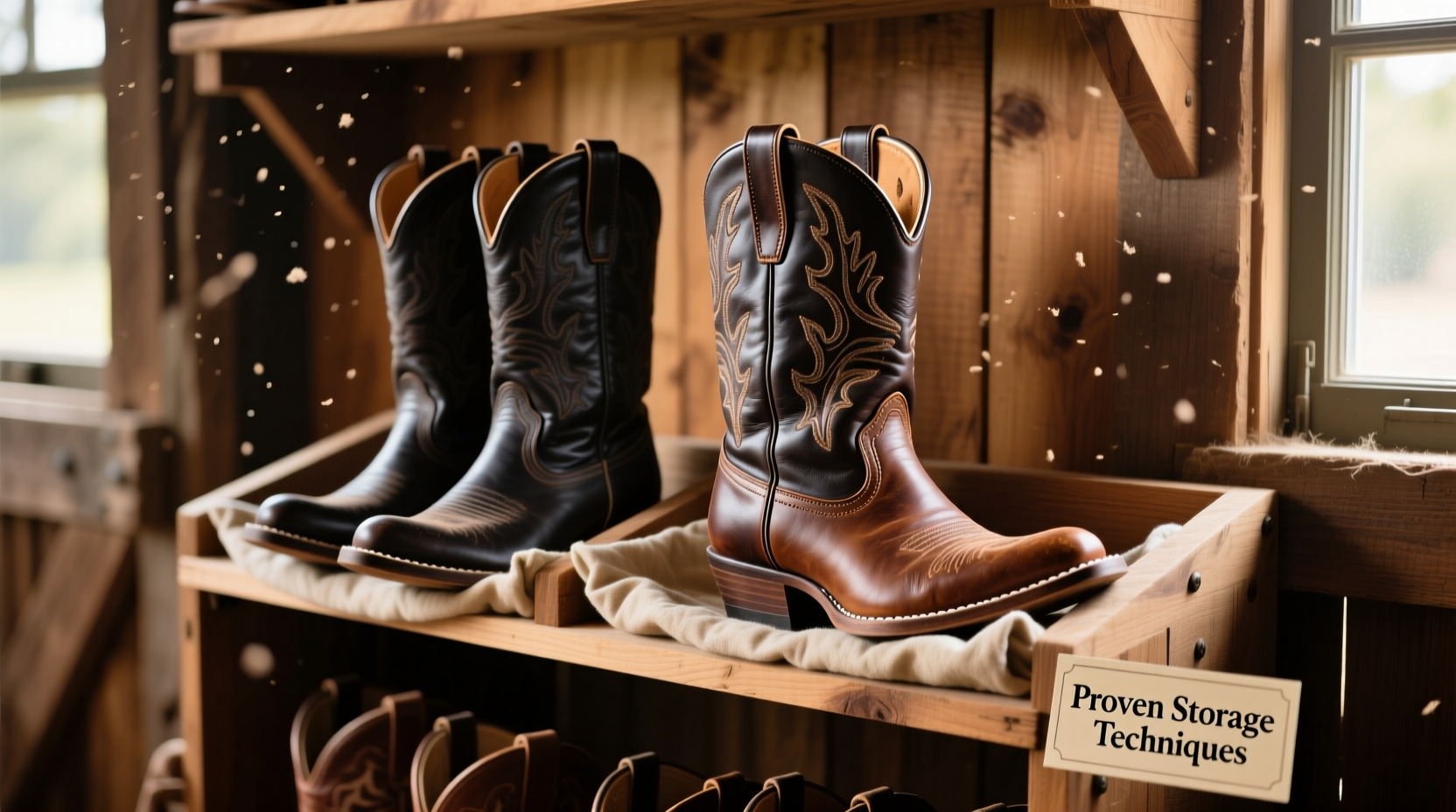
Leaving boots tossed in a closet corner or crammed under a bed does more than create clutter—it actively damages their structure. Leather needs airflow to resist mold and mildew, while the internal shape relies on consistent support. Without it, the arch collapses, the heel counter buckles, and stitching weakens from repeated pressure points. Over time, even high-end boots lose their rigidity and comfort.
Humidity, temperature swings, and exposure to light accelerate deterioration. A damp basement encourages bacterial growth; a sunny entryway fades color and dries out leather. These environmental factors compound when combined with poor positioning—like stacking boots heel-to-toe or storing them sideways.
Step-by-Step Guide to Proper Cowboy Boot Storage
Preserving your boots starts the moment you take them off. Follow this sequence to ensure long-term integrity:
- Clean Thoroughly: Wipe away dirt and dust with a soft horsehair brush or microfiber cloth. For stubborn grime, use a leather-specific cleaner and allow boots to dry naturally at room temperature—never near a heater.
- Condition Regularly: Apply a quality leather conditioner every 4–6 weeks to replenish natural oils. This prevents cracking and maintains suppleness, especially in arid climates.
- Insert Boot Shapers: Use cedar boot trees or foam inserts to maintain the boot’s interior shape. Cedar also absorbs moisture and neutralizes odors.
- Position Upright: Store boots standing straight, never leaning or lying flat. This preserves the shaft's vertical alignment and prevents permanent creases.
- Choose the Right Location: Select a cool, dry, dark space with stable temperature and humidity—ideally between 60–75°F (15–24°C) and 40–50% humidity.
- Rotate When Possible: If you own multiple pairs, rotate usage to give each pair 24–48 hours to rest and air out between wears.
Do’s and Don’ts of Cowboy Boot Storage
| Do | Don’t |
|---|---|
| Store upright with boot shapers inside | Leave boots slumped over or stacked |
| Use breathable cotton or linen dust bags | Store in plastic containers or garbage bags |
| Keep in a climate-stable environment | Store in attics, garages, or basements with humidity swings |
| Clean and condition before long-term storage | Store dirty or damp boots |
| Inspect monthly for mold, pests, or dryness | Forget about boots for months at a time |
Expert Insight: What Long-Term Care Looks Like
“Boot longevity isn’t about how often you wear them—it’s about how you treat them when they’re not on your feet. Proper storage is where most people fail. A well-supported, clean, and ventilated boot can last decades.” — Rafael Mendez, Master Bootmaker, Texas Heritage Footwear Co.
Mendez has restored vintage cowboy boots from the 1940s that remained structurally sound due to consistent cedar tree use and dark, dry storage. He emphasizes that modern owners often underestimate the role of passive care. “It’s not glamorous,” he says, “but stuffing boots with paper towels during short breaks is better than nothing. Consistency beats perfection.”
Real Example: From Sagging to Showroom
Consider Sarah T., a ranch owner in West Texas, who inherited a pair of her grandfather’s hand-tooled ostrich boots. Stored loosely in a wooden crate for over a decade, the leather was faded, the shafts were bent, and the lining smelled musty. After professional cleaning, she began using custom-fitted cedar boot trees and stored them in a ventilated cabinet lined with silica gel packs.
Within six months, the boots regained structural integrity. While minor creases remained, the toe box held its form, and the scent of cedar replaced mildew. Today, she rotates them seasonally and displays one pair on a felt-lined shelf—proof that even neglected boots can recover with disciplined storage habits.
Choosing the Right Storage Tools
Not all boot accessories are created equal. Here’s what works—and what doesn’t:
- Cedar Boot Trees: Ideal for moisture control and odor reduction. Choose full-length versions that extend into the shaft for maximum support.
- Foam Inserts: Affordable and lightweight, but less durable over time. Best for occasional-use boots.
- Dust Bags: Opt for unbleached cotton or muslin. Avoid synthetic blends that don’t breathe.
- Boot Racks: Wall-mounted or freestanding racks keep boots upright and visible. Look for padded shelves to prevent scuffing.
- Shoe Horns (for storage?): Not used during storage, but using one when wearing boots prevents heel collapse—a preventive step that complements proper storage.
FAQ: Common Cowboy Boot Storage Questions
Can I store cowboy boots in their original box?
Only if modified. Most shoeboxes lack ventilation and compress the shaft. If using a box, cut air holes in the sides and line it with acid-free tissue paper. Insert boot trees and place in a climate-controlled area—not a garage or attic.
How long can boots sit unused before needing attention?
Even in ideal conditions, check stored boots every 4–6 weeks. Leather loses moisture over time, so recondition every 3–4 months if not worn. Boots stored longer than six months should be wiped down and re-treated before wearing.
Is it okay to hang cowboy boots by the heel?
No. Hanging distorts the ankle structure and stretches the heel counter. Over time, this causes permanent deformation. Always store boots upright on a flat surface or rack.
Essential Storage Checklist
Before putting your boots away for extended periods, run through this checklist:
- ✔ Clean exterior and interior thoroughly
- ✔ Condition leather and allow 24 hours to absorb
- ✔ Insert cedar or foam boot shapers
- ✔ Place in breathable dust bags
- ✔ Store upright in a cool, dark, dry location
- ✔ Add moisture absorber (silica gel or charcoal)
- ✔ Schedule monthly inspections
Conclusion: Treat Your Boots Like Heirlooms
Cowboy boots deserve more than being kicked into a closet after a long day. With thoughtful storage, they can remain functional, beautiful, and comfortable for generations. The techniques outlined here—consistent cleaning, proper support, climate awareness, and routine checks—are not complicated, but they require intention. Whether you wear your boots weekly or save them for special occasions, how you store them determines their fate.




 浙公网安备
33010002000092号
浙公网安备
33010002000092号 浙B2-20120091-4
Comments
No comments yet. Why don't you start the discussion?