
Crispy rice puffs are a beloved snack across cultures—light, airy, and satisfyingly crunchy. Whether enjoyed plain, seasoned, or as part of a dessert mix, their delicate structure makes them a favorite for all ages. Yet, replicating that ideal crispness and consistent puff at home can be surprisingly tricky. Many end up with flat, chewy, or unevenly puffed grains. The key lies not in complicated techniques but in understanding the science of moisture, heat, and grain selection. With the right approach, you can consistently produce restaurant-quality rice puffs using simple kitchen tools.
The Science Behind the Perfect Rice Puff
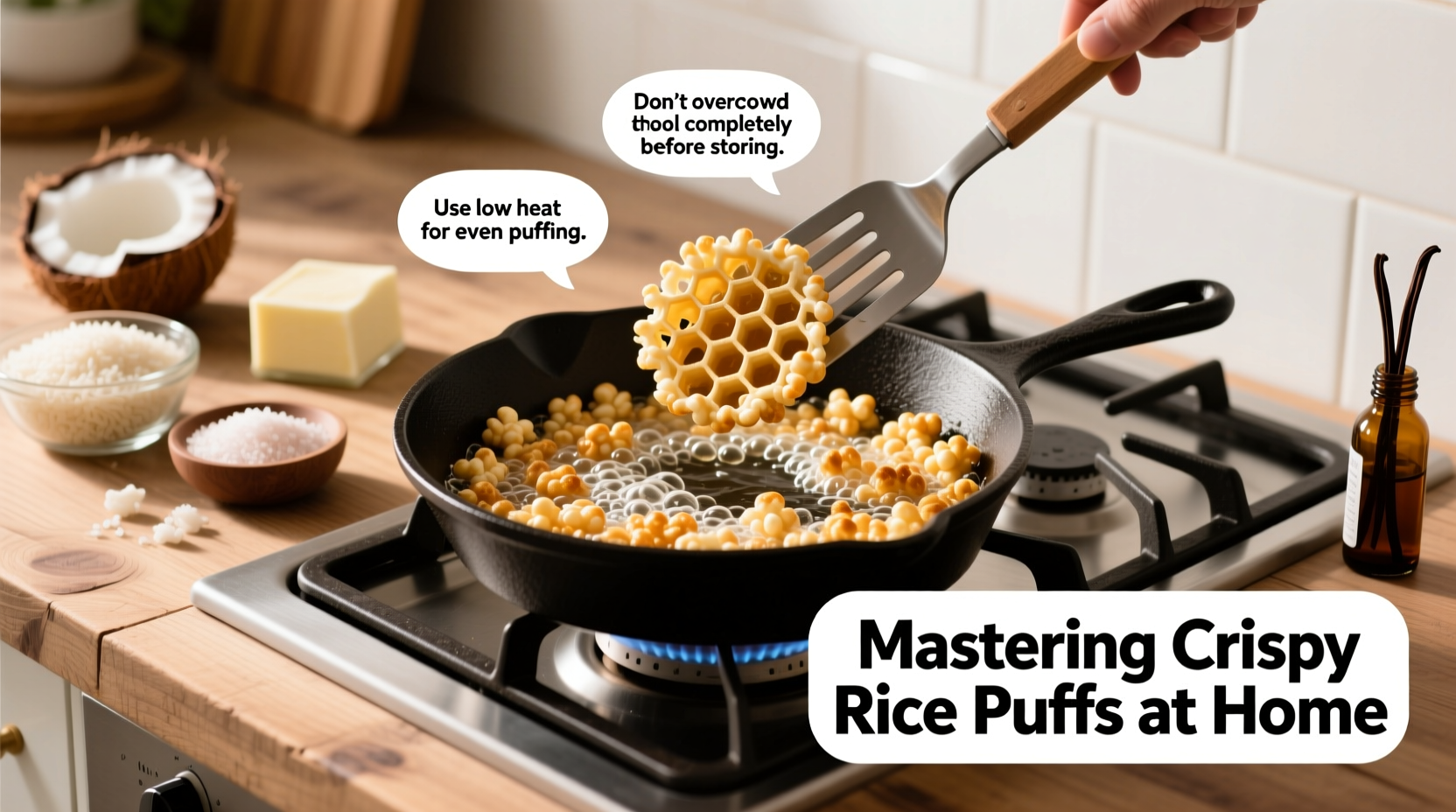
Rice puffs form when moisture trapped inside a grain rapidly turns to steam under intense heat. This expansion causes the kernel to burst outward, creating a light, porous structure. The process is similar to popping popcorn, but rice requires precise conditions to puff effectively. Not all rice varieties behave the same way. Only certain types—typically small, round grains with low moisture content—respond well to high-heat treatment.
The critical factors are: grain type, moisture level, pre-treatment method, and heating technique. Too much moisture prevents rapid expansion; too little results in no puffing at all. The goal is to dry the grain just enough so that internal moisture becomes pressurized instantly upon heating, forcing the starch outward into a crisp network.
“Success with rice puffs isn’t about power—it’s about precision. A 5% difference in moisture can mean the difference between a perfect puff and a hard pellet.” — Dr. Lin Zhao, Food Scientist specializing in cereal processing
Choosing the Right Rice: What Works and What Doesn’t
Not every rice will puff. Long-grain white rice like jasmine or basmati lacks the structural integrity needed for expansion. Instead, opt for short-grain varieties specifically known for puffing ability.
| Rice Type | Puffing Success | Notes |
|---|---|---|
| Short-Grain White (e.g., Calrose) | Moderate | Can puff if properly dried; best for beginners |
| Parboiled Rice (Sela/Converted) | High | Pre-gelatinized starch holds structure better |
| Specialty Popping Rice (available online) | Very High | Engineered for consistent puffing |
| Brown Rice | Low | Hull resists expansion; rarely puffs fully |
| Jasmine or Basmati | Poor | Too long and fragile; burns before puffing |
Step-by-Step Guide to Homemade Crispy Rice Puffs
Follow this detailed process to maximize puff yield and achieve uniform crispness. This method uses stovetop heating, which offers more control than oven-based approaches.
- Select and rinse your rice: Use 1 cup of parboiled or short-grain white rice. Rinse thoroughly under cold water until runoff is clear to remove excess surface starch.
- Soak for controlled hydration: Soak rice in fresh water for exactly 30 minutes. This allows moisture to penetrate evenly without oversaturating.
- Dry completely: Drain and spread rice on a clean towel. Pat dry, then air-dry for 2–3 hours (or use a dehydrator at 40°C for 1 hour). The grains should feel hard and dry to the touch.
- Heat the pan: Use a heavy-bottomed skillet or wok. Heat over medium-high until a drop of water sizzles and evaporates instantly.
- Add rice in a single layer: Sprinkle a thin layer of dried rice—no oil or fat. Cover immediately with a tight-fitting lid to contain steam and flying grains.
- Listen for the pops: Within 30–60 seconds, you’ll hear rapid popping sounds. Shake the pan gently to prevent burning. When pops slow to one every few seconds, remove from heat.
- Cool and store: Let puffs sit covered for 1 minute, then transfer to a bowl. Cool completely before storing in an airtight container.
Flavor Variations After Puffing
Season after puffing to preserve crispness. Toss cooled puffs with a light coating of oil (optional) and any of the following:
- Sea salt and smoked paprika for savory depth
- Light soy sauce and sesame seeds for umami
- Coconut sugar and cinnamon for sweet treats
- Matcha powder and powdered milk for a Japanese twist
Avoiding Common Mistakes: Do’s and Don’ts
Even experienced home cooks make errors that compromise texture. Here’s how to avoid the most frequent pitfalls.
| Action | Do | Don't |
|---|---|---|
| Drying rice | Air-dry 2+ hours or use a dehydrator | Rush drying with a hairdryer or oven (uneven results) |
| Heating method | Use medium-high heat with a tight lid | Use high heat without monitoring (burns grains) |
| Batch size | Cook in thin layers (max 1/4 inch) | Crowd the pan (leads to steaming, not puffing) |
| Storage | Keep in airtight container with silica packet | Leave exposed to humidity (causes sogginess) |
| Seasoning | Toss with dry spices post-puffing | Season before heating (promotes clumping and burning) |
Real Example: From Failed Attempts to Consistent Results
Sophie, a home cook in Portland, struggled for months to make edible rice puffs. Her early batches were either burnt or dense and chewy. She used jasmine rice, soaked it overnight, and tried baking it. “I thought more moisture would help it expand,” she said. After researching traditional methods used in Indian and Southeast Asian kitchens, she switched to parboiled rice, reduced soak time to 30 minutes, and adopted the stovetop popping method. Within a week, she achieved consistent puffs. Now, she seasons them with turmeric and cumin for a spiced snack her kids love. “The real breakthrough was realizing drying mattered more than soaking.”
Essential Tips for Texture and Flavor Mastery
Texture and flavor go hand in hand. A perfectly puffed rice grain provides the canvas; seasoning brings it to life. These tips ensure both elements shine.
- Uniform drying is non-negotiable: Any variation in moisture leads to inconsistent puffing. Spread rice in a single layer and rotate towels halfway through drying.
- Use a dark pan for visual cues: A black or dark-colored skillet helps you see when grains begin to brown, signaling it’s time to remove from heat.
- Never leave unattended: The entire process takes under two minutes once popping starts. Stay by the stove.
- Experiment with brining (advanced): Soak rice briefly in a saltwater solution (1 tsp salt per cup water) before drying. Enhances flavor penetration without compromising puffability.
Frequently Asked Questions
Can I use a microwave to make rice puffs?
It’s possible but not recommended. Microwaves heat unevenly, leading to partial puffing and scorching. Stovetop or hot-sand methods offer far better control and consistency.
Why did my rice burn instead of puff?
This usually happens due to excessive heat or insufficient drying. If the exterior heats too quickly, the inside doesn’t have time to expand. Always use medium-high heat—not maximum—and ensure grains are thoroughly dry before heating.
How long do homemade rice puffs last?
Stored in an airtight container in a cool, dry place, they stay crisp for up to two weeks. For longer shelf life, include a food-safe desiccant pack to absorb ambient moisture.
Final Checklist Before You Begin
Before starting your next batch, run through this checklist to set yourself up for success:
- ✓ Selected parboiled or short-grain rice (not long-grain)
- ✓ Soaked rice for exactly 30 minutes
- ✓ Dried rice completely (no dampness on touch)
- ✓ Preheated a heavy skillet or wok
- ✓ Prepared a tight-fitting lid
- ✓ Measured a thin layer of rice (¼ inch max)
- ✓ Cleared workspace (pops can fly!)
Conclusion: Turn Snack Time Into an Art
Mastering crispy rice puffs at home is less about equipment and more about attention to detail. By selecting the right rice, managing moisture, and applying heat with care, you unlock a world of crunchy, flavorful possibilities. These puffs aren’t just a snack—they’re a blank canvas for creativity, a testament to patience, and a rewarding result of culinary precision. Once you nail the technique, you’ll never reach for store-bought versions again.




 浙公网安备
33010002000092号
浙公网安备
33010002000092号 浙B2-20120091-4
Comments
No comments yet. Why don't you start the discussion?