
Crochet is as much about structure as it is about creativity. While stitches build form, it’s the subtle art of decreasing that gives dimension, shape, and polish to your work. Whether you're crafting amigurumi, garments, or intricate lace patterns, mastering decreases transforms flat fabric into sculpted elegance. Yet for many crocheters, decreases remain a source of confusion—resulting in gaps, uneven edges, or unintended distortions. This guide breaks down the mechanics, methods, and mindful practices behind effective crochet decreases so you can shape your projects with confidence.
Understanding the Purpose of Crochet Decreases
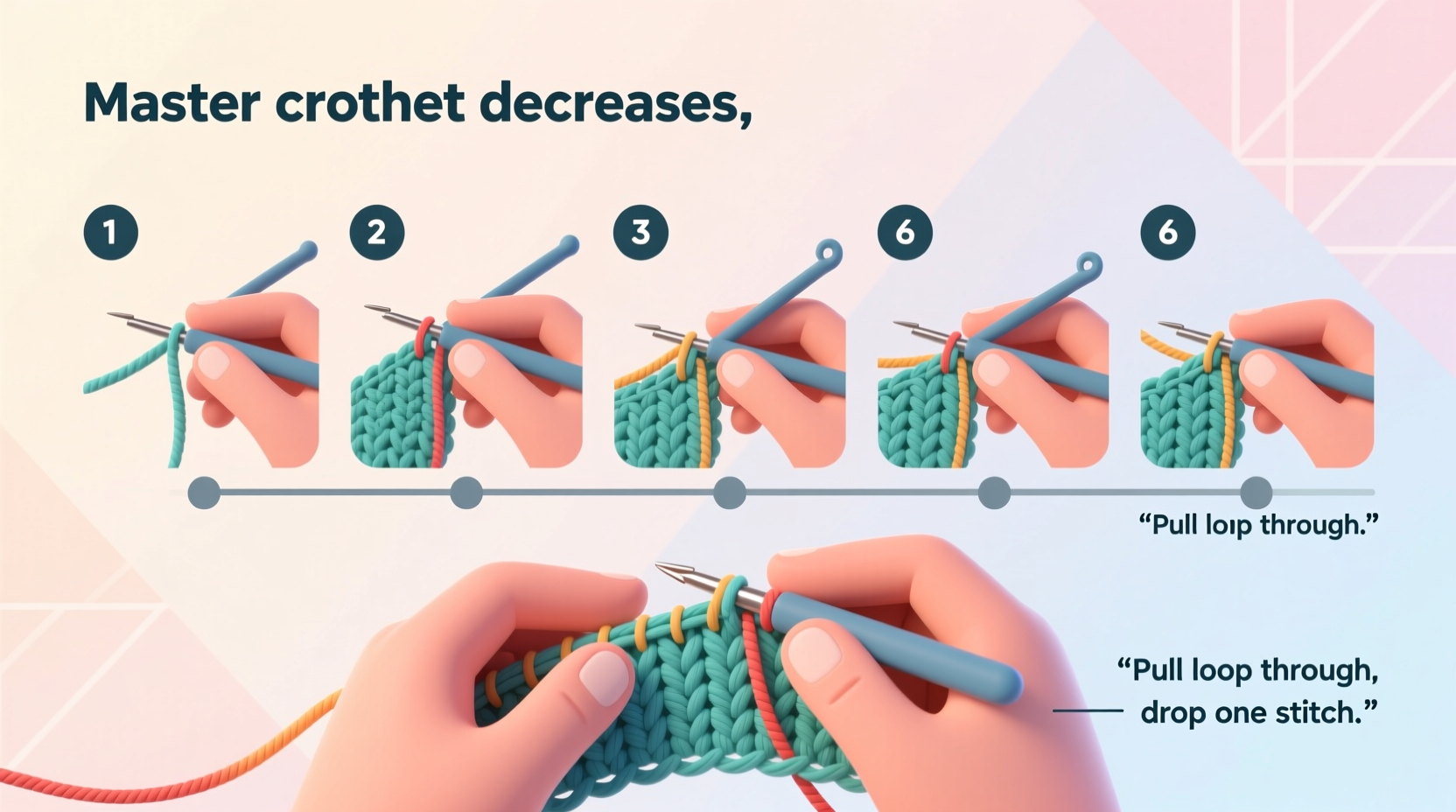
A decrease reduces the number of stitches in a row or round, pulling the fabric inward. Unlike increases, which expand outward, decreases create curves, define edges, and control volume. They are essential in shaping hats, sleeves, toys, and any project requiring contour. Without proper decreases, your work may flare, pucker, or lose structural integrity.
The key to successful decreases lies not just in technique but in timing and placement. A well-placed decrease at the beginning of a hat crown creates a smooth closure; a misaligned one can leave a hole or a jagged peak. Understanding how each decrease behaves—visually and structurally—is the first step toward mastery.
Common Types of Crochet Decreases and When to Use Them
Different stitches require different decrease methods. Using the wrong type can compromise texture and tension. Below is a breakdown of the most widely used decreases across major stitch families.
| Stitch Type | Decrease Method | Best For | Notes |
|---|---|---|---|
| Single Crochet (SC) | Invisible Decrease (inv-dec) | Amigurumi, tight fabrics | Less visible than standard sc2tog; preserves stitch alignment |
| Double Crochet (DC) | dc2tog (double crochet two together) | Hats, shawls, garments | Slight ridge forms; ideal for gradual shaping |
| Half Double Crochet (HDC) | hdc2tog | Textured pieces, mittens | Balances height and density |
| Tunisian Simple Stitch | Tss2tog (Tunisian knit/purl decrease) | Dense, woven-like fabrics | Requires front-to-back hook manipulation |
| Lace or Shell Stitches | Reduce cluster size or skip repeats | Shawls, doilies | Maintain pattern rhythm while reducing width |
“Precision in decreases separates novice work from professional finishes. It’s not just about fewer stitches—it’s about controlled contraction.” — Lila Monroe, Textile Designer & Crochet Educator
Step-by-Step Guide to Executing Key Decreases
Follow these detailed steps to perform the most essential decreases accurately and consistently.
1. Invisible Single Crochet Decrease (inv-dec)
- Insert hook into the front loop only (FLO) of the next stitch.
- Insert hook into the FLO of the following stitch.
- Yarn over and pull up a loop (3 loops on hook).
- Yarn over and draw through all three loops.
This method hides the decrease within the stitch column, making it nearly invisible—ideal for amigurumi heads or seamless garment shaping.
2. Double Crochet Two Together (dc2tog)
- Yarn over, insert hook into next stitch, pull up a loop (3 loops on hook).
- Yarn over, pull through two loops (now 2 loops remain).
- Yarn over, insert hook into next stitch, pull up a loop (4 loops on hook).
- Yarn over, pull through two loops (3 loops on hook).
- Yarn over, pull through all three loops.
This creates a centered decrease with slight texture. Best used in multiples for symmetrical shaping, such as sleeve caps.
3. Half Double Crochet Two Together (hdc2tog)
- Yarn over, insert hook into next stitch, pull up a loop (3 loops on hook).
- Yarn over, insert hook into next stitch, pull up a loop (5 loops on hook).
- Yarn over, pull through all five loops.
Preserves the mid-height nature of hdc while reducing bulk. Excellent for cozy accessories like ear warmers.
Real Example: Shaping an Amigurumi Bear Head
Jessica, an intermediate crocheter, struggled with closing her amigurumi bear heads. She used standard sc2tog, which created a starburst effect at the crown. After switching to invisible decreases and spacing them evenly every 6–7 stitches across reduction rounds, her results improved dramatically. The top closed smoothly without puckering, and the facial features stayed centered. By marking her starting stitch with a stitch marker and counting meticulously, she achieved consistent, professional-looking results. Her next project—a fox plushie—turned out flawlessly on the first try.
This example illustrates how technique refinement directly impacts outcome. A small change in decrease method yielded a significant aesthetic upgrade.
Avoiding Common Decrease Mistakes
Even experienced crocheters make errors when decreasing. Awareness helps prevent them.
- Uneven distribution: Clustering decreases too close together causes sharp angles instead of smooth curves.
- Incorrect stitch count: Miscounting leads to asymmetry, especially in circular projects.
- Poor tension: Tightening too much during a decrease distorts adjacent stitches.
- Using the wrong decrease: A dc2tog in a single crochet row disrupts gauge and texture.
- Skipping turning chains: In flat rows, failing to account for turning chains skews alignment.
To maintain clean lines, plan decreases symmetrically. For circular work, use stitch markers to divide sections evenly. In flat knitting-style crochet, mirror decreases on both sides—for example, decrease at the start and end of a row for tapered edges.
Checklist: Mastering Your Decrease Technique
- ✔ Identify the correct decrease method for your stitch type
- ✔ Mark decrease points with stitch markers in circular work
- ✔ Count stitches before and after each decrease round
- ✔ Maintain consistent yarn tension throughout the decrease
- ✔ Practice new decrease types on a swatch first
- ✔ Follow pattern instructions precisely—or adjust math if customizing
- ✔ Use the invisible decrease for seamless, polished finishes where appropriate
Frequently Asked Questions
Can I substitute a regular sc2tog for an invisible decrease?
Yes, but with visual trade-offs. A standard sc2tog leans visibly and may create a bump. The invisible decrease blends better, especially in tight-pile projects like stuffed animals. If appearance matters, opt for the invisible version.
How do I decrease evenly across a row?
Divide the total number of stitches by the number of decreases needed. For example, if you have 60 stitches and need to decrease 10 times, place a decrease every 6 stitches (60 ÷ 10 = 6). Use stitch markers to track intervals and ensure spacing stays consistent.
Why does my fabric curl when I decrease?
Curling often results from uneven tension or clustering too many decreases in one area. Try spacing them more evenly and relaxing your grip on the yarn during the decrease. Blocking the finished piece can also help relax the fibers and flatten the fabric.
Refine Your Craft, One Stitch at a Time
Mastering crochet decreases is not merely a technical skill—it's an exercise in patience, observation, and intention. Each decrease is a decision point: where to place it, how to execute it, and how it contributes to the whole. With deliberate practice and attention to detail, you’ll move beyond simply following patterns to truly understanding how garments and objects take shape. These subtle techniques are what elevate handmade items from charming to exceptional.




 浙公网安备
33010002000092号
浙公网安备
33010002000092号 浙B2-20120091-4
Comments
No comments yet. Why don't you start the discussion?