
Dressing is more than fabric and silhouette—it’s a declaration of identity, especially when navigating diverse cultural landscapes. In an increasingly interconnected world, \"cross-border independent style\" has emerged as a powerful mode of self-expression: a fusion of global influences, personal values, and fearless individuality. At its core, this aesthetic isn’t about following trends dictated by fashion capitals, but about curating a wardrobe that reflects your journey, your ethics, and your courage. And few garments embody this ethos quite like the dress—versatile, evocative, and deeply symbolic. Whether you're walking through Tokyo's Harajuku district, attending a gallery opening in Berlin, or stepping into a sun-drenched market in Marrakech, wearing a dress with confidence and edge means embracing both heritage and innovation without compromise.
The Essence of Cross-Border Independent Style
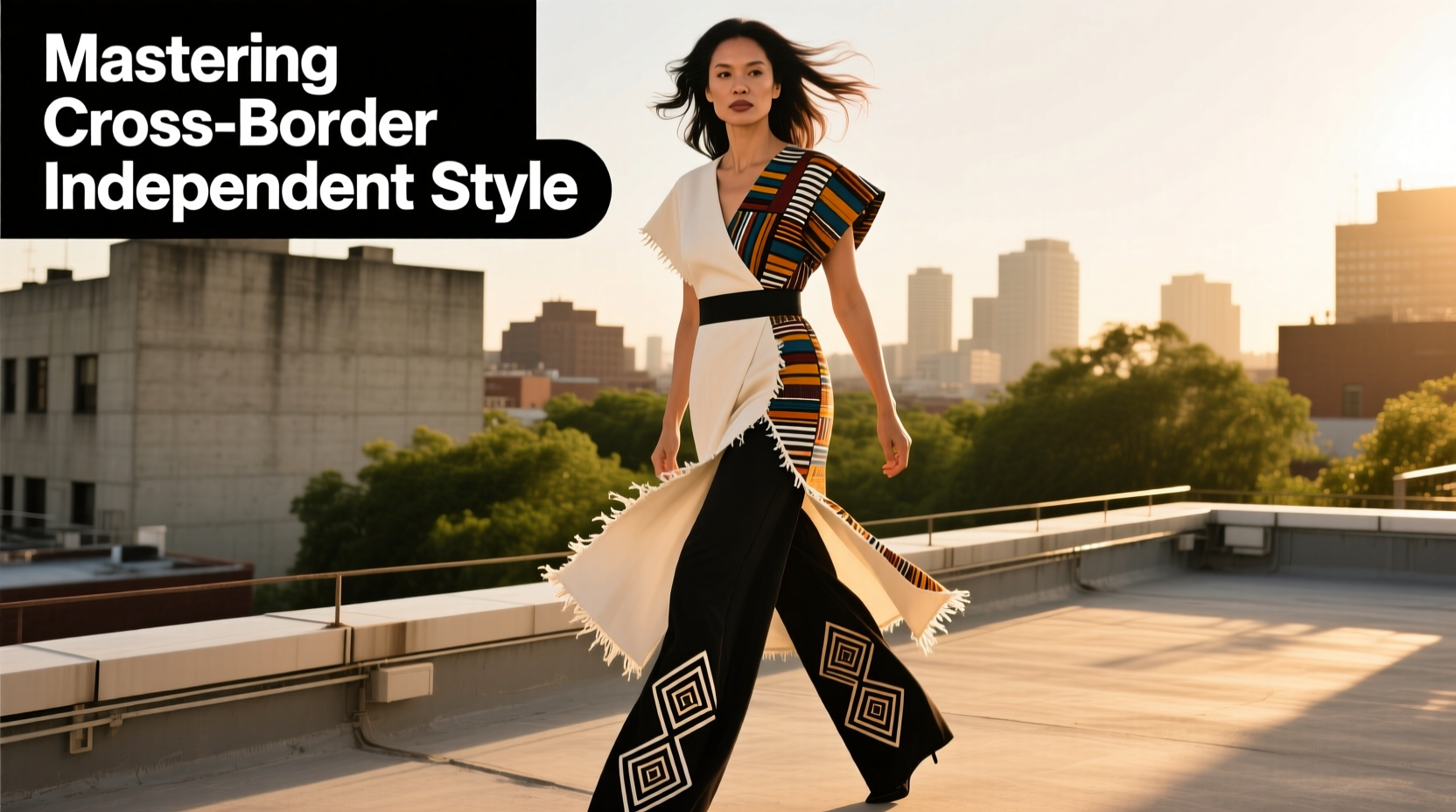
Cross-border independent style transcends geography. It draws from traditional textiles like Indonesian batik, West African wax prints, or Japanese sashiko stitching, reinterpreting them through a contemporary lens. It respects origin while refusing to be confined by it. This approach is not appropriation—it’s appreciation rooted in awareness and intentionality. The independent aspect lies in rejecting mass-market homogenization. Instead, it champions slow fashion, artisanal craftsmanship, and pieces that tell stories.
A dress becomes more than clothing when worn this way. It transforms into a narrative device—a canvas for cultural dialogue, personal evolution, and quiet rebellion against fast-fashion norms. Confidence comes not from fitting in, but from standing out with purpose. Edge emerges not through shock value, but through authenticity and attention to detail: the drape of a handwoven linen, the asymmetry of a self-designed hemline, or the boldness of pairing a Victorian-inspired lace dress with combat boots.
“Style today isn’t about where you’re from—it’s about where you’ve been, what you believe, and how fearlessly you carry it.” — Lila Chen, Global Fashion Ethnographer
Building a Dress Wardrobe with Intention
Curating a cross-border dress collection requires mindfulness. Start by identifying what resonates with you beyond aesthetics—what textures move you? Which silhouettes empower you? Do certain colors evoke memories or emotions tied to places you’ve lived or visited?
Focus on quality over quantity. Seek out brands that prioritize ethical production, transparent sourcing, and timeless design. Consider supporting designers from underrepresented regions who are redefining global fashion narratives. A single piece from a Mongolian felt-maker or a Palestinian embroidery collective can carry more meaning—and longevity—than a dozen trend-driven fast-fashion items.
Key Elements of a Versatile Cross-Border Dress Collection
| Dress Type | Cultural Influence | Styling Tip | Occasion Fit |
|---|---|---|---|
| Kaftan | North African / Middle Eastern | Layer over swimwear or pair with wide-leg trousers | Beach, casual events |
| Wrap Dress | Global (popularized by Diane von Fürstenberg) | Add a structured belt and ankle boots | Work, dinner |
| Indo-Western Anarkali | South Asian fusion | Pair with minimalist jewelry and block heels | Festivals, celebrations |
| Minimalist Shift | Scandinavian / Japanese | Wear with raw-edged denim jacket and sneakers | Day-to-evening transition |
| Upcycled Maxi | Eco-conscious global makers | Add leather straps or patchwork overlays | Art openings, protests, travel |
Wearing Dresses with Confidence Across Cultures
Confidence in cross-border dressing stems from knowledge and respect. Research local customs before traveling—knowing whether shoulders should be covered in religious sites or if modesty norms apply in certain communities allows you to adapt gracefully without sacrificing your voice.
But adaptation doesn’t mean erasure. You can honor context while maintaining your edge. For instance, in conservative environments, layering becomes a tool of both compliance and creativity. A sheer embroidered tunic over a slip dress, paired with opaque tights and tailored boots, maintains coverage while preserving drama and texture.
In progressive urban centers, contrast speaks volumes. Try pairing a traditional Uzbek ikat dress with a graffiti-print trench coat. Or style a high-necked Romanian folk dress with silver punk rings and a shaved sidecut. These juxtapositions challenge assumptions and invite conversation.
Real Example: Amara’s Journey Through Three Continents
Amara, a freelance photographer based between Lagos, Lisbon, and Seoul, built her signature look around a navy-blue indigo-dyed shibori dress gifted by a Kyoto artisan. In Lagos, she pairs it with gele headwraps and gold cuffs, honoring her Nigerian roots. In Lisbon, she belts it asymmetrically and adds cork platform sandals, aligning with local sustainability values. In Seoul, she layers it under a deconstructed hanbok jacket, creating a dialogue between Japanese and Korean textile traditions. Her dress isn’t static—it evolves with her, becoming a living document of connection and courage.
Step-by-Step Guide to Developing Your Signature Dress Style
- Assess Your Identity Map: List places you’ve lived, cultures you admire, values you hold (e.g., sustainability, feminism, heritage preservation).
- Identify Five Inspiring Pieces: Choose existing or aspirational dresses that reflect elements of your map—color, fabric, cut, symbolism.
- Research Origins: Learn about the history behind each garment type. Understand the people and practices behind the craft.
- Create Hybrid Outfits: Mix one traditional piece with three modern accessories. Experiment with footwear, outerwear, and jewelry contrasts.
- Test in Real Settings: Wear your combinations in different environments—urban, rural, formal, informal—and observe reactions and comfort levels.
- Refine Based on Feedback and Feeling: Keep what empowers you. Edit out what feels performative or uncomfortable.
- Document and Share: Take photos, write notes, share your journey. Your story inspires others to explore boldly.
Avoiding Common Pitfalls
- Cultural tokenism: Don’t treat garments as costumes. Avoid wearing sacred or ceremonial attire (like Native American headdresses or Sikh turbans) outside their intended context.
- Over-accessorizing: Let the dress speak. Too many competing elements dilute impact.
- Ignoring fit: Even the most meaningful dress loses power if it doesn’t flatter your body. Tailoring is essential.
- Fear of judgment: Some will misunderstand your choices. That’s inevitable. What matters is your internal alignment.
FAQ
Isn’t mixing cultural styles risky or offensive?
It can be—if done without research or respect. The key is engagement, not extraction. Buy directly from artisans when possible, credit sources, and avoid sacred symbols. When in doubt, ask: “Am I honoring or exploiting?”
How do I find ethically made dresses with global influence?
Look for certifications like Fair Trade, GOTS (Global Organic Textile Standard), or B-Corp status. Follow platforms like Selva Beat, Eco-Age, or independent Instagram accounts highlighting BIPOC and Global South designers.
Can I pull off bold dress styles if I’m petite or plus-sized?
Absolutely. Proportion and attitude matter more than size. Asymmetrical hems, vertical seams, and strategic draping enhance any figure. Confidence is the most flattering cut of all.
Checklist: Building Your Confident Cross-Border Dress Practice
- ☐ Define your personal style pillars (e.g., sustainability, heritage, rebellion)
- ☐ Acquire at least one dress with authentic cultural craftsmanship
- ☐ Learn basic care methods for natural dyes and delicate fabrics
- ☐ Experiment with three contrasting styling approaches for one dress
- ☐ Document your looks and reflect on how they make you feel
- ☐ Support at least one independent designer from a non-Western country annually
- ☐ Adjust outfits respectfully when entering culturally sensitive spaces
Conclusion: Step Into Your Power
Mastering cross-border independent style isn’t about perfection—it’s about presence. Every time you choose a dress that reflects your truth, you assert your place in a global conversation. You say: I am here. I remember where I come from. I am open to where I’m going. Wear your dresses not to impress, but to express. Let them ripple with history, hum with intention, and crackle with edge. The world doesn’t need more followers. It needs more fearless individuals who dress with conscience, curiosity, and unapologetic confidence.




 浙公网安备
33010002000092号
浙公网安备
33010002000092号 浙B2-20120091-4
Comments
No comments yet. Why don't you start the discussion?