
Crossword puzzles are more than just a pastime—they’re a mental workout that sharpens vocabulary, improves memory, and enhances problem-solving abilities. Whether you're tackling the daily newspaper puzzle or preparing for competitive events like the American Crossword Puzzle Tournament, improving your skills is both achievable and rewarding. With the right approach, even beginners can evolve into confident solvers. This guide outlines proven strategies, common pitfalls, and expert-backed methods to help you solve faster, smarter, and with greater enjoyment.
Build a Strong Foundation: Vocabulary and General Knowledge
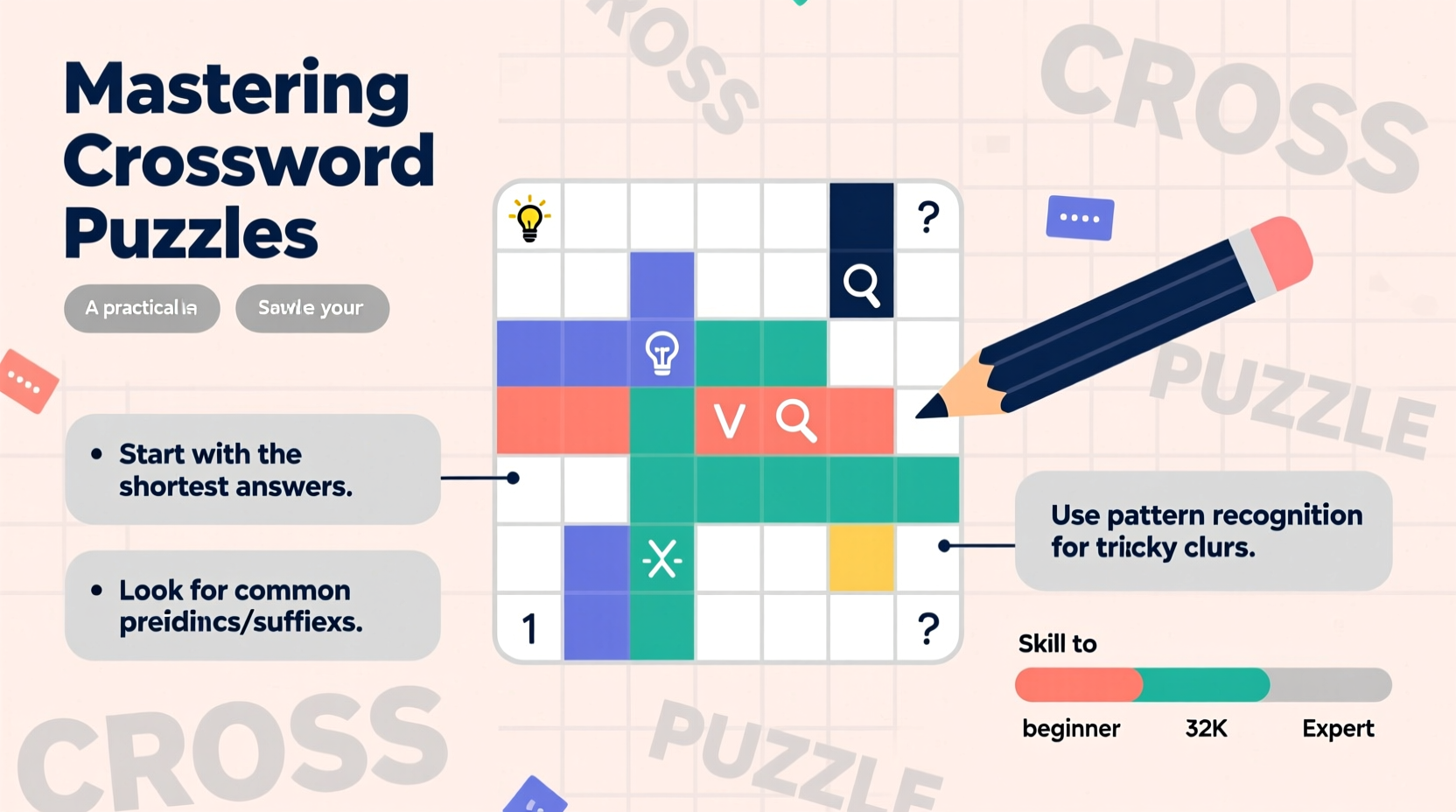
A strong solver isn’t born—they’re made through consistent exposure to language and trivia. Crosswords draw from a wide range of domains: literature, history, pop culture, science, and wordplay. The broader your knowledge base, the more clues will instantly click.
Start by reading widely—especially publications like *The New York Times*, *The Guardian*, or *The Atlantic*, whose crossword editors often pull references from current and classic content. Pay attention to recurring themes, such as Shakespearean characters, chemical symbols, or musical terms.
Focus on high-frequency crossword entries—words that appear repeatedly across puzzles due to their letter combinations. Examples include ERA, ORE, ELI, ENE, and ALAI. Recognizing these quickly gives you anchor points in tough grids.
Decode Clue Types and Master Wordplay
Understanding how clues work is fundamental. Most crosswords use three primary clue types: definition-based, cryptic (in advanced puzzles), and pun-based or playful hints.
- Definition clues: Straightforward definitions, often seen in easier puzzles. Example: “Feline pet” → CAT.
- Wordplay clues: Rely on puns, homophones, or double meanings. Example: “It might be hard to swallow” → PILLS (play on “swallow” as action vs. difficulty).
- Cryptic clues: Common in British-style puzzles; involve a definition plus a separate wordplay component. Example: “Wise leader initially ignored (5)” → SAGE (definition: “wise”; wordplay: “leader initially” = first letter of “ignored” = I, hidden in “wise leader” → SAGE).
Learning to identify clue styles helps you switch mental gears. If a clue seems nonsensical at face value, it’s likely relying on misdirection or punning.
“Half the battle in crosswords is recognizing when the clue is joking with you.” — Will Shortz, Crossword Editor, The New York Times
Step-by-Step Guide to Efficient Solving
Approaching a puzzle without a strategy can lead to frustration. Follow this structured method to maximize progress and minimize dead ends.
- Scan all clues quickly: Don’t start writing yet. Read every clue to identify the easiest ones—usually short answers, common phrases, or obvious definitions.
- Solve the gimmes first: Fill in answers you know with confidence. These provide letters that help crack tougher intersecting clues.
- Mark uncertain answers lightly: Use pencil or mentally flag entries you’re unsure about, especially in themed or tricky sections.
- Look for theme entries: In most modern puzzles, theme answers span multiple rows and share a pattern—pun, quote, or category. Identifying one can unlock others.
- Re-evaluate after partial completion: Return to stuck clues with fresh eyes. New letters may reveal the answer.
- Use crossing letters strategically: When stuck, focus on clues that intersect with filled squares. Even one known letter can narrow options significantly.
Common Pitfalls and How to Avoid Them
Even experienced solvers fall into traps. Awareness is the first step toward improvement.
| Pitfall | Why It Happens | How to Fix It |
|---|---|---|
| Overthinking simple clues | Assuming complexity where there is none | Ask: “Could this be literal?” Stick to the simplest interpretation first. |
| Ignoring plural indicators | Misreading clues ending in “s” or “are” | Check verb agreement—“They run” implies plural, so answer likely ends in S. |
| Forcing incorrect answers | Committing too early to a guess | Be willing to erase. A wrong letter can derail multiple answers. |
| Misreading abbreviations | Not recognizing shorthand cues like “Abbr.” or “Colloq.” | Memorize common abbreviations: ST for street, AMT for amount, SCH for school. |
Mini Case Study: Breaking Through a Stuck Puzzle
Sarah, an intermediate solver, was stuck on a Saturday *NYT* puzzle. She had filled only 30% of the grid despite 45 minutes of effort. Frustrated, she decided to apply a new tactic: listing all clues with question marks—those hinting at wordplay. One read: “Lead-in to sock?” with a 4-letter answer. She considered brands (e.g., “tube”), but nothing fit. Then she paused: “Lead-in” could mean prefix. What prefixes go with “sock”? “Knee-sock,” “crew-sock,” “ankle-sock.” “Ankle” starts with ANKR—not fitting. But “tube sock”? TUBE is 4 letters. And “tube” as “lead-in” to “sock”? Yes—it’s a compound word. She entered TUBE, and three crossing clues suddenly made sense. Within 10 minutes, she completed the puzzle.
The lesson? Reinterpreting clue phrasing—especially question marks—can unlock entire sections.
Essential Checklist for Daily Practice
Consistency beats intensity. Use this checklist daily or weekly to build lasting skill:
- ✅ Solve at least one puzzle per day (start easy, increase difficulty gradually)
- ✅ Review missed answers and understand why they were correct
- ✅ Learn at least one new word or reference per puzzle
- ✅ Practice different puzzle styles (quick, cryptic, themed, large-grid)
- ✅ Time yourself occasionally to track speed improvements
- ✅ Join a crossword community or forum for feedback and tips
Frequently Asked Questions
How long does it take to get good at crosswords?
With regular practice, noticeable improvement occurs within 4–6 weeks. Many solvers go from completing only Monday puzzles to tackling Thursday challenges confidently in about three months. Progress depends on consistency, review habits, and willingness to learn from mistakes.
Are there apps or tools that help improve crossword skills?
Yes. Apps like *Across Lite*, *NYT Crossword*, and *Cruciverbalist* offer built-in hints, answer checking, and archives. Use them not to cheat, but to study completed puzzles. Additionally, websites like XWord Info provide databases of past clues and answers, helping you spot patterns.
What should I do when I can’t finish a puzzle?
It’s perfectly normal. Instead of guessing, look up the answers—but only after a genuine effort. Analyze each one: Why didn’t you get it? Was it obscure knowledge, tricky wordplay, or a misread clue? Turn every incomplete puzzle into a learning session.
Conclusion: Start Solving Smarter Today
Mastering crossword puzzles isn’t about innate genius—it’s about strategy, persistence, and curiosity. By building your vocabulary, decoding clue patterns, avoiding common errors, and practicing deliberately, you’ll see steady growth in both speed and accuracy. Every blank square you fill is a small victory, and every tough clue you crack strengthens your mind.




 浙公网安备
33010002000092号
浙公网安备
33010002000092号 浙B2-20120091-4
Comments
No comments yet. Why don't you start the discussion?