
Packing a daypack might seem straightforward—toss in what you need and go. But the difference between a smooth outing and one filled with frustration often comes down to how well your pack is organized. A poorly packed bag leads to wasted time, sore shoulders, and forgotten essentials. On the other hand, a thoughtfully arranged daypack enhances mobility, keeps gear accessible, and reduces mental clutter. Whether you're hiking a mountain trail, commuting through the city, or exploring a new museum, mastering daypack organization transforms your experience from chaotic to seamless.
Understand Your Daypack’s Anatomy
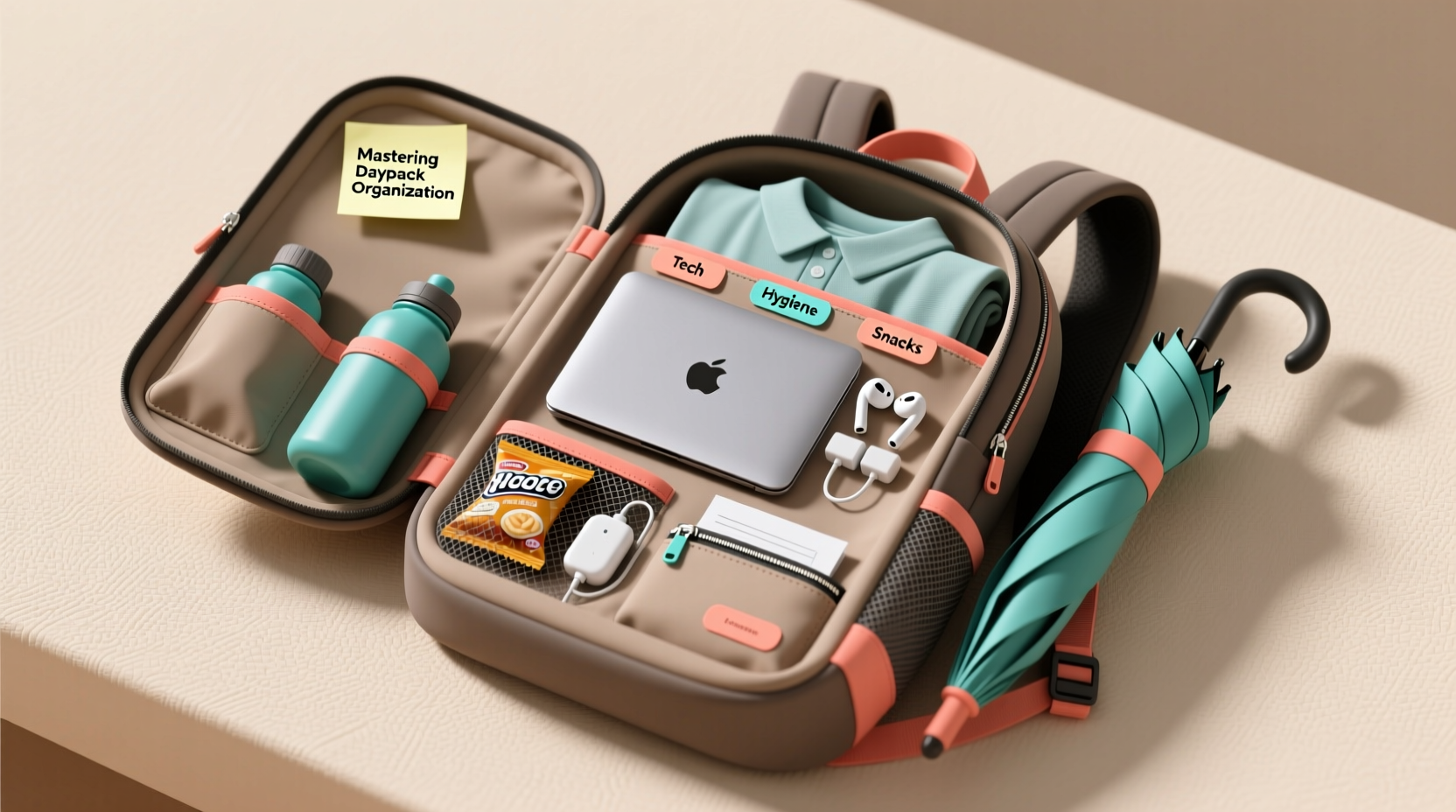
Before organizing your contents, understand the structure of your daypack. Most models feature multiple compartments: a main cavity, front pockets, side mesh sleeves, a hydration sleeve, and sometimes a laptop compartment or hidden anti-theft pocket. Each serves a specific function.
The main compartment is ideal for bulkier, less frequently accessed items. Front zippered pockets are perfect for quick-grab essentials like sunscreen or snacks. Side mesh pockets typically hold water bottles or umbrellas. Smaller internal or external pockets manage electronics, keys, or transit cards. Recognizing these zones allows you to assign items strategically rather than randomly.
Apply the Zone-Based Packing System
Efficient packing follows a zonal approach, grouping items by function and frequency of use. This system minimizes digging and ensures balance within the pack. Divide your gear into four core zones:
- Access Zone: Items needed frequently—phone, wallet, sunglasses, lip balm, energy bar.
- Core Zone: Heavier or mid-use items—laptop, notebook, extra layer, packed lunch.
- Utility Zone: Tools and safety items—multi-tool, flashlight, first aid kit, rain jacket.
- Hydration Zone: Water bottle or bladder, electrolyte tablets, collapsible cup.
Place the heaviest items (like a laptop or water) close to your back and centered vertically. This maintains your center of gravity and prevents strain. Lighter, bulkier items can go toward the outer edges or top of the main compartment.
Real Example: A Hiker’s Morning Routine
Sophia prepares her 25-liter daypack for a ridge hike. She places her 2-liter water bladder in the hydration sleeve, with the tube routed over her left shoulder. Her packed lunch goes into a reusable silicone bag and is placed at the bottom of the main compartment. The mid-layer fleece, compacted in a stuff sack, sits just above it. In the front zippered pocket, she arranges trail mix, sunscreen, and lip balm. Her phone and ID go into an internal RFID-safe pocket. When she reaches the summit, she retrieves her snack in seconds—no unpacking required.
Optimize Space with Compression and Containers
Maximizing space isn’t about stuffing more in—it’s about using volume wisely. Soft-sided packing cubes or lightweight dry bags help compress clothing and group similar items. For example, a small cube can contain all hygiene products, another for tech cables, and a third for emergency supplies.
Use rigid containers only when necessary—like a hard case for glasses or a camera lens. Otherwise, favor flexible materials that conform to the shape of your pack. Rolled clothing saves space compared to folding, especially for t-shirts and socks.
| Item Type | Best Storage Method | Avoid |
|---|---|---|
| Laptop/Tablet | Dedicated padded sleeve | Loose in main compartment |
| Cables & Chargers | Small pouch with velcro wrap | Tangled in open space |
| Snacks | Resealable silicone bags | Bulk packaging |
| Rain Gear | Compression sack in side pocket | Wrapped around straps |
| First Aid Kit | Front pocket or top lid | Bottom of main compartment |
“Organization isn’t just about neatness—it’s about reducing cognitive load. When you know exactly where everything is, your mind stays focused on the journey.” — Dr. Marcus Lin, Outdoor Behavioral Psychologist
Step-by-Step: Build Your Ideal Packing Sequence
Follow this logical order to ensure balance, accessibility, and efficiency every time you pack:
- Empty and inspect: Start with a clean, dry pack. Check for debris or lingering moisture.
- Load the base: Place heavy, infrequently used items at the bottom—packed lunch, book, extra sweater.
- Add mid-weight layers: Position your laptop or hydration reservoir next, close to your back.
- Insert organizational cubes: Slide in labeled cubes for accessories, toiletries, or tech.
- Fill side pockets: Add water bottle, umbrella, or trekking poles if applicable.
- Secure front compartments: Load daily essentials—wallet, keys, tissues, hand sanitizer.
- Top-off with quick-access items: Sunglasses, hat, or snack in the top flap or outer zipper.
- Double-check weight distribution: Lift the pack; it should feel balanced, not tilted forward or sagging.
Common Pitfalls and How to Avoid Them
Even experienced packers fall into traps that compromise comfort and efficiency. Awareness is the first step to correction.
- Overpacking: Carrying “just in case” items adds unnecessary weight. Stick to a pre-approved checklist.
- Misplaced essentials: Keys buried in the main compartment lead to frantic searches. Assign a consistent home—like a magnetic key leash in the front pocket.
- Neglecting weather prep: Failing to pack a compact rain cover or extra layer can ruin a trip. Always include a micro-jacket or poncho.
- Ignoring balance: Uneven weight causes posture issues and fatigue. Distribute mass evenly and centered.
Checklist: Daily Pack Readiness
- ✅ Phone + portable charger
- ✅ Wallet, ID, transit card
- ✅ Reusable water bottle
- ✅ Compact rain jacket
- ✅ Snack (nutrient-dense, non-perishable)
- ✅ Sun protection (sunglasses, SPF)
- ✅ Mini first aid blister patch
- ✅ Key item reminder (meeting notes, gym shoes, etc.)
Frequently Asked Questions
How do I keep my electronics safe and accessible?
Use a padded electronics sleeve or a dedicated tablet compartment. Keep power banks in an interior pocket to regulate temperature. Never store devices loose—they can shift and get damaged during movement.
What’s the best way to organize cables?
Bundle cords with a velcro strap or silicone band, then place them in a small zip pouch labeled “Tech.” Include a mini multi-tool with a wire stripper if you travel frequently. Avoid stuffing cables under heavy items to prevent fraying.
Can I use the same system for work and outdoor adventures?
Absolutely. The zone-based method is adaptable. Swap out hiking-specific items (like a headlamp) for work essentials (notebook, pens). Maintain consistent placement—your brain will remember where things live, reducing morning stress.
Final Thoughts: Make Organization Automatic
Mastering daypack organization isn’t a one-time fix—it’s a habit built through repetition and intention. When your packing process becomes second nature, you reclaim time, reduce anxiety, and move through your days with greater ease. The goal isn’t perfection but consistency: knowing your system works because it’s been tested, refined, and trusted.
Start tonight. Empty your bag, clean it, and rebuild it using the zone method. Label your cubes. Weigh it. Walk around your home with it on. Notice how it feels. Adjust. Repeat. Within a week, you’ll notice fewer pauses, fewer frustrations, and more confidence in your readiness.




 浙公网安备
33010002000092号
浙公网安备
33010002000092号 浙B2-20120091-4
Comments
No comments yet. Why don't you start the discussion?