
Double flying butterfly earrings have surged in popularity, blending elegance with movement. Their delicate design—two interconnected butterfly motifs that appear to flutter with every turn—makes them a standout accessory. Yet, their beauty comes with a challenge: ensuring they stay securely in place while enhancing your overall look. Many wearers love the aesthetic but struggle with balance, comfort, or even losing one mid-event. The key to mastering these earrings lies not just in selection, but in understanding fit, fashion integration, and functional wear techniques.
The Anatomy of Double Flying Butterfly Earrings
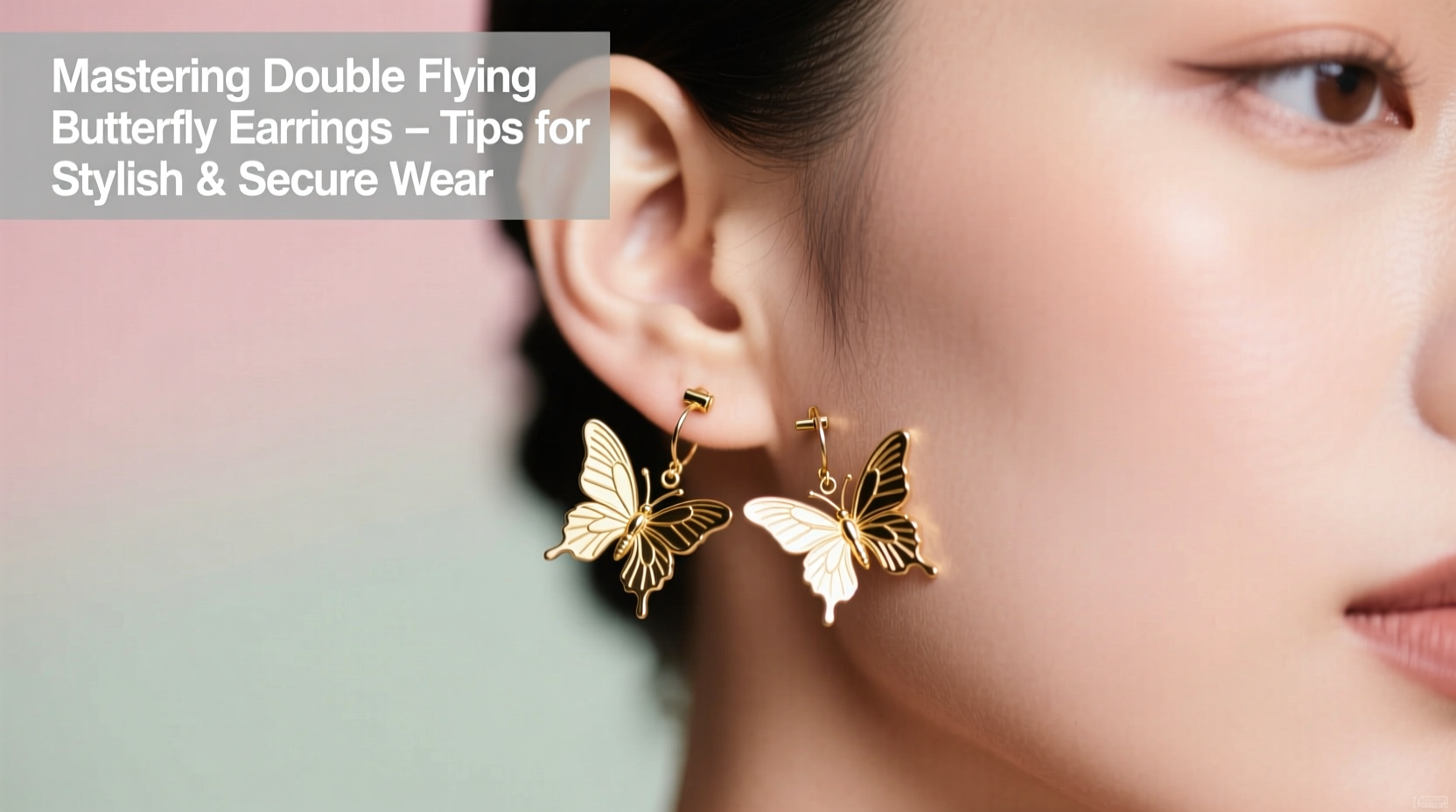
These earrings are more than decorative—they’re engineered for motion. Typically, they consist of two butterfly-shaped elements connected by fine chains or flexible wires, allowing independent movement. One butterfly rests near the earlobe, while the second dangles below, catching light and drawing attention. This dual-layered structure demands precision in both craftsmanship and wear.
The most common materials include lightweight alloys, sterling silver, gold plating, or hypoallergenic surgical steel. The post-back mechanism is usually a standard butterfly clutch, though some premium versions use omega backs or screw fittings for added stability. Because of their dynamic design, weight distribution becomes critical. Even a slight imbalance can cause discomfort or slippage over time.
“Double flying butterfly earrings are a triumph of kinetic jewelry design—but only when properly secured. A well-fitted pair should feel almost weightless despite its visual impact.” — Lila Nguyen, Jewelry Designer & Founder of Aura Motif Studio
Choosing the Right Pair for Your Ear Type
Not all ears are created equal, and neither are all earring fits. The success of double flying butterfly earrings depends heavily on compatibility with your ear anatomy.
- Lobe thickness: Thicker lobes may require longer posts to accommodate both the earring and the back securely.
- Piercing placement: High or angled piercings can affect how the butterflies align. Ideally, the upper butterfly should sit parallel to the jawline.
- Allergies: Opt for nickel-free or titanium-backed posts if you have sensitive skin.
Do’s and Don’ts When Selecting Your Pair
| Action | Recommended | Avoid |
|---|---|---|
| Weight | Under 8 grams per earring | Over 12 grams; increases pull |
| Back Type | Locking clutch or silicone grip | Loose butterfly backs |
| Length | 1.5 to 2.5 inches total drop | Over 3 inches; prone to snagging |
| Material | Hypoallergenic metals | Uncoated base alloys |
Securing Your Earrings: A Step-by-Step Guide
No matter how beautiful your earrings are, poor attachment leads to frustration—or loss. Follow this methodical approach to ensure a stable, comfortable fit that lasts all day.
- Clean your earlobes and earring posts with rubbing alcohol to remove oils and reduce slippage.
- Insert the post gently, ensuring it passes fully through the piercing without resistance.
- Attach the back snugly but not tightly. Over-tightening can distort the post or pinch the lobe.
- Add a secondary safety measure: Use clear silicone earring stoppers behind the clutch for extra hold.
- Test the movement by tilting your head side to side. The butterflies should glide smoothly without wobbling excessively.
- Check alignment in a mirror at eye level to confirm symmetry.
For those with active lifestyles or long wear sessions (e.g., weddings, galas), consider using earring jackets or magnetic stabilizers designed to anchor dangling elements. These discreet accessories prevent swinging beyond a safe arc, reducing stress on the piercing.
Styling Tips for Maximum Impact
Double flying butterfly earrings command attention, so pairing them wisely enhances rather than overwhelms your look.
- Hairstyles: Wear hair up or swept to one side to showcase the earrings. A low bun or half-up twist works beautifully.
- Necklines: Opt for off-the-shoulder, V-neck, or boat neck tops that leave the neck and shoulders exposed.
- Makeup: Complement the whimsy with soft shimmer on the eyelids and a touch of highlighter on the cheekbones to echo the earrings’ sparkle.
- Occasion: These earrings shine at evening events, garden parties, or cultural celebrations—avoid pairing with overly busy patterns or competing statement pieces.
Mini Case Study: A Bridal Trial Gone Right
Sophia, a bride planning her wedding in Napa Valley, fell in love with a pair of crystal-embellished double flying butterfly earrings. During her first trial with her hairstylist, she noticed one earring slipped during the veil adjustment. Concerned about losing it during the ceremony, she consulted a jewelry specialist.
The solution? The jeweler replaced the original butterfly backs with locking silicone grips and shortened the connecting chain by 0.25 inches to reduce torque. Sophia also agreed to wear her hair in a slightly looser chignon, allowing airflow and minimizing friction. On the big day, the earrings stayed perfectly in place throughout the 10-hour event—even during dancing. “They moved with me, not against me,” she said. “I felt like I was wearing art.”
Maintenance and Longevity
To preserve both appearance and function, treat your double flying butterfly earrings with care. Regular maintenance prevents tarnish, loosened joints, and broken chains.
“A single loose solder joint can unravel an entire design. Inspect moving parts monthly under magnification.” — Rafael Torres, Master Jeweler at Metropolitan Artisan Guild
After each wear:
- Wipe with a microfiber cloth to remove skin residue.
- Store upright in a divided jewelry box to prevent tangling.
- Keep away from perfumes, hairsprays, and chlorine.
Every three months, examine the connecting wires or chains for signs of fatigue. If you notice any bending or thinning, take them to a professional for reinforcement.
Frequently Asked Questions
Can I wear double flying butterfly earrings every day?
While possible, daily wear is not recommended unless the pair is specifically designed for durability. Frequent exposure to sweat, friction, and environmental factors accelerates wear. Reserve them for special occasions to extend their life.
What if I lose one earring? Can I replace just one?
Most designers sell replacement singles or repair kits. Contact the manufacturer with the model number. If unavailable, a skilled jeweler can often recreate the missing piece to match, especially if you still have the original.
Are these earrings suitable for children or teens?
Only if supervision is ensured. The dangling components pose a minor choking hazard for young children, and teens may need guidance on proper insertion and removal. Consider smaller, lighter versions for younger wearers.
Final Checklist Before You Wear
- ✅ Earring posts are clean and undamaged
- ✅ Backs are secure and include silicone stoppers
- ✅ Weight feels balanced on both ears
- ✅ Movement is smooth but controlled
- ✅ Hair and clothing choices minimize contact risk
- ✅ Backup pair or travel repair kit is accessible
Conclusion
Double flying butterfly earrings are more than an accessory—they’re a statement of grace in motion. With thoughtful selection, secure fitting, and mindful styling, you can enjoy their elegance without compromise. Whether worn for a milestone event or as a personal signature, mastering their wear transforms fleeting beauty into lasting confidence.




 浙公网安备
33010002000092号
浙公网安备
33010002000092号 浙B2-20120091-4
Comments
No comments yet. Why don't you start the discussion?