
Fishing isn’t just about casting far or choosing the right lure—it’s about precision, patience, and equipment that responds exactly how you need it to. One of the most overlooked yet critical components of a successful fishing experience is proper drag adjustment. Whether you're targeting aggressive bass in shallow waters or battling deep-sea species, a well-tuned drag system gives you the edge: protecting your line from snapping under pressure while allowing enough give to tire out a strong fish.
The drag system on a spinning reel regulates how much resistance the spool offers when line is pulled during a fight. Too loose, and you risk losing fish to overrun; too tight, and even moderate strikes can snap your line. Mastering this balance is essential. This guide breaks down everything you need to know—from understanding drag mechanics to fine-tuning settings for real-world conditions—so you can take full control of your reel and improve your catch rate.
Understanding the Drag System: How It Works
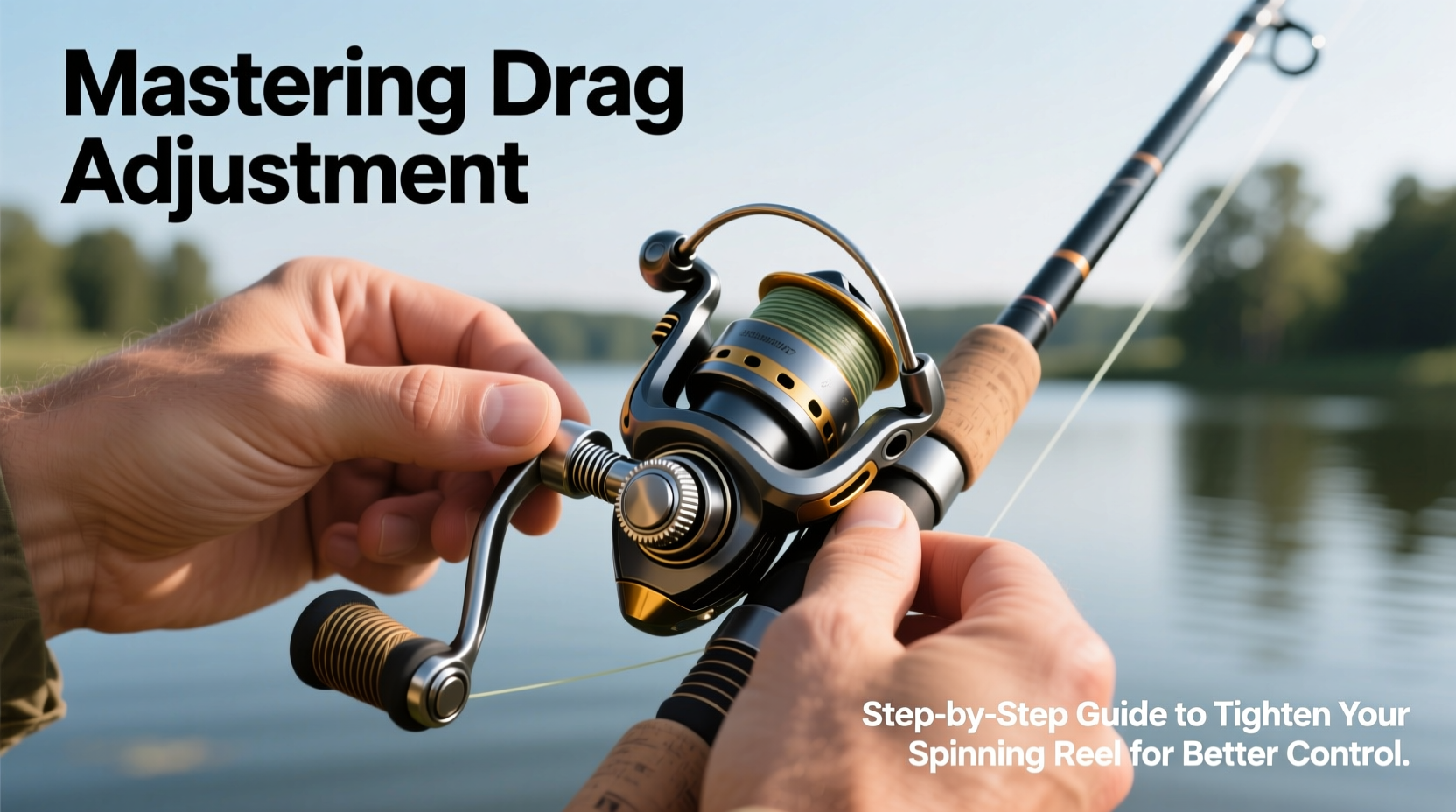
The drag mechanism sits behind or beneath the spool on most spinning reels and consists of a series of washers (often fiber or carbon) compressed by a knob or star-shaped adjuster. When tightened, these washers create friction against the spool, controlling how freely it spins when line is pulled.
There are two main types of drag systems found on spinning reels:
- Front Drag: Located near the front of the spool, offering superior heat dissipation and smoother performance under heavy load. Preferred for saltwater and large-game fishing.
- Back Drag: Positioned on the back plate of the reel, easier to access mid-cast but generally less powerful. Common on freshwater and entry-level reels.
Different materials used in drag washers affect responsiveness and durability. Carbon fiber provides consistent resistance across temperatures, while felt or cork may degrade faster but offer a softer initial pull feel.
“Proper drag setting is more important than raw line strength. A 20-pound test line set incorrectly might as well be 5-pound.” — Captain Rick Delaney, Offshore Fishing Guide
Step-by-Step Guide to Adjusting Your Spinning Reel Drag
Adjusting your drag doesn’t require tools or technical expertise—but it does demand attention to detail. Follow this timeline-tested process before every trip to ensure optimal performance.
- Start with the Reel Mounted and Line Attached: Ensure your reel is securely attached to your rod and loaded with the line you plan to use. Different lines (monofilament, fluorocarbon, braid) react differently under tension.
- Set the Drag Knob to Zero: Turn the drag adjustment knob counterclockwise until it feels loose. You should hear or feel clicks disengaging.
- Test Initial Tension: Hold the rod tip up and let a weight (like a pair of pliers) hang from the line. The spool should spin freely without unspooling completely.
- Apply Gradual Pressure: Slowly turn the drag knob clockwise. Test again using the hanging weight method. Aim for smooth rotation with slight resistance.
- Use the Pull Test Method: Step into a doorway, close the door over your line, and walk backward slowly, pulling the line taut. Feel how much force is needed to make the spool slip. Compare this to recommended percentages (see table below).
- Refine Based on Target Species: Adjust tighter or looser depending on whether you’re after panfish or pike.
- Recheck Mid-Day: Heat buildup from extended runs can alter drag performance. Pause occasionally to verify settings remain consistent.
Drag Settings by Fish Type: Recommended Tension Levels
A common rule of thumb is to set your drag at **25% to 30% of your line’s breaking strength**. Exceeding this increases the chance of snapped lines during sudden surges. Below is a practical reference table based on typical setups.
| Fish Species | Line Test (lb) | Recommended Drag Setting (lb) | Notes |
|---|---|---|---|
| Panfish / Crappie | 4–6 | 1.0–1.5 | Light drag prevents hook pullout on soft mouths |
| Largemouth Bass | 8–12 | 2.0–3.0 | Allows head-shaking but maintains control in cover |
| Striped Bass | 14–20 | 3.5–5.0 | Account for long runs and tidal currents |
| Red Drum / Snook | 17–30 | 5.0–7.5 | Balance between power and finesse near structure |
| Tuna / Sailfish | 30–50 | 8.0–12.0 | Front-drag reels preferred; frequent cooling advised |
Common Mistakes That Sabotage Drag Performance
Even experienced anglers sometimes fall into habits that compromise their drag system’s effectiveness. Avoid these pitfalls:
- Over-tightening “for safety”: Many believe a tighter drag means more control. In reality, it drastically increases the risk of immediate line failure when a fish makes a hard run.
- Ignoring line memory: Coiled monofilament exiting the spool creates uneven tension, leading to erratic drag behavior.
- Using dirty or corroded drag washers: Salt, sand, or old grease buildup causes sticky engagement or inconsistent slippage.
- Setting drag once and forgetting it: Environmental changes, like water temperature or depth, affect line elasticity and drag response.
- Not checking spool tension knob: On some reels, the anti-reverse bearing interacts with drag feel. An overly tight preload can mimic excessive drag.
Real-World Example: Turning a Near-Loss Into a Trophy Catch
Last summer, angler Mark R. was fishing Lake Fork, Texas, targeting trophy bass. He hooked a 9-pounder in thick vegetation—a classic scenario where control is everything. Initially, his drag had been set too high (~40% of 12-lb test), causing the line to lock during the first head shake. He felt the jolt and feared a break-off.
Remembering a tip from a guide seminar, he quickly released one-quarter turn on the drag knob mid-fight. Instantly, the spool began slipping smoothly during lunges, absorbing shock without giving away too much line. Over six minutes, he gradually increased pressure during recovery phases. The fish tired just before reaching open water, and he landed one of his best catches ever.
Afterward, Mark recalibrated his default setting to 2.8 pounds (23% of max) and now checks it before each cast in heavy cover. “That small tweak saved the fish—and taught me more than any tutorial,” he said.
Frequently Asked Questions
How do I know if my drag is too tight?
If your line snaps during a sudden strike or short burst, or if the spool doesn’t slip when you apply firm hand pressure, your drag is likely too tight. Also, if casting distance drops significantly without changing lures, excess drag tension could be restricting spool rotation.
Can I damage my reel by adjusting the drag incorrectly?
Yes. Over-tightening can warp drag washers, compress springs beyond their limit, or cause premature wear. Conversely, leaving the drag fully loose for storage may allow internal components to shift or loosen over time.
Should I set the drag differently for braid vs. mono?
Absolutely. Braid has virtually no stretch, so it transfers force directly to the rod and knot. Use lower drag settings (closer to 20–25%) with braided line. Monofilament stretches, absorbing shock—allowing slightly higher settings (up to 30%). Fluorocarbon falls in between.
Final Thoughts: Take Control With Confidence
Mastering drag adjustment transforms your spinning reel from a passive tool into an active extension of your technique. It’s not about brute force—it’s about intelligent resistance, timing, and feel. By understanding how drag works, applying precise settings, and maintaining your gear regularly, you gain greater command over every phase of the fight.
Don’t wait for a big fish to expose a flaw in your setup. Calibrate your drag before each outing, adapt to conditions, and trust the system you’ve tuned with care. The difference between a lost opportunity and a memorable catch often comes down to ounces of pressure—and your ability to get it right.




 浙公网安备
33010002000092号
浙公网安备
33010002000092号 浙B2-20120091-4
Comments
No comments yet. Why don't you start the discussion?