
In recent years, Korean fashion has emerged as a global force—subtle, refined, and deeply intentional. At the heart of this quiet revolution lies the Korean-style suit: not loud or flashy, but quietly commanding attention through precision tailoring, minimalist design, and an emphasis on harmony between fabric, fit, and form. Unlike traditional Western suits that often emphasize broad shoulders and sharp power lines, Korean suit sets favor a sleeker silhouette, softer structure, and a more youthful, modern aesthetic. This isn’t just about clothing—it’s about cultivating presence.
Whether you're dressing for a business meeting, a formal event, or simply aiming to elevate your everyday style, mastering the Korean suit is a journey worth taking. It requires understanding proportions, embracing subtlety, and paying close attention to detail. Below is a comprehensive roadmap to help you find—and wear—the perfect Korean-style suit set with confidence and grace.
The Essence of Korean Suit Aesthetics
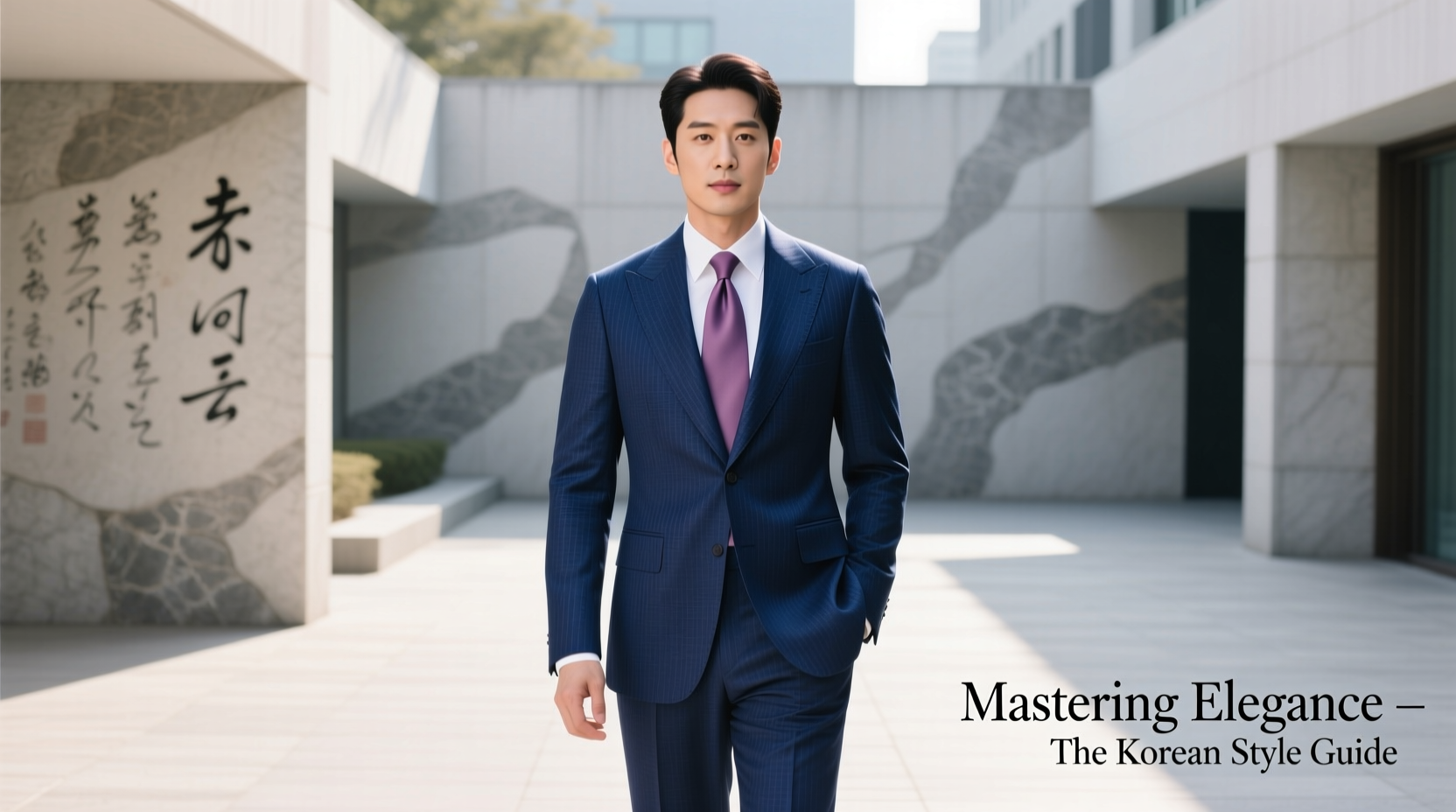
Korean menswear blends Eastern minimalism with contemporary urban sensibility. The focus is less on overt status symbols and more on understated refinement. Key characteristics include:
- Slim but not tight: The cut hugs the body without constriction, creating a streamlined profile.
- Shorter jacket length: Typically ending at the hip bone, offering a balanced proportion that flatters average-height frames.
- Natural shoulder lines: Minimal padding preserves natural posture, avoiding the boxy look of structured Western suiting.
- Higher armholes: Enhance mobility and contribute to a cleaner drape across the torso.
- Tapered trousers: Slight narrowing from thigh to ankle creates a modern, clean break over shoes.
This approach prioritizes comfort and versatility. A well-chosen Korean suit should feel like a second skin—one that moves with you, not against you.
“Korean tailoring speaks in whispers, not shouts. The best suit doesn’t draw eyes because it’s loud, but because it feels *right*.” — Min-Jae Park, Seoul-based Fashion Consultant
Step-by-Step Guide to Finding Your Perfect Fit
Finding the ideal Korean suit isn't about chasing trends—it's about aligning the garment with your body type, lifestyle, and personal expression. Follow these steps to ensure every choice enhances your overall appearance.
- Determine Your Body Type
Korean suits are designed with East Asian proportions in mind, but they can work beautifully for all builds when adjusted correctly. Identify whether you're slim, athletic, short, tall, or stocky. Slim individuals benefit most from the naturally narrow cuts, while broader-shouldered wearers may need slight alterations for sleeve width or chest room. - Select the Right Jacket Length
As a rule, the bottom hem should cover your seat entirely but not extend beyond the midpoint of your backside. For most men under 5'10\", a jacket length of 27–29 inches works best. Taller men might opt for 30–31 inches while maintaining the same proportional balance. - Focus on Shoulder Seam Placement
The seam should sit precisely where your shoulder meets your arm—no drooping, no extending. Avoid any pulling or tension across the back when buttoned. - Check Sleeve Length
When standing naturally, the cuff should reveal about 0.5 to 1 inch of shirt cuff. Too long looks sloppy; too short breaks the line of elegance. - Evaluate Trouser Rise and Fit
Korean suits typically feature mid-to-high rise trousers (around 9–11 inches), which elongate the leg and support a clean tuck. Pair with slim-fit dress shirts tucked in for maximum effect. - Assess the Break
Aim for a “clean” or “slight” break—where the trouser gently touches the top of the shoe with minimal fold. Excessive pooling undermines the suit’s modern appeal.
Choosing Fabric and Color: Subtlety Over Statement
While Western fashion often leans toward bold checks or deep navy hues, Korean styling favors muted tones and textured neutrals. Think charcoal gray, soft beige, warm taupe, and dark olive—not black, unless required formally.
Fabrics play a critical role. Lightweight wool blends, cotton-linen mixes, and stretch-infused materials dominate Korean collections due to their breathability and ease of movement. These choices reflect a culture that values practicality even in formal settings.
| Color | Best For | Pairing Suggestions |
|---|---|---|
| Light Gray | Casual office, daytime events | Pale blue shirt, brown loafers |
| Charcoal | Business meetings, evening functions | White shirt, black oxfords |
| Beige/Tan | Spring weddings, outdoor gatherings | White or pastel shirt, suede derbies |
| Olive Green | Modern creative environments | Gray turtleneck, minimalist sneakers |
Avoid overly shiny fabrics or synthetic blends—they lack depth and age poorly. Instead, prioritize natural fibers with subtle texture, such as herringbone, birdseye, or fresco weaves.
Real Example: From Ill-Fitting to Impeccable
Joon-Ho, a 29-year-old marketing executive in Busan, struggled with off-the-rack suits that either bunched at the waist or pulled across the chest. After gaining 10 pounds during remote work, he assumed his only option was larger sizes—which only exaggerated his proportions.
He visited a local tailor known for adapting Korean patterns to varied builds. They started with a size medium jacket but narrowed the back panel by 1.2 cm, tapered the sleeves slightly, and adjusted the trouser rise to sit higher on his hips. The result? A suit that looked custom-made. Colleagues noticed immediately, not because the suit was flashy, but because Joon-Ho carried himself differently—more assured, more put-together.
This transformation wasn’t about vanity. It was about alignment: when your clothes move with you instead of against you, confidence follows naturally.
Essential Checklist Before Purchase
Before committing to a Korean-style suit set, run through this checklist to ensure quality and suitability:
- ✅ Jacket buttons comfortably without strain when seated
- ✅ Lapels lie flat without gapping
- ✅ Vent (if single-vented) opens cleanly and re-closes smoothly
- ✅ Interior pockets are functional and lined with breathable fabric
- ✅ Buttons are securely attached, preferably made of horn or matte resin
- ✅ Trousers have enough give in the seat and thigh for walking
- ✅ No visible stitching errors or loose threads
- ✅ Fabric returns to shape after light stretching
Frequently Asked Questions
Can I wear a Korean-style suit if I'm over 6 feet tall?
Absolutely. While traditionally tailored for shorter frames, many Korean brands now offer extended sizing or “long” versions. Alternatively, purchase a standard size and have the jacket and trousers lengthened by a skilled tailor. Focus on maintaining proportional balance—don’t let the jacket become too short relative to your torso.
Are Korean suits appropriate for conservative workplaces?
Yes, provided you choose classic colors like charcoal or dark gray and avoid overly trendy details like cropped lengths or extreme tapering. Stick to two-button, notch lapel designs for universal acceptance. The key difference will be in the fit—cleaner, lighter, more agile—not the formality.
How do I care for my Korean suit set?
Most are dry-clean only, especially wool blends. However, airing out between wears prevents odor buildup and reduces cleaning frequency. Use padded hangers to preserve shoulder shape, and store in breathable garment bags. Avoid plastic covers—they trap moisture and encourage mildew.
Final Thoughts: Elegance Is an Ongoing Practice
Mastering elegance isn’t achieved overnight. It’s cultivated through mindful choices—the way a jacket drapes, how trousers skim the shoe, the quiet confidence of wearing something that fits not just your measurements, but your moment in life.
The Korean-style suit set represents more than fashion. It reflects a philosophy: that refinement comes not from excess, but from elimination. Remove what doesn’t serve. Keep what enhances. Wear it with intention.
Your next suit shouldn’t just be bought—it should be discovered. Measure carefully, try thoughtfully, adjust patiently. And when you find the one that moves with you, stands with you, and feels invisible in its perfection—that’s when true elegance begins.




 浙公网安备
33010002000092号
浙公网安备
33010002000092号 浙B2-20120091-4
Comments
No comments yet. Why don't you start the discussion?