
In a world where inboxes are flooded with hundreds of messages daily, the ability to write effective emails is no longer optional—it’s essential. Whether you're communicating with colleagues, clients, or potential employers, your message must be clear, concise, and compelling. Poorly written emails can damage credibility, delay decisions, and even harm professional relationships. On the other hand, well-crafted emails build trust, drive action, and reflect professionalism. This guide breaks down the process into actionable steps, offering practical strategies to elevate your email communication.
1. Understand Your Purpose Before You Type
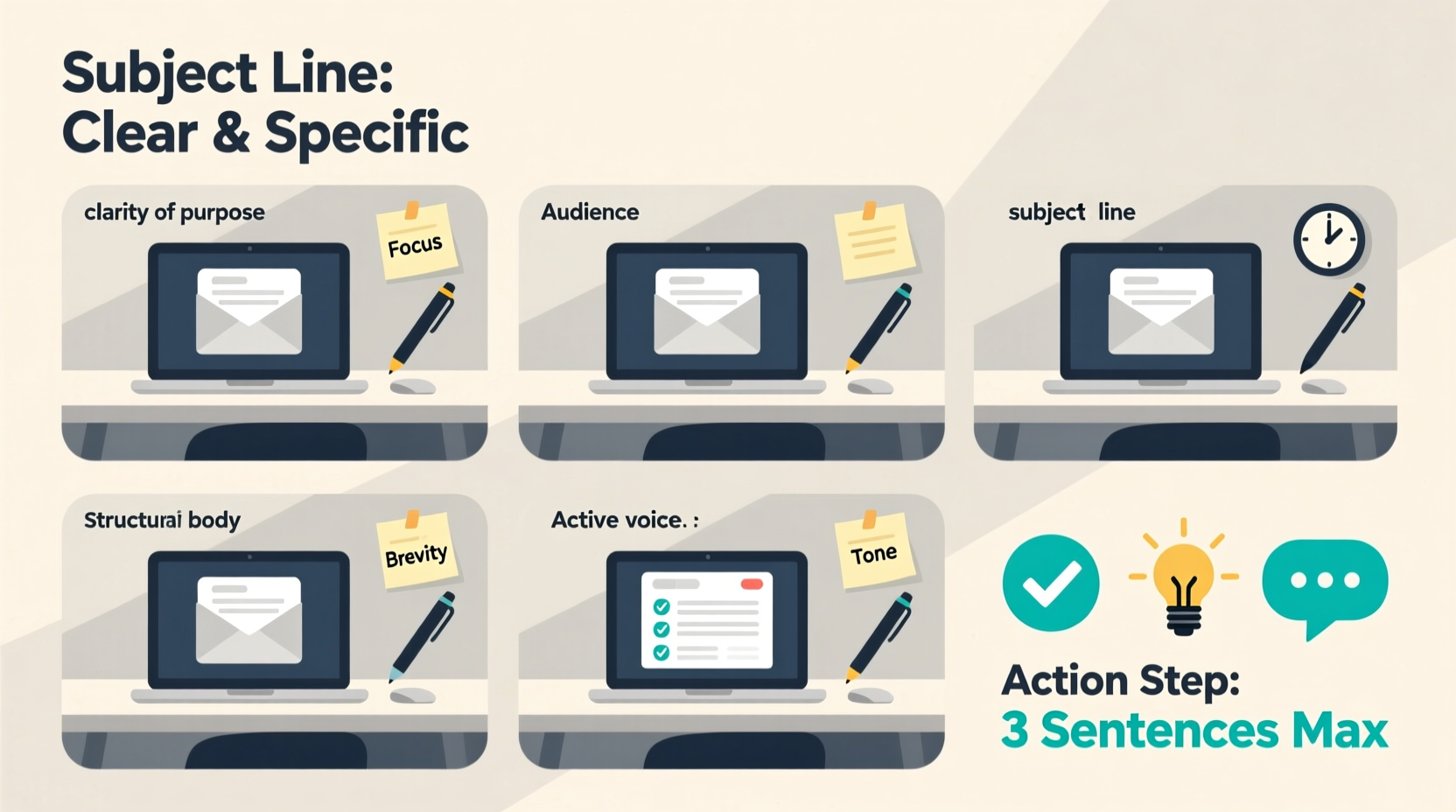
Every email should have a clear objective. Ask yourself: What do I want the recipient to know, feel, or do after reading this? Is it to inform, request, persuade, confirm, or follow up? Without clarity on purpose, your message risks becoming vague or unfocused.
Start by defining the goal in one sentence. For example: “This email will request approval for the Q3 marketing budget by Friday.” With that anchor, every sentence you write supports that aim.
2. Structure Your Email for Maximum Clarity
A well-structured email respects the reader’s time and makes information easy to digest. Use a logical flow that guides the recipient from subject line to closing with minimal effort.
- Subject Line: Clear, specific, and under 50 characters when possible.
- Opening: Greeting followed by a brief context or purpose statement.
- Body: One to three short paragraphs explaining key details.
- Action Request: Clearly state what you need and by when.
- Closing: Polite sign-off with contact information if needed.
Avoid long blocks of text. Use bullet points for lists, bold key deadlines, and keep paragraphs to three sentences or fewer.
Example of Effective Structure
| Section | Content Example |
|---|---|
| Subject Line | Approval Needed: Q3 Marketing Budget by Fri, Aug 16 |
| Opening | Hi Sarah, I’ve finalized the Q3 marketing budget and would appreciate your review. |
| Body | The total proposed spend is $42,000, focused on digital campaigns and influencer partnerships. Key highlights include a 15% increase in social ad spend based on Q2 performance data. |
| Action | Please approve by end of day Friday so we can secure vendor contracts. |
| Closing | Thanks for your input—let me know if you’d like to discuss. Best, Jordan |
3. Write with Precision and Professional Tone
Clarity comes from precision. Avoid filler words like “just,” “really,” or “kind of.” Instead of “I just wanted to see if you could maybe look at the report,” say “Could you please review the report by Thursday?”
Maintain a professional tone regardless of familiarity. Even with colleagues, avoid slang, excessive exclamation points, or ambiguous phrasing. Use active voice (“We completed the analysis”) over passive (“The analysis was completed”) to sound confident and direct.
“Clear writing reflects clear thinking. When people understand your message instantly, they’re more likely to act on it.” — Dr. Linda Thomas, Communication Professor, Stanford University
4. Step-by-Step Guide to Crafting High-Impact Emails
Follow this six-step process every time you draft a professional email:
- Define the Objective – What outcome do you want?
- Identify the Audience – Are they technical? Busy? Senior-level?
- Draft a Strong Subject Line – Make it searchable and urgent if needed.
- Write the Body Using the BLUF Method (Bottom Line Up Front) – Lead with the key point.
- Edit Ruthlessly – Remove redundancies, jargon, and emotional language.
- Proofread Aloud – Catch awkward phrasing and typos.
Mini Case Study: Turning Around a Failed Request
Mark, a project manager, sent an email requesting team feedback on a new workflow tool. His initial version read: “Hey everyone, let me know what you think about the new software when you get a chance.” No deadline, no context, no attachment link. He received zero replies.
He revised using the six-step method:
- Objective: Get feedback from all team members by Wednesday.
- Audience: Remote team with varying time zones.
- Subject: Feedback Requested: New Workflow Tool – Response by Wed
- Body: “Hi team, We’re testing Asana to improve task tracking. Please try the demo account (link below) and share your top 2 pros and cons by Wednesday EOD. Your input ensures we choose the right tool.”
This time, he received responses from 90% of the team. The difference? Clarity, urgency, and respect for their time.
5. Common Pitfalls and How to Avoid Them
Even experienced professionals fall into email traps. Here’s a breakdown of frequent mistakes and how to fix them:
| Do’s | Don’ts |
|---|---|
| Use a specific subject line (e.g., “Meeting Rescheduled: July 10 at 2 PM”) | Use vague subjects like “Quick Question” or “Update” |
| Include a single clear call to action | Ask multiple questions without prioritization |
| Keep emails under 200 words when possible | Send long emails without paragraph breaks or bullets |
| Reply promptly—even if just to acknowledge receipt | Leave messages unanswered for days without explanation |
| BCC external recipients when appropriate for privacy | CC unnecessary people, causing inbox clutter |
FAQ
How long should a professional email be?
Ideal length is 50–200 words. Focus on delivering value quickly. If more detail is needed, attach a document and summarize key points in the email body.
When should I use “Reply All”?
Only use “Reply All” if your response is relevant to everyone copied. If replying with a simple acknowledgment like “Thanks,” use “Reply” to avoid spamming others.
Is it okay to send emails outside business hours?
Sending is acceptable, but consider scheduling delivery for business hours. Late-night emails can create pressure to respond immediately, disrupting work-life balance.
Checklist: Before Hitting Send
- ✅ Is the subject line clear and specific?
- ✅ Have I stated the purpose in the first two sentences?
- ✅ Is there a clear call to action with a deadline?
- ✅ Did I remove unnecessary words or jargon?
- ✅ Have I checked for spelling, grammar, and tone?
- ✅ Are attachments included and named clearly?
- ✅ Did I verify all names, dates, and links?
Conclusion
Mastering email writing isn’t about perfection—it’s about consistency, clarity, and respect for your reader’s time. By applying these principles, you’ll communicate more effectively, reduce misunderstandings, and build stronger professional relationships. Every email is an opportunity to reinforce your credibility and influence. Don’t treat it as routine correspondence. Treat it as a strategic tool.




 浙公网安备
33010002000092号
浙公网安备
33010002000092号 浙B2-20120091-4
Comments
No comments yet. Why don't you start the discussion?