
In a world where constant connectivity blurs the lines between personal and external emotional space, maintaining inner peace can feel like an uphill battle. Emotional boundaries are invisible yet powerful lines that define how others may treat you, what behaviors you tolerate, and how deeply their emotions can influence your own. Without clear boundaries, it's easy to absorb stress, anxiety, or negativity from coworkers, family members, or friends—often without realizing it. Mastering emotional boundaries isn’t about isolation; it’s about self-respect, clarity, and sustainable well-being.
Understanding Emotional Boundaries
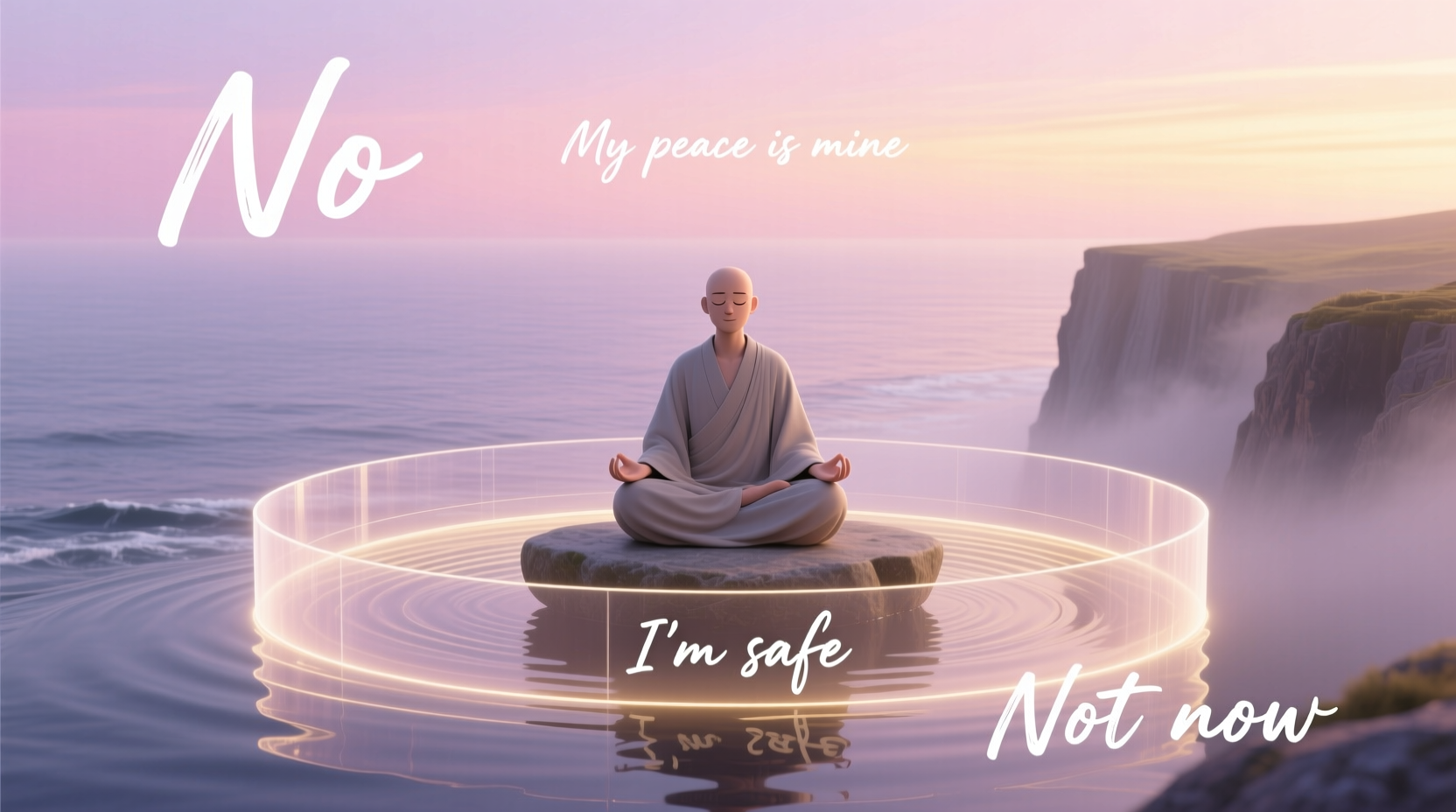
Emotional boundaries involve recognizing where your feelings end and someone else’s begin. They allow you to empathize without absorbing, support without sacrificing, and engage without losing yourself. Healthy emotional boundaries mean you can listen to a friend’s problems without feeling obligated to fix them or carry the emotional weight.
Many people struggle with boundaries because they were raised in environments where enmeshment was normalized—where everyone’s emotions were shared, expected to be managed by others, or used as leverage. In such settings, saying “no” feels selfish, and emotional independence is mistaken for coldness.
“Boundaries are not walls to keep people out—they are gates to let people in on your terms.” — Dr. Nedra Glover Tawwab, therapist and author of *Set Boundaries, Find Peace*
The goal isn't emotional detachment but emotional sovereignty—the ability to remain grounded regardless of external turbulence.
Why Others Affect Your Peace (And How to Stop It)
People affect your peace when your internal system lacks filters. This often happens due to:
- Low self-awareness: Not knowing your emotional triggers or limits.
- Over-empathy: Feeling others’ pain so deeply it becomes your own.
- Fear of conflict: Avoiding confrontation to maintain harmony, even at your expense.
- People-pleasing: Prioritizing others’ comfort over your emotional safety.
The first step toward reclaiming your peace is acknowledging that you are not responsible for managing other people’s emotions—and they are not entitled to manage yours.
Step-by-Step Guide to Building Strong Emotional Boundaries
Creating emotional boundaries is a skill, not an instinct. It requires consistent practice. Follow this six-step process to build resilience and protect your inner calm.
- Identify Your Limits
Reflect on past interactions that left you feeling resentful, anxious, or exhausted. What was said or done? These moments highlight where your boundaries were crossed. - Clarify Your Needs
Ask yourself: What do I need to feel safe, respected, and at peace in relationships? Examples include privacy, honesty, or time alone after stressful events. - Communicate Clearly
Use direct, non-defensive language. Instead of “You always make me upset,” say “I need to pause this conversation if voices are raised.” - Practice Non-Negotiables
Decide which behaviors you will no longer tolerate—such as yelling, guilt-tripping, or unsolicited advice—and stick to them. - Create Space When Needed
It’s okay to leave a room, delay a reply, or take a break from a relationship. Distance is not punishment—it’s preservation. - Reinforce Consistently
Boundaries only work when applied regularly. Each reinforcement trains others on how to treat you.
Real Example: Sarah’s Turning Point
Sarah, a project manager and mother of two, constantly felt overwhelmed by her sister’s emotional demands. Every week, her sister called crying about her marriage, expecting Sarah to listen for hours and offer solutions. Over time, Sarah became anxious, irritable, and detached from her own family.
After learning about emotional boundaries, she calmly told her sister: “I care about you, but I can’t be available for long calls every evening. Let’s schedule a 30-minute check-in on Sundays.” When her sister called midweek sobbing, Sarah texted: “I hear you’re hurting. I’ll call Sunday at 5 PM.”
Her sister initially reacted with anger, but within weeks, she began seeking therapy instead. Sarah regained her evenings, reduced her anxiety, and actually improved their relationship—now built on mutual respect, not emotional dependency.
Do’s and Don’ts of Emotional Boundary Setting
| Do | Don’t |
|---|---|
| Use “I” statements (“I feel overwhelmed when…”) | Blame or accuse (“You always dump your problems on me”) |
| Be specific about what you need | Be vague (“I just need space”) |
| Stay calm and firm, even if challenged | Engage in arguments to justify your boundary |
| Allow flexibility when safe and appropriate | Compromise your core needs to avoid discomfort |
Essential Strategies to Maintain Your Peace Daily
Boundaries aren’t set once and forgotten. They require daily maintenance. Integrate these practices into your routine:
- Start your day with intention: Set a mental tone: “Today, I am in charge of my emotional energy.”
- Use the 10-second rule: Before responding to an emotional request, pause. Ask: “Is this mine to carry?”
- Limit exposure to chronic complainers: You don’t have to cut them off—just reduce contact frequency and duration.
- Debrief after intense interactions: Journal briefly: “How did that make me feel? Did I honor my needs?”
- Practice energetic hygiene: Visualize shedding others’ emotions like water off a duck’s back during meditation.
FAQ: Common Questions About Emotional Boundaries
Isn’t setting boundaries selfish?
No. Boundaries are self-care, not selfishness. You cannot pour from an empty cup. Protecting your peace allows you to show up more fully—for yourself and others.
What if someone gets angry when I set a boundary?
That’s common—but not your responsibility. Their reaction reflects their relationship with limits, not your wrongdoing. Stay calm, restate your boundary, and disengage if needed.
Can you have boundaries in toxic relationships?
Yes, though they may require greater distance. In abusive situations, prioritize safety. Boundaries might mean minimal contact or complete estrangement. That’s not failure—it’s survival.
Final Checklist: Are Your Emotional Boundaries Strong?
- ✅ I know my emotional triggers.
- I can identify situations or people that drain me.
- ✅ I communicate my needs clearly.
- I use respectful, direct language without apology.
- ✅ I allow myself to say no.
- I don’t feel guilty for protecting my time and energy.
- ✅ I don’t take responsibility for others’ moods.
- I can listen without fixing or fixing myself.
- ✅ I enforce consequences consistently.
- If a boundary is crossed, I respond—not react.
Conclusion: Reclaim Your Inner Peace
Mastering emotional boundaries is one of the most empowering acts of self-respect. It doesn’t require dramatic confrontations or isolation—it begins with small, consistent choices to honor your inner world. When you stop letting others dictate your emotional state, you create space for clarity, calm, and authentic connection. Peace isn’t found in perfect circumstances; it’s cultivated through disciplined self-awareness and courageous boundary-setting.




 浙公网安备
33010002000092号
浙公网安备
33010002000092号 浙B2-20120091-4
Comments
No comments yet. Why don't you start the discussion?