
For many eyeglass wearers, slipping frames are more than an annoyance—they’re a daily distraction. While nose pads and temple tips help, one often-overlooked solution lies in the eyeglass chain. Also known as spectacle cords or lanyards, these accessories prevent loss, reduce strain, and add a personal touch to your look. But only if the length is right. Too short, and you’ll feel tension; too long, and the glasses dangle awkwardly. The key is mastering eyeglass chain length—balancing comfort, function, and fashion.
Whether you're using a vintage-style double-ended chain, a modern silicone cord, or a decorative piece from a boutique brand, proper fit makes all the difference. This guide walks through practical steps to measure, adjust, and personalize your eyeglass chain so it stays secure without compromising style.
Why Eyeglass Chain Length Matters
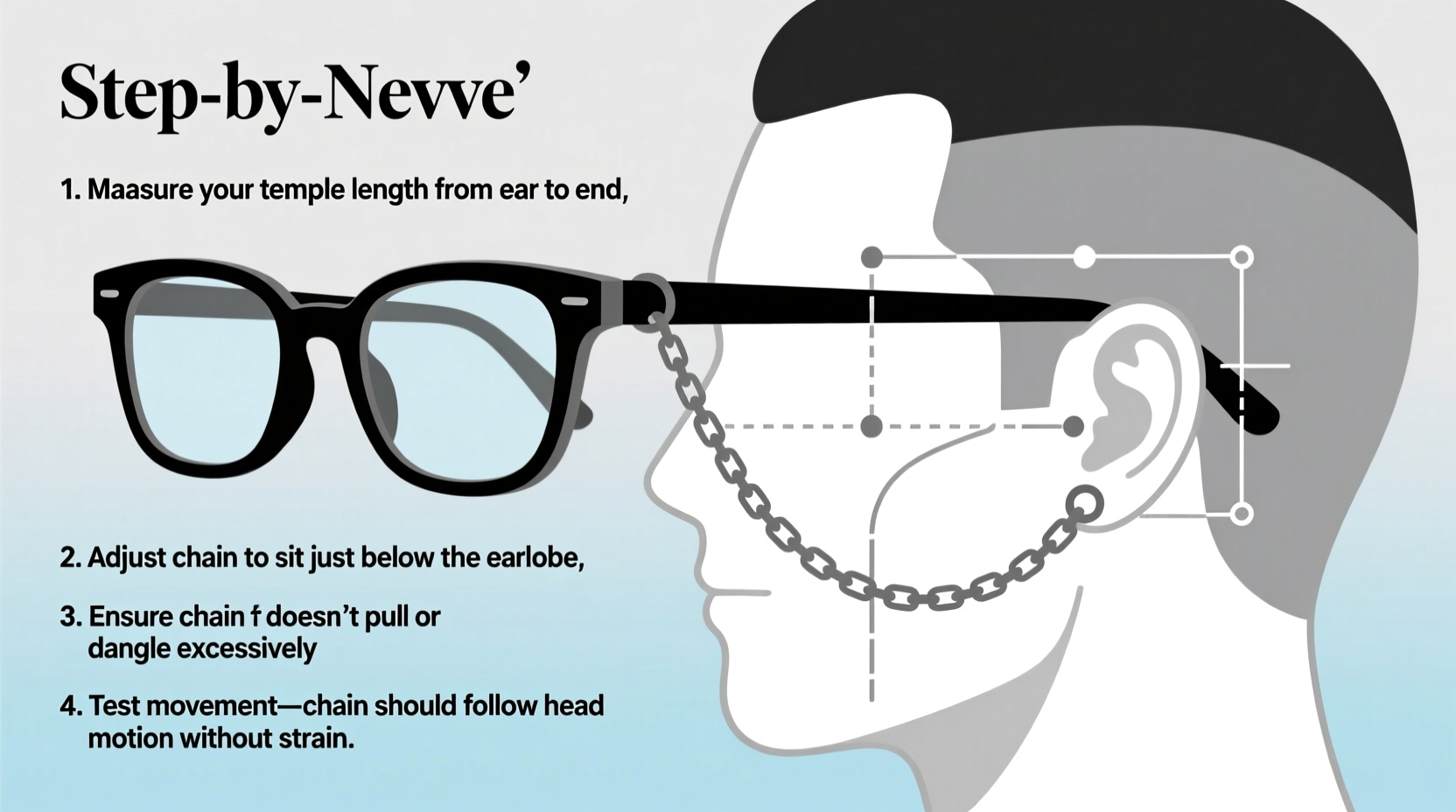
An improperly sized chain can do more than just annoy—it can affect posture, cause neck strain, and even damage your glasses over time. When a chain is too tight, it pulls the temples into your ears or presses against the back of your head. If it’s too loose, your glasses may swing forward when you bend down or slip off entirely during movement.
The ideal chain allows your glasses to rest naturally on your face while remaining securely attached. It should sit comfortably around your neck or shoulders, depending on your preferred wearing style, without tugging or sagging. A well-fitted chain also enhances aesthetics, letting your eyewear become part of your overall outfit rather than a functional afterthought.
Step-by-Step Guide to Measuring and Adjusting Chain Length
Finding the correct length doesn’t require special tools—just a tape measure, some patience, and attention to detail. Follow this sequence to get it right:
- Put on your glasses normally. Ensure they sit correctly on your nose and ears before attaching any chain.
- Determine your wearing style. Do you prefer the chain to hang loosely around your neck (standard), be clipped behind your head (sport), or loop over your ears (vintage)? Your choice affects optimal length.
- Measure current fit (if applicable). If you already use a chain, note where it sits. Is it tight? Loose? Does it ride high on your neck or fall below your collar?
- Use a flexible tape measure. Place one end at the outer tip of your right temple and run it across the back of your head or neck to the left temple. For a neck-hanging style, keep the tape just above the collarbone. For a headband style, pass it over the crown.
- Add 0.5 to 1 inch (1.25–2.5 cm) for slack. This prevents tension and allows natural movement.
- Cut or adjust accordingly. If using an adjustable chain, slide the stops or knots. For fixed-length models, consider replacement or professional resizing.
- Test in motion. Walk, bend, turn your head. Your glasses should stay in place without pulling or bouncing.
This process works whether you're using metal, leather, fabric, or silicone chains. Precision matters—especially for people with larger heads, smaller frames, or active lifestyles.
Choosing the Right Style Based on Neck Size and Frame Weight
Not all chains suit every person. Your body type, clothing habits, and eyewear weight influence what works best. Lightweight acetate frames may only need a thin silk cord, while heavy titanium or retro metal styles demand sturdier support.
| Neck Circumference | Recommended Chain Length | Suggested Chain Type |
|---|---|---|
| 13–14 inches (33–35.5 cm) | 18–20 inches (45–50 cm) | Fine metal, braided nylon |
| 14–16 inches (35.5–40.5 cm) | 20–22 inches (50–55 cm) | Medium-link chain, soft leather |
| 16+ inches (40.5+ cm) | 22–26 inches (55–66 cm) | Adjustable silicone, wide fabric strap |
Heavier frames increase downward pull, so longer or wider chains distribute weight better. Conversely, petite frames paired with bulky chains can overwhelm facial features. Balance is key.
“Many patients come in complaining of ear pain or sliding glasses, not realizing their chain is too short or too rigid. A half-inch adjustment can eliminate discomfort.” — Dr. Lena Patel, Optometric Consultant
Styling Tips: Matching Chains to Outfits and Occasions
A well-chosen chain elevates your eyewear from utility to accessory. Think of it like jewelry—it should complement your wardrobe, not clash with it.
- Office wear: Opt for subtle tones—gunmetal, black, navy, or beige. Avoid dangling charms that click against keyboards.
- Casual outings: Express yourself with colorful beads, woven patterns, or engraved pendants.
- Active settings: Choose non-slip silicone or rubberized chains that grip clothing and resist sweat.
- Vintage or formal looks: Pearl strands, delicate gold links, or velvet ribbons add elegance.
Consider seasonal changes too. Lighter materials work in summer; thicker chains provide warmth and presence in winter. And don’t forget layering—your chain shouldn’t tangle with scarves, necklaces, or collars.
Real-Life Example: From Frustration to Perfect Fit
Sarah, a librarian in Portland, struggled with her reading glasses slipping off during story hours. She tried nose grips and tighter temples, but nothing worked. After switching to a double-ended eyeglass chain, she found immediate relief—but the default 20-inch length caused pressure behind her ears.
Following a simple measurement method, she discovered her ideal length was 23 inches. She ordered a custom-adjustable chain with sliding knots and soft silicone ends. Now, her glasses stay put during animated readings, and the deep green cord matches her cardigans. “It’s like my glasses finally belong,” she said. “I didn’t realize how much mental energy I spent keeping them on.”
Checklist: How to Achieve the Perfect Eyeglass Chain Fit
Before finalizing your chain setup, go through this checklist:
- ✅ Glasses sit properly on your face without the chain
- ✅ Chain length measured from temple to temple with slight slack
- ✅ No pulling on ears or pressure at the nape
- ✅ Glasses remain stable during head movement
- ✅ Chain material suits your lifestyle (e.g., hypoallergenic, durable)
- ✅ Style complements your regular outfits
- ✅ Easy to remove or adjust when needed
Frequently Asked Questions
Can I shorten an eyeglass chain myself?
Yes, if it’s made of fabric, cord, or has adjustable sliders. Use small pliers to reposition crimps or re-tie knots securely. For metal chains, consult a jeweler to avoid damaging links.
Are longer chains less secure?
Not necessarily. A longer chain can still be secure if properly adjusted and made from non-slip materials. The key is ensuring the resting position keeps the glasses close to your body and centered.
Do eyeglass chains work with progressive lenses?
Absolutely. In fact, they’re especially helpful for multifocal wearers who frequently take glasses on and off. Just ensure the chain doesn’t tilt the frame when hanging, which could misalign the lens zones.
Final Thoughts: Comfort Meets Confidence
Mastering eyeglass chain length isn’t about perfection—it’s about personalization. With a few thoughtful adjustments, you transform a simple accessory into a seamless extension of your daily life. Whether you prioritize security, style, or spine health, the right chain gives you freedom to move, focus, and express yourself.
Don’t settle for ill-fitting cords or one-size-fits-all solutions. Measure mindfully, choose wisely, and wear proudly. Your glasses are part of your identity—make sure they stay put in both function and fashion.




 浙公网安备
33010002000092号
浙公网安备
33010002000092号 浙B2-20120091-4
Comments
No comments yet. Why don't you start the discussion?