
Choosing the right jacket isn’t just about style or fit—it’s about understanding the fabric that shapes its performance, longevity, and comfort. A well-made jacket begins with high-quality material, but most consumers lack the tools to distinguish premium wool from mediocre polyester blends. This guide equips you with the knowledge and techniques used by tailors, designers, and textile experts to assess fabric quality confidently and accurately.
The Foundation: Understanding Fiber Types
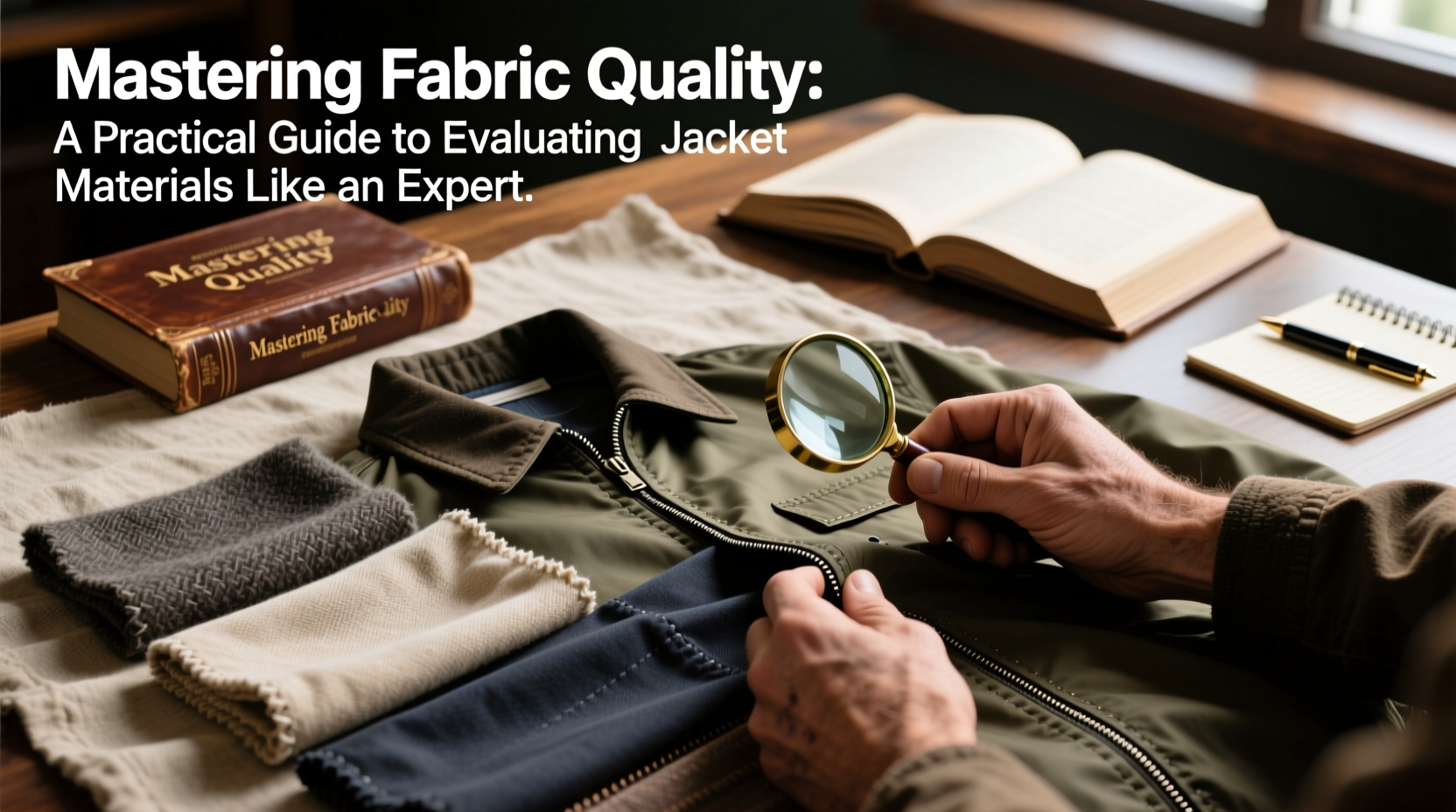
Fabric quality starts at the fiber level. Natural fibers generally outperform synthetics in breathability, drape, and aging, but not all natural materials are created equal. The most common jacket fabrics fall into three categories: animal-based (wool, cashmere), plant-based (cotton, linen), and synthetic (polyester, nylon).
Wool remains the gold standard for structured jackets. Merino, worsted, and flannel wools offer varying textures and weights suitable for different seasons. Cashmere provides unmatched softness but requires careful handling due to its delicacy. Cotton and cotton blends work well for casual blazers and summer wear, while synthetics are often blended to reduce cost or add wrinkle resistance—though they sacrifice breathability.
How to Evaluate Fabric Quality: The Five-Sense Test
Experts don’t rely on labels alone. They use their senses to evaluate fabric integrity. Here’s a step-by-step method you can apply in any store or showroom:
- Sight: Hold the fabric under natural light. Look for even weaving, consistent color, and minimal pilling or loose threads. High-twist yarns reflect light differently and resist creasing.
- Touch: Run your fingers across the surface. Premium fabrics feel smooth but not slippery. They have body—resisting collapse when lightly pressed. Avoid anything that feels plasticky or overly stiff.
- Smell: New fabric should have a clean, neutral scent. Chemical odors may indicate heavy processing or low-grade dyes.
- Hear: Crinkle a small section gently between your fingers. Quality wool produces a crisp, subtle rustle—a sign of tight weave and fiber resilience.
- Drape: Let the fabric hang naturally. It should flow smoothly without buckling or folding sharply. Poor drape suggests weak yarns or improper finishing.
“We judge 70% of a garment’s quality within the first five seconds of touching it.” — Daniel Reyes, Textile Consultant, Savile Row Atelier
Decoding Fabric Specifications: What Numbers Really Mean
Jacket linings might list “Super 120s” or “14 oz wool”—but what do these numbers mean?
The “Super” number refers to the fineness of wool fibers measured in microns. Higher numbers (e.g., Super 150s) indicate finer, softer yarns—but also greater fragility. While Super 110s to 130s offer an ideal balance of softness and durability for daily wear, ultra-high counts (180s+) are best reserved for special occasions.
Weight, measured in grams per square meter (gsm) or ounces per yard, determines seasonality. Lightweight jackets (7–9 oz) suit spring and summer, midweights (10–12 oz) are versatile for fall and mild winters, and heavyweights (13+ oz) provide warmth in cold climates.
| Fabric Weight (oz) | Season | Best Use Case |
|---|---|---|
| 7–9 | Spring/Summer | Casual blazers, tropical wool suits |
| 10–12 | Fall/Mild Winter | All-purpose business jackets |
| 13+ | Winter | Overcoats, flannel, melton wool |
Construction Clues That Reveal Fabric Integrity
A jacket’s structure can tell you as much about its fabric as the material itself. Examine the lapel roll—how smoothly it curves from collar to front. A natural roll indicates full canvas construction and quality wool that molds over time. A flat, rigid lapel often signals fused interfacing, which can bubble with heat and age.
Check the inside of the jacket. Look for a floating chest piece made of hair canvas or felt. This allows the fabric to breathe and conform to your body. Fused jackets use glue to bond layers, which degrades faster and restricts movement.
Also inspect the buttonholes. Hand-stitched buttonholes have a slight raised bump and irregular stitching—a hallmark of bespoke or high-end ready-to-wear. Machine-stitched versions are uniform but less durable and indicative of mass production.
Real-World Example: Two Jackets, One Price Point
Consider two navy blazers priced at $450. One is labeled “100% wool, Super 120s, half-canvas.” The other says “wool blend, Super 110s, fully fused.” At first glance, they appear similar. But upon inspection, differences emerge.
The first has a soft drape, a slightly bumpy texture indicating natural wool, and a lapel that rolls fluidly. Inside, the chest piece moves independently, and the lining allows airflow. After six months of weekly wear, it retains its shape and develops a subtle sheen—signs of maturing gracefully.
The second feels smoother but stiffer. The lapel lies flat unnaturally, and the inside reveals glued layers. By month four, small bubbles form along the chest—a result of delamination. Despite the identical price, the construction and fabric behavior reveal a clear winner.
This scenario plays out daily in retail. Labels mislead; touch and structure don’t.
Essential Checklist: Evaluating a Jacket Before Purchase
- ✅ Check the fiber content label—prioritize 100% natural fibers
- ✅ Perform the hand feel test—look for softness with structure
- ✅ Inspect the weave—hold up to light for pinholes or inconsistencies
- ✅ Examine the lapel roll—natural curve indicates full or half canvas
- ✅ Feel the inside chest—should not be uniformly stiff
- ✅ Test recovery—press fabric and see if it springs back
- ✅ Look at buttonholes—hand-stitched is a strong quality signal
- ✅ Assess weight—match to intended season and use
Frequently Asked Questions
Is a higher “Super” number always better?
No. While higher numbers mean finer fibers and a softer hand, they also reduce durability. Super 150s wool may feel incredible but can pill easily and isn’t suited for daily wear. For long-term value, choose Super 110s to 130s for versatility and resilience.
Can I trust a “wool blend” label?
It depends. A blend with 5–10% synthetic fiber (like elastane) can improve shape retention without sacrificing breathability. However, if wool is below 80%, you’re likely compromising on comfort and aging. Always check the exact percentage.
How do I care for high-quality jacket fabrics?
Steam instead of iron—direct heat damages fibers. Store on wide, padded hangers in breathable garment bags. Never machine wash unless explicitly stated. Spot clean only, and air out after wearing to prevent odor buildup.
Conclusion: Confidence Through Knowledge
Mastering fabric quality transforms how you shop. No longer must you depend on brand names or price tags as proxies for excellence. With the ability to see, touch, and interpret the subtleties of material and construction, you gain independence and precision in building a lasting wardrobe.
Every jacket tells a story—from the source of its wool to the hands that cut and sewed it. Learn to read those details, and you’ll own fewer pieces, but far better ones. Start your next shopping trip not with a brand in mind, but with a standard—one you now have the expertise to uphold.




 浙公网安备
33010002000092号
浙公网安备
33010002000092号 浙B2-20120091-4
Comments
No comments yet. Why don't you start the discussion?