
In an age where personal data is both valuable and vulnerable, understanding how to manage your digital footprint on social media is no longer optional—it's essential. Facebook, one of the world’s largest social networks, collects vast amounts of user data. While this enables personalized experiences, it also increases exposure to unwanted tracking, data misuse, and privacy breaches. The good news? You have more control than you think. With deliberate adjustments to your settings, you can significantly reduce risks and tailor your experience to align with your comfort level.
This guide walks through the most impactful privacy controls on Facebook, offering practical steps to secure your profile, limit data sharing, and regain control over who sees your content—and what they see.
Understanding Your Privacy: Why It Matters
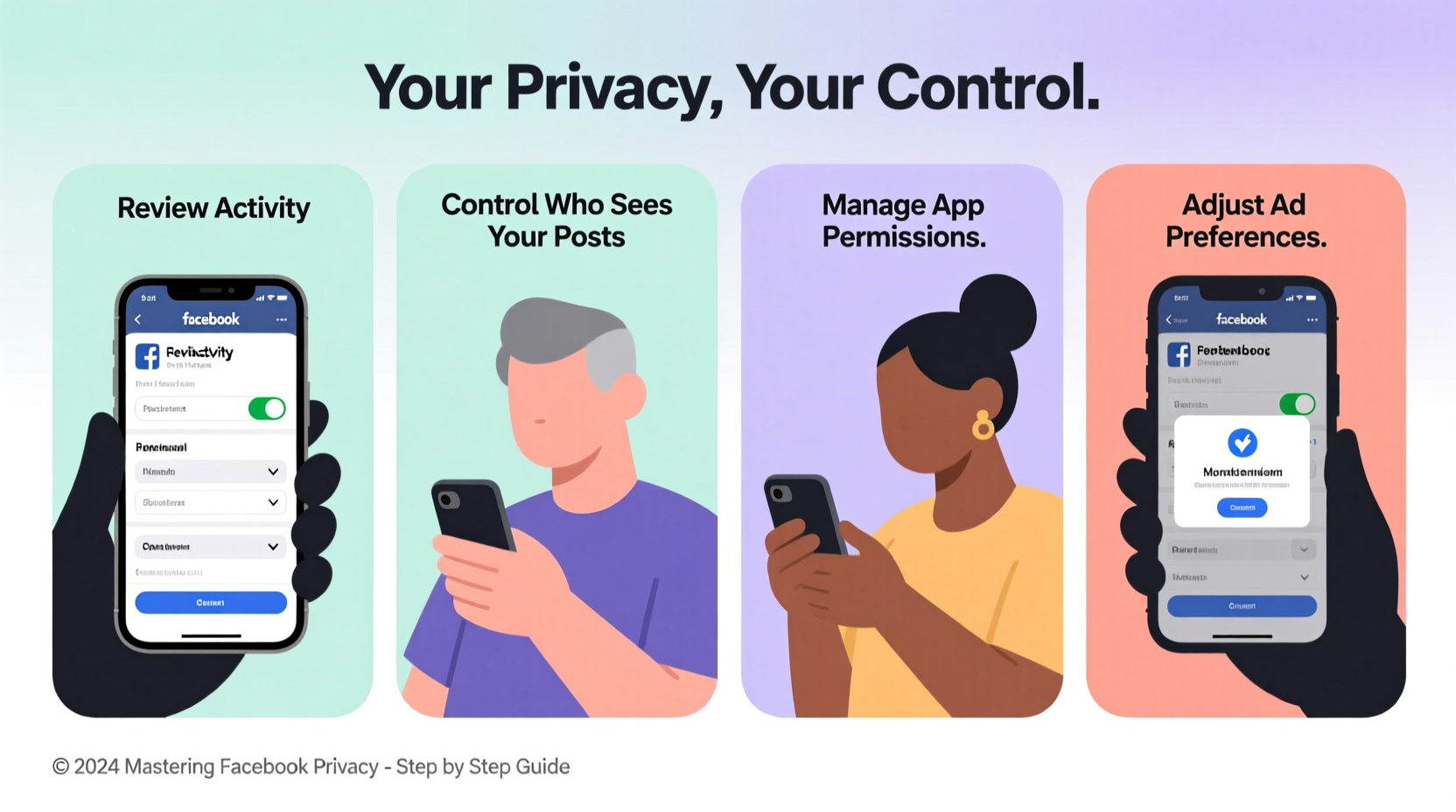
Facebook’s default settings are designed for connectivity, not privacy. When you sign up, many features are set to public or “friends” visibility, meaning your posts, photos, location history, and even friend lists may be accessible beyond your intended audience. Over time, algorithm changes and third-party integrations can further erode control.
A 2023 Pew Research study found that 64% of users feel they’ve lost control over how their personal information is collected and used online. High-profile data incidents, such as the Cambridge Analytica scandal, underscore the real-world consequences of lax privacy management.
“Most people don’t realize how much of their behavior is tracked—even when they’re not actively using Facebook.” — Dr. Lena Patel, Digital Privacy Researcher at Stanford University
By taking proactive steps now, you minimize the risk of identity theft, targeted scams, unwanted contact, and reputational damage.
Step-by-Step Guide to Securing Your Facebook Account
Follow this structured approach to tighten your privacy settings across key areas of Facebook. Perform these steps from a desktop browser for full access to all options—mobile apps often hide advanced settings.
- Access Privacy Settings & Tools: Log into Facebook, click the downward arrow in the top-right corner, and select “Settings & Privacy,” then “Privacy Checkup.” This guided tool helps review critical areas.
- Review Who Can See Your Past Posts: In the Privacy Checkup, go to “Your Activity” and choose “Limit the audience for posts you’ve shared with friends of friends or Public.” Click “Limit Past Posts” to change all previous public or semi-public posts to “Friends” only.
- Adjust Future Post Visibility: Go to “Settings & Privacy” > “Settings” > “Privacy.” Under “Who can see your future posts?”, click “Edit” and set the default audience to “Friends” (or “Only Me” for maximum privacy).
- Control Tagging Permissions: Navigate to “Profile and Tagging” in Settings. Enable “Review tags people add to your posts before they appear on your timeline” and “When you’re tagged in a post, who do you want to add to the audience if they can’t already see it?” Set this to “Only Me” to prevent tag-based exposure.
- Manage Search Engine Visibility: In “Settings” > “Privacy,” find “Do you want search engines outside of Facebook to link to your profile?” and switch it to “No.” This prevents your profile from appearing in Google or Bing results.
- Limit Friend List Visibility: Visit your profile, click “Friends,” then “Edit Public Sharing.” Change “Public” to “Friends” or “Only Me” so strangers can’t browse your connections.
- Disable Face Recognition: Go to “Settings” > “Face Recognition” and select “No.” This stops Facebook from automatically identifying you in photos uploaded by others.
- Review App and Website Activity: In “Settings” > “Apps and Websites,” remove any third-party apps you no longer use. These often retain access to your profile, friends list, and activity.
- Turn Off Location Tracking: On mobile, disable Facebook’s access to your device location via phone settings. Within Facebook, go to “Location” settings and disable “Location History.”
- Enable Two-Factor Authentication: Under “Security and Login,” activate two-factor authentication (2FA) to protect against unauthorized account access.
What You Should and Shouldn’t Share Publicly
Your content choices directly impact your privacy. Even with strict settings, oversharing increases risk. Use this guide to evaluate what belongs online.
| Do Share (With Friends Only) | Avoid Sharing (Even Privately) |
|---|---|
| Casual life updates (e.g., weekend plans) | Real-time location when away from home |
| Photos from past events | Personal identification numbers (SSN, passport, driver’s license) |
| General opinions on public topics | Home address or daily routines |
| Announcements (births, engagements) | Children’s full names and schools in public posts |
| Links to reputable articles | Sensitive medical or financial details |
Remember: Once something is posted—even briefly—it can be screenshotted, downloaded, or shared without your knowledge. Assume permanence.
Real-World Example: Recovering Control After a Privacy Breach
Sarah, a freelance writer in Austin, noticed unfamiliar login alerts and received messages from unknown accounts referencing her vacation plans. She realized her Facebook profile was too exposed. Her “Future Posts” were set to “Public,” and she had dozens of unused third-party app connections.
After following the step-by-step guide above, Sarah limited her past posts, removed seven inactive apps, disabled face recognition, and enabled 2FA. She also adjusted her profile picture audience and turned off location tagging. Within days, the suspicious messages stopped, and her peace of mind returned. More importantly, she regained confidence in using Facebook to stay connected—without feeling exposed.
Essential Privacy Checklist
Use this checklist to ensure comprehensive protection:
- ✅ Limited past posts to “Friends” only
- ✅ Set default future post audience to “Friends” or “Only Me”
- ✅ Enabled tag review and restricted tag audience expansion
- ✅ Disabled search engine linking to your profile
- ✅ Turned off face recognition
- ✅ Removed unused third-party apps and websites
- ✅ Disabled location history and mobile tracking
- ✅ Activated two-factor authentication
- ✅ Reviewed and customized friend list visibility
- ✅ Logged out of unused devices in “Security and Login” settings
Frequently Asked Questions
Can Facebook still track me if I limit my privacy settings?
Yes, to some extent. Even with tight settings, Facebook tracks interactions within the platform (likes, clicks, time spent). Additionally, Meta-owned services (Instagram, WhatsApp) and third-party websites using Facebook pixels can collect behavioral data. To reduce tracking, use privacy-focused browsers like Brave or Firefox with tracker blockers, and consider logging out after each session.
Will changing my settings affect how I see content from others?
No. Adjusting your privacy settings only controls who sees your content and how your data is used. It does not alter your News Feed, friend requests, or ability to view others’ public posts.
Is it safe to use Facebook at all?
Safety depends on your habits. No platform is entirely risk-free, but disciplined privacy practices—such as limiting shared information, auditing apps, and enabling 2FA—make Facebook safer to use. For maximum privacy, consider reducing usage or maintaining a minimal, non-personal profile.
Take Control Today
Your digital presence should reflect your values, not corporate defaults. Mastering Facebook privacy isn’t about fear—it’s about empowerment. By investing just 30 minutes to adjust your settings, you create lasting safeguards against misuse, surveillance, and unintended exposure.
Privacy isn’t a one-time fix. Make it part of your digital hygiene. Revisit your settings quarterly, stay informed about policy changes, and encourage friends and family to do the same. A safer online world starts with individual action.




 浙公网安备
33010002000092号
浙公网安备
33010002000092号 浙B2-20120091-4
Comments
No comments yet. Why don't you start the discussion?