
Football—known as soccer in some regions—is more than just a game; it's a global language spoken through movement, teamwork, and instinct. Whether you're stepping onto the pitch for the first time or returning after years away, mastering the fundamentals is the foundation of confidence and performance. Success on the field doesn’t come from flashy moves alone but from consistent control, smart decisions, and disciplined practice. This guide breaks down the core skills every beginner should focus on, offers actionable advice, and provides a roadmap to help you progress with purpose.
The Four Pillars of Football Fundamentals
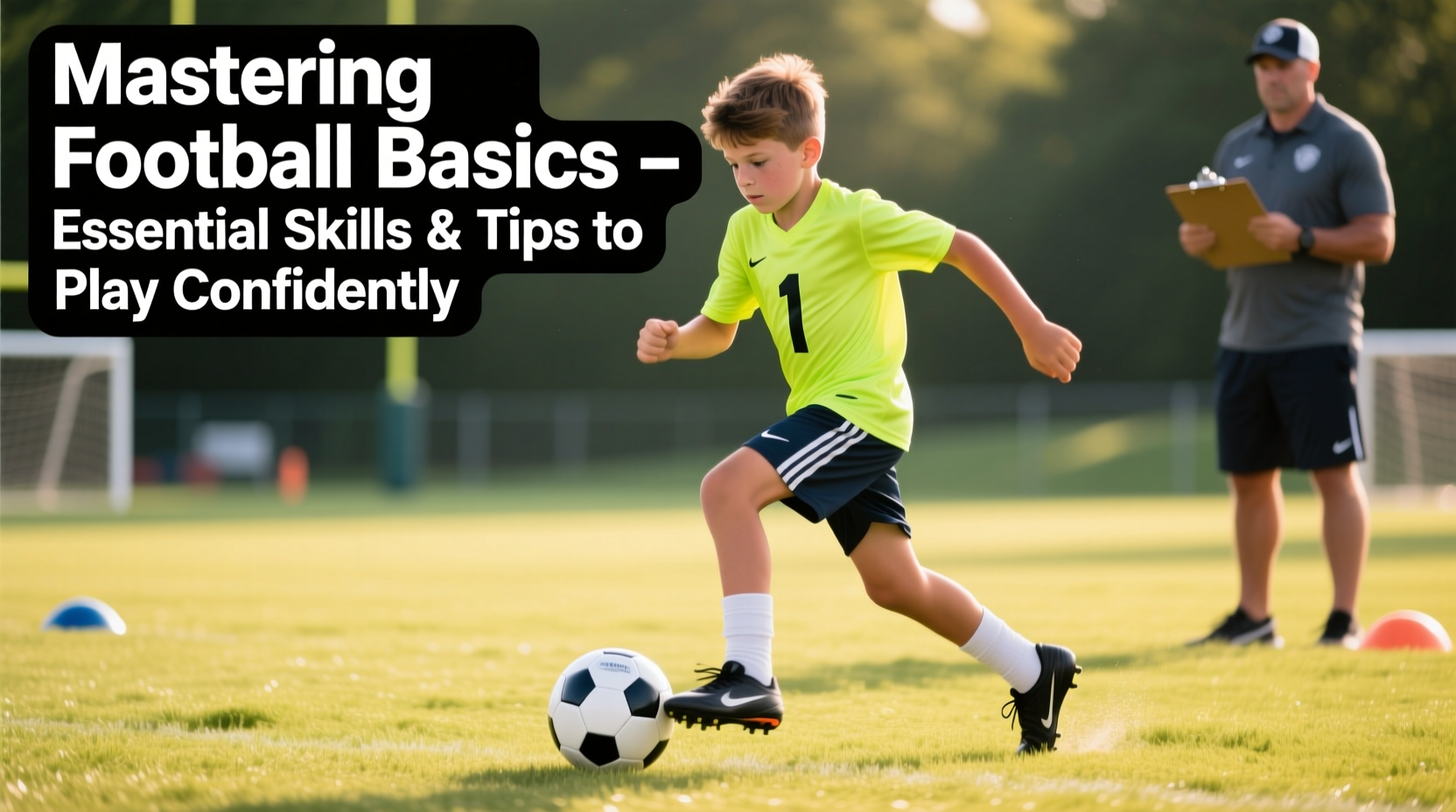
To play confidently, you must develop four key areas: ball control, passing accuracy, defensive awareness, and spatial understanding. These elements form the backbone of all successful players, regardless of position or style. While advanced tactics evolve over time, these basics remain constant across levels of play.
- Ball Control: The ability to move with the ball under pressure.
- Passing Accuracy: Delivering the ball precisely to teammates.
- Defensive Positioning: Anticipating opponent movements and cutting off angles.
- Spatial Awareness: Understanding where you are in relation to teammates, opponents, and goals.
Essential Ball Control Techniques
Dribbling isn't just about speed—it's about close control, change of pace, and shielding the ball from defenders. Beginners often make the mistake of kicking too far ahead, losing possession instantly. Instead, focus on using small touches with both feet.
- Inside-of-the-Foot Dribbling: Use the inside of your foot to push the ball forward in short bursts. Keep your body slightly bent and eyes up when possible.
- Outside Foot Moves: Practice cutting the ball sideways using the outside of your foot to evade imaginary defenders.
- Shielding: When pressed, turn your body between the ball and the opponent, using arms (without pushing) to create space.
Set up cones in your backyard or local park and weave through them at varying speeds. Gradually increase difficulty by adding turns, sudden stops, and backward rolls.
Step-by-Step Ball Mastery Drill
- Lay out six cones in a straight line, spaced about one yard apart.
- Dribble through them using only your right foot’s inside edge.
- Repeat using your left foot.
- Next, alternate feet with each cone.
- Finally, add a pause-and-go motion at every other cone to simulate real-game pressure.
This drill improves coordination, touch, and confidence when navigating tight spaces.
Passing and Receiving with Precision
A good pass sets up opportunities. A great pass creates goals. Yet many beginners struggle not because they lack strength, but because they neglect technique and timing.
| Situation | Recommended Pass Type | Key Focus |
|---|---|---|
| Short distance, open space | Push pass (inside foot) | Accuracy and weight |
| Moving target, medium range | Driven pass (laces) | Timing and follow-through |
| Over a defender | Chip or lofted pass | Backspin and elevation |
| Quick turnover under pressure | One-touch pass | First touch control |
When receiving the ball, cushion the impact with your foot. Let the ball “die” softly rather than stopping it abruptly. This reduces turnovers and prepares you for your next move.
“Great players don’t just pass the ball—they pass it to where their teammate will be.” — Rafael Benítez, Former Premier League Manager
Positional Awareness and Game Intelligence
Confidence comes not just from skill, but from knowing what to do next. Even amateur matches reward players who understand positioning. Without this, even strong dribblers become isolated and ineffective.
As a beginner, observe how professional players constantly adjust their position based on the ball’s location. If your team has possession, move into open space to offer a passing option. If the opposition controls the ball, drop back and support your defense.
Mini Case Study: Learning from Amateur Leagues
Carlos, a 24-year-old office worker, joined a recreational league with minimal experience. Initially, he tried to dribble past everyone and rarely passed. After three games without scoring, his coach pulled him aside and suggested two changes: make one simple pass before attempting anything else, and stay wide when his team had the ball.
Within two weeks, Carlos recorded two assists. By focusing on positioning and smart decisions instead of heroics, he became a reliable player. His confidence grew—not because his technique suddenly improved, but because he understood the game better.
Beginner’s Skill Development Checklist
Use this checklist weekly to track progress and ensure balanced development:
- ✅ Practice dribbling with both feet for 10 minutes
- ✅ Complete 50 short passes against a wall or with a partner
- ✅ Perform 3 sets of agility ladder or cone drills
- ✅ Play a small-sided game (3v3 or 5v5) to apply skills
- ✅ Review one full match, focusing on player positioning
- ✅ Stretch and cool down after every session
Consistency matters more than intensity. Doing these exercises regularly builds muscle memory and mental sharpness.
Common Mistakes and How to Avoid Them
New players often fall into predictable traps that slow their growth. Recognizing these early can save months of frustration.
| Mistake | Why It Hurts | How to Fix It |
|---|---|---|
| Looking down at the ball constantly | Limits vision and reaction time | Practice lifting your head every 2–3 touches |
| Kicking the ball too hard | Loses control and increases errors | Focus on finesse, not force |
| Staying static when not in possession | Becomes invisible to teammates | Move into open channels and call for the ball |
| Trying to imitate pros too soon | Neglects fundamentals for flair | Master basics before attempting tricks |
Frequently Asked Questions
How long does it take to become confident playing football?
With regular practice—about 3–4 sessions per week—most beginners feel noticeably more confident within 6 to 8 weeks. Confidence grows fastest when combined with actual gameplay, not just drills.
Do I need expensive gear to start learning?
No. All you need is a regulation-sized ball, flat-soled shoes or cleats suitable for grass, and comfortable athletic clothing. A water bottle and motivation matter more than branded equipment.
Can I learn football effectively on my own?
You can build technical skills solo, such as dribbling, passing against a wall, and juggling. However, decision-making and teamwork require interaction. Join pickup games or local beginner leagues to round out your development.
Building Long-Term Confidence on the Pitch
True confidence in football isn’t loud—it’s quiet assurance. It’s the calmness to receive a pass under pressure, the patience to wait for the right moment, and the humility to keep learning. Every elite player once stood where you are now: unsure, eager, and ready to grow.
Start small. Master one skill at a time. Celebrate progress, not perfection. And remember, the most important quality in a footballer isn’t talent—it’s persistence.




 浙公网安备
33010002000092号
浙公网安备
33010002000092号 浙B2-20120091-4
Comments
No comments yet. Why don't you start the discussion?