
Improvement isn’t accidental. Whether you're learning a new language, refining your public speaking, or mastering a sport, the path from novice to expert follows a predictable pattern—not of talent, but of method. While natural ability may provide a head start, sustained progress comes from structured effort, self-awareness, and intelligent repetition. The truth is, anyone can get better at anything if they apply the right principles consistently. This article breaks down the science-backed strategies that top performers use to accelerate their growth and how you can implement them in your own pursuits.
The Myth of Natural Talent
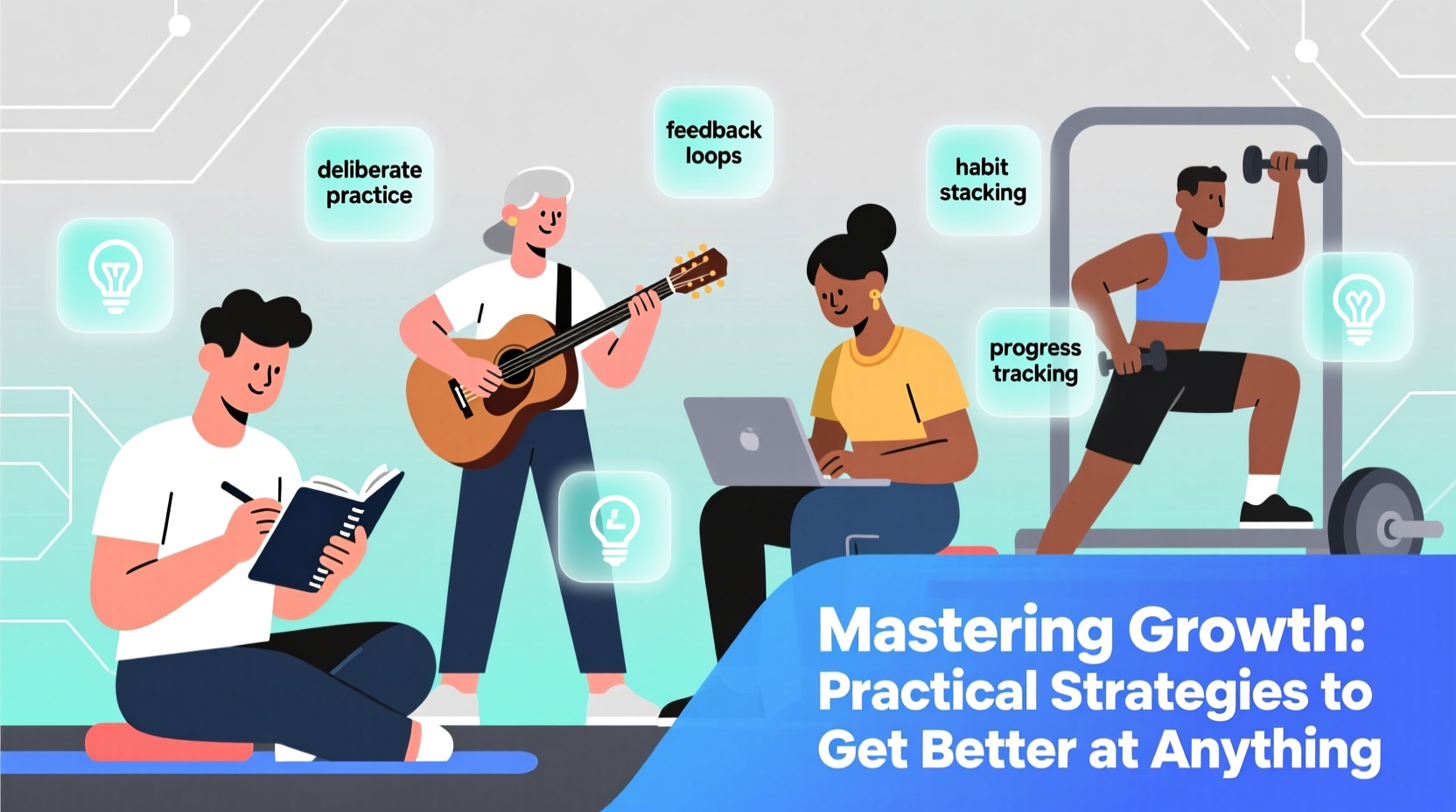
Society often attributes mastery to innate gifts—“She’s just a natural musician” or “He was born to lead.” But research across domains—from chess to surgery—shows that expertise is built, not bestowed. Psychologist K. Anders Ericsson, whose work inspired the popular \"10,000-hour rule,\" emphasized that what separates elite performers is not raw talent, but deliberate practice: a focused, goal-oriented approach to skill development.
“The most effective learners are not those with the highest IQs, but those who engage in purposeful, reflective practice over time.” — Dr. Carol Dweck, Stanford University
Deliberate practice requires more than repetition. It demands identifying weaknesses, pushing beyond comfort, and receiving immediate feedback. Most people plateau because they practice on autopilot. To grow, you must disrupt routine and challenge your limits deliberately.
Principle 1: Focus on Micro-Skills, Not Just Outcomes
When aiming to improve, it's tempting to fixate on results—winning the game, acing the presentation, finishing the race faster. But long-term growth happens by mastering the components that lead to those outcomes.
For example, instead of setting a goal to “become a better writer,” break it down:
- Improve sentence clarity
- Strengthen paragraph transitions
- Develop a stronger narrative voice
- Edit for conciseness
Each micro-skill can be isolated, practiced, and measured. By narrowing your focus, you increase precision and reduce overwhelm.
Principle 2: Embrace Discomfort as a Signal of Progress
Effective practice should feel difficult. If it doesn’t, you’re likely reinforcing existing habits rather than building new ones. The brain strengthens neural pathways when challenged—this is the foundation of neuroplasticity.
Consider a pianist learning a complex passage. Playing it slowly and accurately, repeating measures with attention to fingering and timing, is far more valuable than rushing through it perfectly once. Each mistake corrected under pressure builds deeper competence.
How to Practice with Purpose
- Define a clear objective for each session (e.g., “Reduce filler words in my speech by 50%”)
- Isolate the skill (record yourself speaking, then analyze only word frequency)
- Practice in short bursts with full concentration (20–30 minutes max)
- Seek immediate feedback (use recordings, coaches, or peer reviews)
- Adjust and repeat
Principle 3: Leverage Feedback Loops
Feedback is the compass of improvement. Without it, you risk reinforcing errors. Yet many avoid feedback due to ego or fear of criticism. High performers, however, treat feedback as data—not judgment.
There are three types of feedback:
| Type | Description | Example |
|---|---|---|
| Immediate | Real-time response during performance | A coach correcting your tennis swing mid-drill |
| Delayed | Analysis after the fact | Reviewing a recorded sales call |
| Comparative | Benchmarked against standards or peers | Grading an essay using a rubric |
To maximize learning, combine all three. Record your presentations, compare them to exemplars, and have a mentor highlight areas for refinement.
Mini Case Study: From Nervous Speaker to Confident Presenter
Jamal, a junior project manager, dreaded team meetings. He stumbled over words, avoided eye contact, and felt dismissed. Determined to change, he adopted a growth strategy:
- He recorded every internal presentation for two weeks.
- Analyzed each for pacing, clarity, and confidence markers.
- Identified his top flaw: starting sentences with “So…” or “Like…”
- Designed drills: practicing opening statements without fillers.
- Asked a senior colleague for bi-weekly feedback.
Within six weeks, Jamal spoke more concisely and confidently. Three months later, he led a client pitch successfully. His transformation wasn’t magic—it was methodical.
Principle 4: Build Systems, Not Just Goals
Goals define destinations; systems determine the journey. Want to write a book? Setting a deadline helps, but writing 500 words every morning builds momentum. Mastery thrives on consistency, not motivation.
Create a sustainable practice system by asking:
- When will I practice? (Fixed time daily or weekly)
- Where will I do it? (Minimize distractions)
- What triggers the behavior? (Habit stacking: e.g., “After coffee, I write for 25 minutes”)
- How will I track progress? (Journal, spreadsheet, app)
Checklist: Daily Growth Routine
Use this checklist to structure your improvement process:
- ✅ Identify one micro-skill to improve today
- ✅ Schedule 20–30 minutes of focused practice
- ✅ Eliminate distractions (phone off, workspace clear)
- ✅ Record or document the session (notes, audio, video)
- ✅ Review and reflect: What went well? What needs adjustment?
- ✅ Plan next step based on feedback
Principle 5: Cultivate a Growth Mindset
Stanford psychologist Carol Dweck found that individuals who believe abilities can be developed outperform those who see traits as fixed. A growth mindset transforms failure from a verdict into a lesson.
Rather than thinking, “I’m bad at networking,” reframe it: “I’m still learning how to connect with professionals effectively.” This subtle shift opens the door to experimentation and resilience.
“Effort is what makes you smart or talented. It’s not the other way around.” — Carol Dweck, Mindset: The New Psychology of Success
Adopt these mental habits:
- Replace “I failed” with “I learned what doesn’t work.”
- Celebrate small wins and visible effort.
- Seek challenges that stretch your current ability.
FAQ
How long does it take to get good at something?
There’s no fixed timeline. With deliberate practice, noticeable improvement typically occurs within 4–8 weeks. Mastery takes years, but competence in most skills can be achieved in 3–6 months of consistent effort.
Can I improve if I’m older or lack experience?
Absolutely. Neuroplasticity—the brain’s ability to adapt—exists throughout life. Older learners often bring discipline, focus, and real-world context that accelerates meaningful progress. Starting late is better than never starting.
What if I don’t see progress despite practicing?
Reevaluate your method. Are you practicing mindfully or just going through the motions? Are you getting feedback? Try changing your approach, seeking coaching, or breaking the skill into smaller parts. Plateaus are normal—break through them with adjusted strategy, not just more hours.
Conclusion: Start Where You Are
Mastering growth isn’t about perfection. It’s about direction. Every expert was once a beginner who chose to keep going. You don’t need extraordinary talent—just ordinary consistency applied with intention. Pick one skill, isolate one component, practice with focus, and review honestly. Repeat. Over time, the compound effect of small improvements creates remarkable transformation.




 浙公网安备
33010002000092号
浙公网安备
33010002000092号 浙B2-20120091-4
Comments
No comments yet. Why don't you start the discussion?