
Headbands are no longer just a functional accessory for keeping hair out of your face. Today, they’re a fashion statement—subtle yet powerful in transforming an everyday look into something polished and intentional. Whether you're dressing for work, a weekend brunch, or a special event, the right headband can harmonize your hairstyle, highlight your features, and complete your ensemble. The key lies not just in choosing a stylish piece, but in understanding how to wear it in a way that complements your outfit, face shape, and occasion.
From minimalist fabric bands to bold embellished crowns, headbands offer versatility few accessories match. Yet many wear them incorrectly—too tight, too far back, or mismatched with their clothing tone. With thoughtful styling, a headband becomes more than an afterthought; it becomes a signature element of your personal aesthetic.
Understanding Headband Types and Their Best Uses
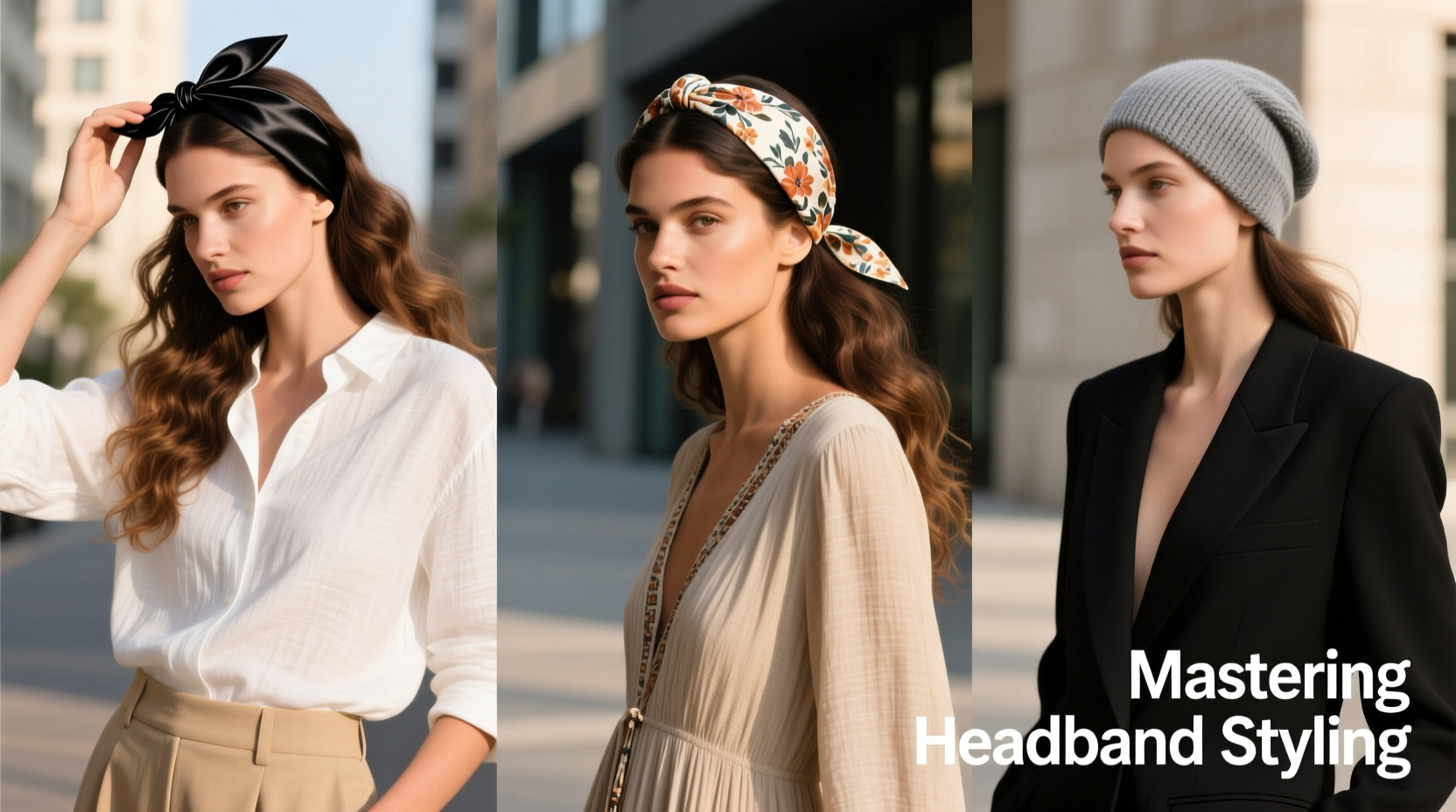
Not all headbands are created equal. Each type serves a different purpose and pairs best with certain styles, hair types, and outfits. Knowing the distinctions helps you make informed choices.
| Type | Description | Best For |
|---|---|---|
| Thin Fabric Bands | Narrow, often elasticated bands made from silk, velvet, or cotton | Casual wear, soft hairstyles, adding subtle color coordination |
| Wide Brimmed Bands | Bulky, structured bands that sit flat against the head | Boho-chic looks, volume control, making a bold fashion statement |
| Padded or Knotted Bands | Soft, cushioned bands with a center knot or bow | Everyday elegance, balancing round or heart-shaped faces |
| Metal or Minimalist Bands | Sleek metallic or geometric designs, often gold or silver | Professional settings, evening wear, modern minimalist outfits |
| Embellished or Statement Bands | Decorated with pearls, crystals, or floral motifs | Weddings, parties, formal events where glamour is desired |
Matching Your Headband to Your Outfit and Occasion
A well-chosen headband doesn’t clash with your clothes—it enhances them. Think of it as jewelry for your hair. Just as you wouldn’t pair chunky gold earrings with a delicate lace dress, avoid overwhelming a simple outfit with an oversized headband unless that’s the intentional effect.
For professional environments, opt for sleek metal bands or neutral-toned fabric ones. A slim gold band with a small clasp adds sophistication without distraction. In contrast, weekend outings allow for creativity: try a wide leopard-print band with jeans and a white tee for instant bohemian flair.
Color coordination is essential. A headband should either match a dominant hue in your outfit or provide a tasteful contrast. For example, a deep burgundy band elevates a navy coat by introducing warmth and depth. Avoid clashing patterns—pair a floral headband only with solid colors, never another print.
“Accessories are the punctuation marks of an outfit. A headband, when used correctly, gives your look a clear exclamation point.” — Lena Torres, Stylist & Fashion Consultant
Step-by-Step Guide to Wearing a Headband Flawlessly
Even the most beautiful headband can fall flat if worn incorrectly. Follow this five-step process to ensure yours sits perfectly every time.
- Prep your hair: Lightly brush or finger-comb your hair. For smooth styles, use a light serum to tame flyaways. If wearing wavy or curly hair loose, gently fluff the crown for volume.
- Position correctly: Place the headband about half an inch above your eyebrows. It should rest comfortably on the widest part of your head, not too tight behind the ears.
- Adjust for volume: If you have thick or voluminous hair, gently pull some strands forward near the temples to frame your face and prevent the band from pushing hair straight back.
- Secure if needed: Use bobby pins discreetly at the ends if the band slips. Choose pins that match your hair color and tuck them under the band’s edge.
- Final check: Look in the mirror from multiple angles. Ensure the band is level, not tilted, and that your hair flows naturally around it.
When to Break the Rules
While these steps apply to most situations, creative styling invites exceptions. For instance, slipping a thin velvet band slightly backward creates a retro-inspired look ideal for vintage-themed events. Or, doubling up with two narrow bands—one above each ear—adds edge to a punk or streetwear outfit.
Real-Life Example: From Office to Evening Event
Sophia has a busy Thursday: a client meeting in the morning followed by a friend’s engagement party at night. Her goal? Transition seamlessly without changing her entire wardrobe.
She wears a tailored beige blazer over a cream shell top with dark trousers. For the office, she selects a slim brushed-gold metal headband. It adds polish without drawing attention, complementing her minimalist stud earrings and structured tote.
After work, she swaps her flats for heels, adds red lipstick, and replaces the metal band with a wide black velvet one adorned with a single crystal brooch. She loosens her hair slightly, letting waves fall over her shoulders. The new headband instantly elevates the outfit, shifting the tone from professional to celebratory.
This demonstrates how a headband can function as a “style pivot”—a single accessory change that redefines an entire look.
Checklist: Choosing the Right Headband for Any Outfit
- ✅ Is the headband material appropriate for the season? (e.g., velvet for winter, silk for summer)
- ✅ Does the color or pattern align with at least one element of my outfit?
- ✅ Is the size proportional to my face and hairstyle?
- ✅ Will it stay secure without causing discomfort?
- ✅ Does it suit the occasion’s dress code?
- ✅ Have I considered my face shape? (e.g., wide bands soften angular features)
Frequently Asked Questions
Can I wear a headband with short hair?
Absolutely. Headbands work beautifully with short hair, especially pixie cuts or bobs. Try a thin metallic band or a knotted fabric style to add dimension. Position it just above the ears to avoid flattening shorter layers.
How do I stop my headband from slipping?
Choose headbands with silicone grips or inner velvet lining—they adhere better to hair. You can also lightly texturize your roots with dry shampoo for extra grip. If necessary, secure with small bobby pins hidden beneath the band.
Are headbands still in style in 2024?
Yes. Headbands have seen a resurgence in both high fashion and streetwear. Designers like Simone Rocha and Miu Miu have featured exaggerated and jeweled versions on runways, while influencers embrace minimalist bands for everyday wear. They’re not a trend—they’re a timeless accessory with cyclical reinvention.
Conclusion: Elevate Your Style One Band at a Time
Mastering headband styling isn’t about following fleeting trends—it’s about intentionality. The right headband balances form and function, enhancing your natural beauty while tying your outfit together with quiet confidence. Whether you lean toward classic elegance or bold experimentation, there’s a headband style that aligns with your vision.
Start by assessing your wardrobe and identifying gaps where a headband could add cohesion or flair. Experiment with placement, pairing, and proportions. Over time, you’ll develop an instinct for what works—and what makes you feel truly put together.




 浙公网安备
33010002000092号
浙公网安备
33010002000092号 浙B2-20120091-4
Comments
No comments yet. Why don't you start the discussion?