
Reaching high notes without strain is a goal for many singers—whether you're performing on stage, recording in the studio, or singing for your own enjoyment. While some voices naturally extend into higher registers, every singer can improve their range, stability, and ease with the right training. The key lies not in pushing harder, but in refining technique, aligning breath support, and developing muscular coordination. This guide breaks down the most effective methods to access high notes with precision, power, and lasting vocal health.
The Foundation: Breath Support and Diaphragmatic Control
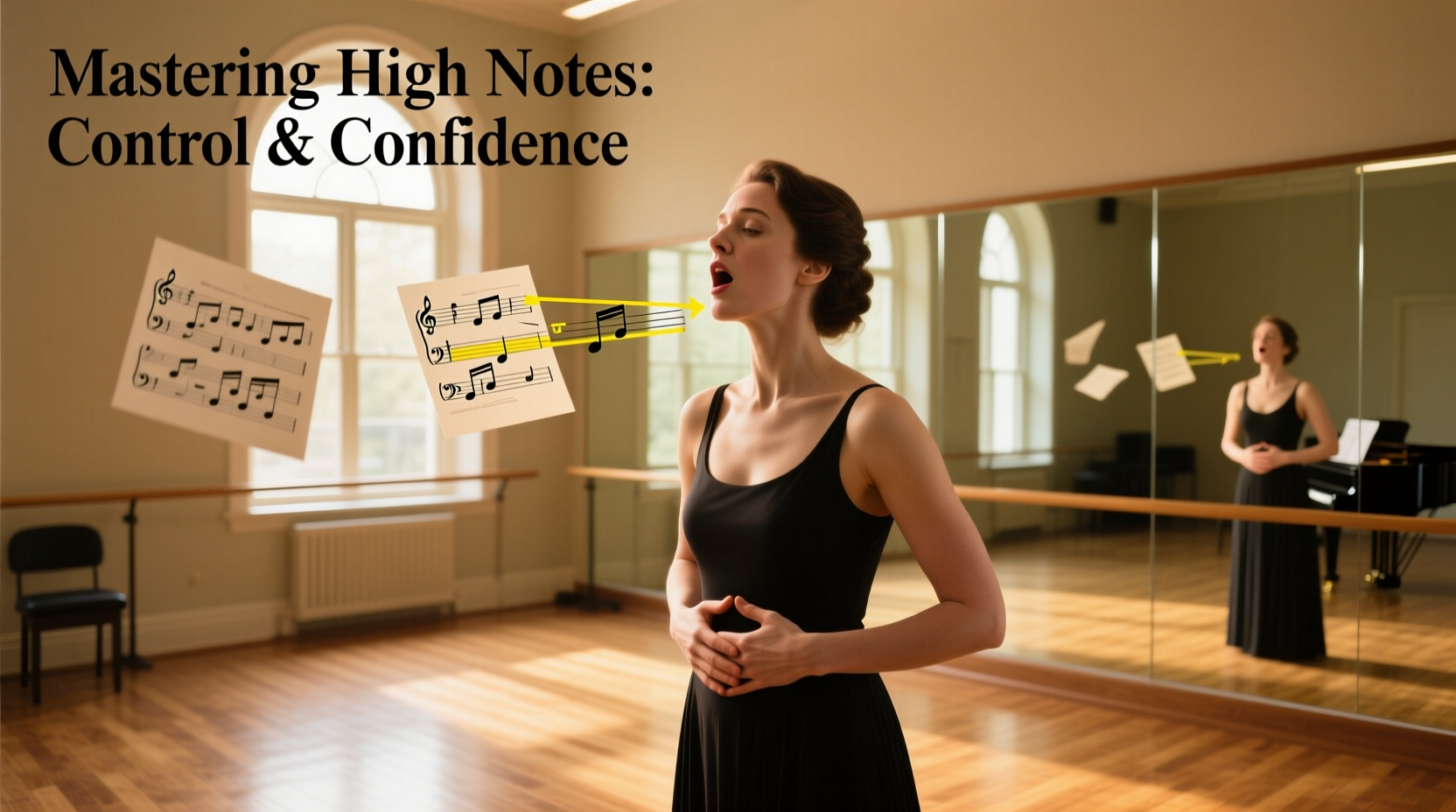
High notes demand consistent airflow and steady subglottic pressure. Without proper breath support, singers often compensate by tightening the throat, lifting the larynx, or forcing volume—leading to strain and vocal fatigue. The diaphragm acts as the engine of your voice, regulating air release so your vocal cords can vibrate efficiently.
To engage true diaphragmatic breathing:
- Stand or sit with a straight spine, shoulders relaxed.
- Inhale deeply through the nose, allowing the lower abdomen (not the chest) to expand outward.
- Exhale slowly on a sustained “sss” or “shh,” maintaining even pressure for at least 15 seconds.
When approaching high notes, avoid gasping or overfilling the lungs. Instead, take a quick, low breath and maintain engagement in the lower abdominals throughout the phrase. This creates a balanced resistance between airflow and vocal cord closure, enabling clean, resonant high tones.
Vocal Placement and Resonance Tuning
Where you \"place\" the sound dramatically affects how easily you hit high notes. Many singers instinctively push sound forward into the nasal cavity or squeeze in the throat. Instead, aim for optimal resonance in the mask—the area around the nose, cheeks, and upper teeth.
Try this exercise: Hum gently on a mid-range note, then gradually ascend. Notice the tingling sensation in your facial bones. That’s resonance. Now, keep that same sensation as you sing a vowel like “ee” or “ah” ascending chromatically. You should feel the sound vibrating forward, not trapped in the throat.
“Great high notes aren’t pushed—they’re released into space with intention and resonance.” — Dr. Ingo Titze, Voice Scientist and Vocal Pedagogy Authority
Use consonant-vowel combinations like “ng-ee” or “voo” to encourage forward placement. These sounds naturally direct resonance into the head and minimize laryngeal tension, making high pitches more accessible.
Step-by-Step Guide to Expanding Your Range Safely
Building vocal range requires patience and consistency. Follow this five-step progression to develop higher notes without compromising vocal health.
- Warm Up Thoroughly: Begin with lip trills, tongue trills, and gentle sirens from your lowest comfortable note to just above your current range. Spend 8–10 minutes preparing the voice.
- Isolate Head Voice: Use a descending octave slide on “oo” starting from a comfortable high pitch. Focus on keeping the tone light and floaty—this activates head voice without strain.
- Connect Registers: Sing a five-note scale (do-re-mi-fa-sol-fa-mi-re-do) using “me” on each note. Start in mid-range and move up by half-steps. Smooth out any breaks between chest and head voice.
- Add Volume Gradually: Once transitions are seamless, increase dynamic intensity from piano to mezzo-piano—but never shout. Maintain balanced resonance.
- Test in Phrases: Apply new heights to short melodic fragments from songs. Choose lines that rise stepwise rather than leap abruptly.
Practice this sequence daily for 15–20 minutes. Progress may be slow—gaining one semitone per month is normal and sustainable.
Common Mistakes and How to Avoid Them
Even experienced singers fall into habits that sabotage high-note performance. Recognizing these pitfalls is the first step toward correction.
| Mistake | Why It’s Harmful | Solution |
|---|---|---|
| Raising the larynx | Creates tension, thinning vocal folds and increasing risk of strain | Swallow gently to feel larynx rise, then release. Sing while imagining a yawn to keep it low. |
| Over-breathing before high notes | Increases subglottic pressure, causing shouting or cracking | Breathe low and quick. Think “refill,” not “recharge.” |
| Pushing chest voice too high | Leads to yelling, hoarseness, and register breaks | Allow voice to lighten and transition into mix or head voice around E4–G4 (for women) or A3–C4 (for men). |
| Tensing jaw or tongue | Restricts resonance and vocal tract shaping | Keep jaw loose. Place fingertip under chin—shouldn’t rise when singing. |
Mini Case Study: From Strain to Strength
Lena, a 28-year-old indie vocalist, struggled to hit B4s in her live set without her voice cracking or going sharp. After consulting a vocal coach, she discovered she was pushing chest voice too high and holding her breath before climactic phrases. Over eight weeks, she implemented diaphragmatic breathing drills, practiced semi-occluded vocal exercises (like straw phonation), and worked on smooth chest-to-head transitions using “goo” glides. By focusing on coordination rather than force, Lena gained three stable semitones above her previous limit and now delivers high passages with clarity and emotional control.
Essential Exercises for High-Note Mastery
Incorporate these evidence-based exercises into your routine to build strength and agility:
- Lip Trills on Sirens: Glide smoothly from your lowest note to your highest comfortable pitch. Encourages balanced airflow and reduces strain.
- Straw Phonation: Sing scales through a drinking straw. Creates back pressure that stabilizes vocal fold vibration.
- Falsetto Slides: Men: Slide from falsetto down to chest voice. Women: Use light head voice slides to reinforce registration balance.
- Octave Jumps on “Nay”: Jump from C4 to C5 on “nay,” focusing on consistent resonance. Prevents collapsing into breathiness.
Perform each exercise for 3–5 minutes daily. Stop if you feel pain or scratchiness—discomfort is a warning sign, not a challenge to overcome.
FAQ
Can anyone learn to sing high notes, regardless of voice type?
Yes. While vocal range varies by physiology, every voice can improve its upper extension with proper technique. Even basses and contraltos can access head voice and mixed tones above their speaking range. The goal is healthy production, not mimicking another voice type.
How long does it take to sing higher with confidence?
Most singers see noticeable improvement within 4–6 weeks of consistent practice. Full integration of high notes into performance-ready singing typically takes 3–6 months, depending on prior experience and frequency of training.
Is it safe to practice high notes every day?
Yes, if done correctly. Limit high-range work to 10–15 minutes per session, always after warming up. Prioritize quality over quantity. If your voice feels tired, switch to resonance or articulation exercises instead.
Conclusion: Sing with Power and Purpose
Mastering high notes isn’t about sheer willpower—it’s about intelligent technique, mindful practice, and respect for your instrument. When breath, resonance, and registration align, high notes emerge effortlessly, carrying emotion and authority. Whether you’re belting a chorus or floating a delicate head tone, the tools are within your reach. Commit to daily refinement, listen to your body, and trust the process. Your voice is capable of more than you think.




 浙公网安备
33010002000092号
浙公网安备
33010002000092号 浙B2-20120091-4
Comments
No comments yet. Why don't you start the discussion?