
In an age of endless distractions and information overload, simply turning pages no longer guarantees understanding or recall. Passive reading—where the eyes move across text without deep engagement—leaves most material forgotten within hours. Active reading, by contrast, is a deliberate, cognitive process that transforms the way we consume written content. It’s not about reading faster; it’s about reading smarter. When practiced consistently, active reading sharpens focus, deepens comprehension, and dramatically improves long-term retention.
This approach treats reading as a conversation between the reader and the text. Instead of absorbing words like a sponge, active readers question, annotate, summarize, and connect ideas. Whether you're studying for exams, analyzing business reports, or exploring nonfiction books, mastering active reading gives you control over your learning. The techniques are simple but powerful—and they compound over time.
What Is Active Reading and Why It Matters
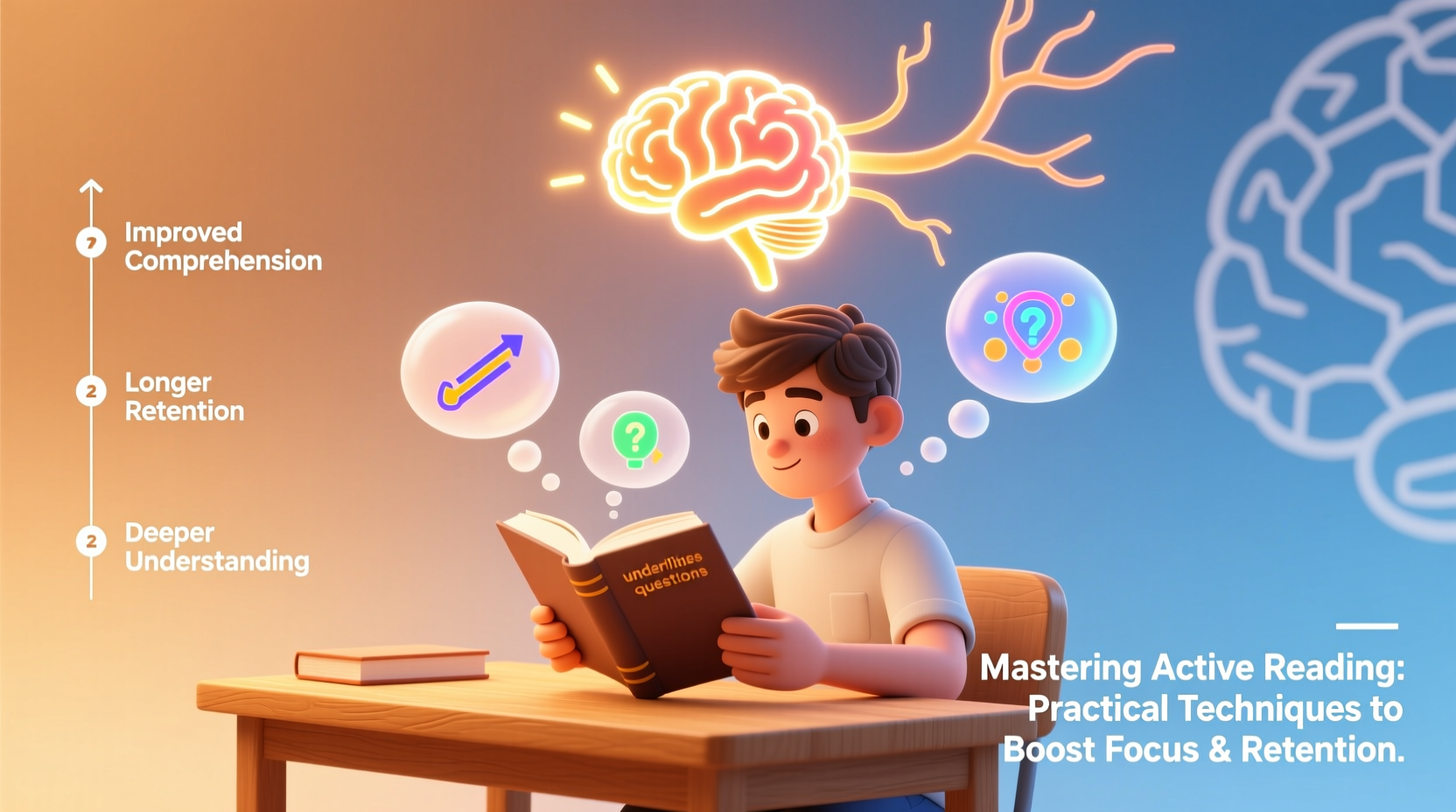
Active reading is the practice of engaging deeply with a text through intentional strategies such as questioning, summarizing, visualizing, and note-taking. Unlike passive reading, which often leads to skimming and shallow understanding, active reading requires mental effort and interaction with the material.
The benefits extend beyond academic success. Professionals who apply active reading techniques retain key insights from industry reports, make better decisions based on evidence, and communicate ideas more effectively. Students using these methods demonstrate improved critical thinking and perform better on assessments that require analysis rather than memorization.
“Reading is not an act of consumption but of construction. You don’t just take in information—you build meaning.” — Dr. Sarah Thompson, Cognitive Psychologist and Author of *The Mindful Reader*
Core Techniques for Practicing Active Reading
Becoming an active reader doesn’t require special tools—just a shift in mindset and consistent application of strategic habits. Below are five foundational techniques that form the backbone of effective active reading.
1. Preview Before You Dive In
Before reading a chapter or article in full, spend 3–5 minutes previewing its structure. Skim headings, subheadings, introductions, conclusions, and any highlighted terms or visuals. This primes your brain for what’s coming and activates prior knowledge.
2. Annotate As You Read
Marginalia—writing brief notes in the margins or digitally highlighting with comments—keeps your mind engaged. Use symbols: underline key claims, star important examples, and jot down reactions like “This contradicts X” or “How does this apply to Y?”
3. Summarize Paragraphs in Your Own Words
After every few paragraphs, pause and silently restate the main idea. If you can’t explain it simply, you haven’t understood it. This technique forces clarity and exposes gaps in comprehension.
4. Ask Questions Continuously
Challenge assumptions, consider implications, and probe logic. Good questions include: “What evidence supports this claim?” “Who might disagree, and why?” “How does this relate to what I already know?”
5. Visualize Concepts and Create Mental Models
Turn abstract ideas into images, diagrams, or analogies. For example, if reading about economic supply chains, imagine a flowchart in your mind linking producers to consumers. Visualization strengthens memory encoding.
Step-by-Step Guide to Implement Active Reading Daily
Integrating active reading into your routine doesn’t have to be overwhelming. Follow this six-step process to build lasting habits:
- Set a clear purpose: Know why you’re reading—Is it to learn, critique, apply, or remember? Purpose shapes how you engage.
- Choose a distraction-free environment: Silence notifications, use noise-canceling headphones if needed, and allocate focused time blocks (25–45 minutes).
- Preview the material: Scan titles, summaries, and structure to form expectations.
- Read in small chunks: Break text into manageable sections. After each, pause and reflect.
- Apply annotation strategies: Use colors or symbols to mark arguments, data, definitions, and personal responses.
- Review and synthesize afterward: Within 24 hours, write a short summary or teach the concept to someone else (or pretend to).
This cycle reinforces neural pathways associated with memory and understanding. Over time, these steps become automatic, making deep reading feel natural rather than laborious.
Do’s and Don’ts of Effective Active Reading
| Do’s | Don’ts |
|---|---|
| Pause regularly to reflect on meaning | Read straight through without stopping |
| Use your own words when summarizing | Rely solely on underlining or highlighting |
| Connect new ideas to prior knowledge | Treat each text in isolation |
| Revisit difficult passages immediately | Skip confusing parts and hope they’ll make sense later |
| Test yourself after reading (recall questions) | Assume understanding just because you finished the text |
Real-World Example: How a Law Student Improved Comprehension
Maya, a second-year law student, struggled with dense case readings. She’d spend hours reviewing judgments only to find herself unable to recall key rulings during class discussions. Frustrated, she adopted active reading techniques recommended by her professor.
She began by previewing case facts and legal issues before reading. As she moved through each section, she annotated margins with questions like “Why did the court reject this argument?” and summarized holdings in one sentence per paragraph. After each case, she wrote a three-sentence summary and recorded herself explaining it aloud.
Within four weeks, Maya noticed dramatic improvements. Her participation in seminars increased, and her exam scores rose by nearly 30%. More importantly, she felt confident discussing cases without constantly referring back to notes. “I finally feel like I’m thinking like a lawyer,” she said, “not just memorizing like a student.”
Essential Checklist for Every Active Reader
- ☑ Define your reading goal before starting
- ☑ Preview the text structure and key sections
- ☑ Keep a pen or digital annotation tool ready
- ☑ Pause every 3–5 paragraphs to summarize mentally
- ☑ Ask at least two critical questions per page
- ☑ Highlight sparingly—only core concepts or evidence
- ☑ Write a post-reading summary within 24 hours
- ☑ Test recall by teaching the content aloud
Frequently Asked Questions
Can active reading slow me down?
Initially, yes—active reading takes more time than passive skimming. But the trade-off is deeper understanding and less need for re-reading. Over time, your processing speed increases as comprehension becomes more efficient.
What if I’m reading digitally? Can I still annotate effectively?
Absolutely. Most e-readers and PDF viewers allow highlighting and note-taking. Use tagging systems (e.g., #KeyArgument, #Example) to organize thoughts. Just avoid over-highlighting—focus on quality, not quantity.
How do I stay motivated when the material is dry or complex?
Break sessions into shorter intervals (Pomodoro method), reward yourself after milestones, and remind yourself of your purpose. Also, try connecting the content to real-life applications—this boosts relevance and engagement.
Transform Your Relationship with Text
Active reading isn’t a shortcut—it’s a skill worth cultivating. It turns reading from a passive chore into an empowering act of intellectual growth. By asking questions, making connections, and reflecting critically, you reclaim agency over your learning. Whether you're preparing for a presentation, advancing your education, or expanding your worldview, these techniques ensure that what you read truly sticks.




 浙公网安备
33010002000092号
浙公网安备
33010002000092号 浙B2-20120091-4
Comments
No comments yet. Why don't you start the discussion?