
Connecting a PS4 controller properly is essential whether you're gaming on a PlayStation 4, a Windows PC, or even an Android device. While the process may seem straightforward, issues like pairing failures, input lag, or unrecognized controllers are common—especially when connecting via Bluetooth. A clear understanding of both wired and wireless methods ensures smooth gameplay without interruptions. This guide breaks down every connection method with precision, offering troubleshooting insights, compatibility notes, and expert-backed tips to help you achieve a reliable, low-latency setup.
Understanding Your PS4 Controller Options
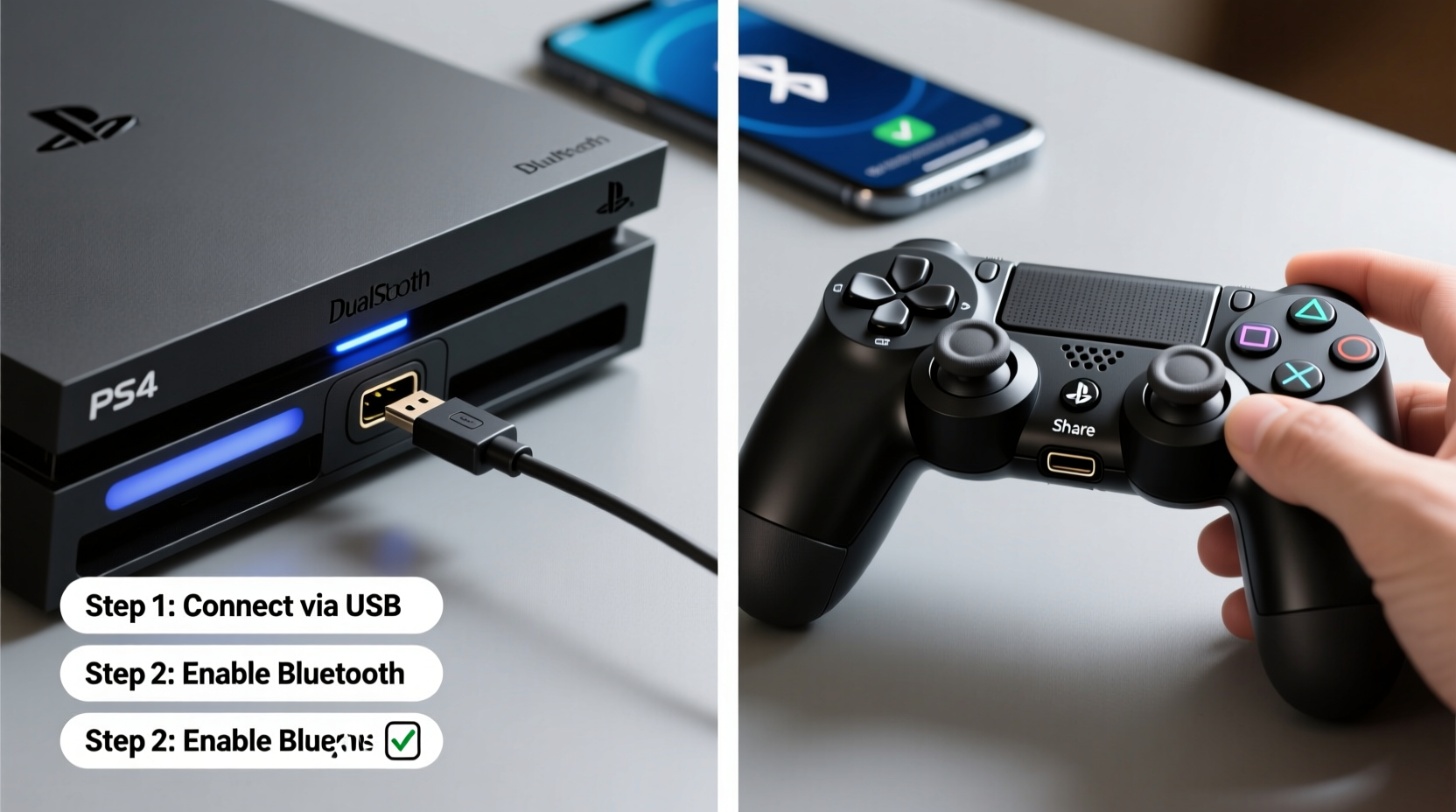
The DualShock 4 (DS4) controller, officially released alongside the PlayStation 4, supports multiple connectivity options: USB, Bluetooth, and Wi-Fi (via console). Each method has its advantages depending on your use case—be it low-latency gaming on a console, plug-and-play convenience on a PC, or portable play on a mobile device.
Before attempting any connection, ensure your controller is charged. A low battery can prevent successful pairing or cause disconnections during use. The DS4 uses a micro-USB port for charging (USB-C on the revised CUH-ZCT2 model), and most issues stem from overlooked power levels or outdated firmware.
Step-by-Step Guide: Connecting to a PlayStation 4 Console
The most reliable and seamless experience comes from using your DualShock 4 with its native system—the PS4. Here’s how to pair it correctly, whether you’re setting up a new console or replacing a damaged controller.
- Power on your PlayStation 4 using the front panel button or remote.
- Connect the PS4 controller to the console using a micro-USB cable.
- Press the PS button located at the center of the controller.
- Wait for the light bar to turn solid blue—this indicates a successful connection.
- Once synced, you can disconnect the cable and use the controller wirelessly if desired.
If connecting a second or additional controller, repeat the process while logged into your user profile. Note that only one controller can be used per account unless multiplayer settings allow otherwise.
“Even with wireless capabilities, starting with a wired connection ensures stable driver handshake and firmware recognition.” — Jordan Lee, Senior Console Technician at GameFix Labs
Connecting to a Windows PC: Wired vs. Wireless Methods
Using a PS4 controller on a PC expands gaming flexibility, especially with platforms like Steam, Epic Games, or cloud services such as Xbox Cloud Gaming. However, native Windows support requires attention to detail.
Wired Connection (Recommended for Beginners)
This method is plug-and-play on most modern Windows 10 and 11 systems:
- Plug the micro-USB end into the controller and the USB-A end into your PC.
- Windows will automatically install basic drivers via Windows Update.
- Press the PS button to activate the controller.
- Test inputs using Settings > Devices > Game Controllers.
Wireless Bluetooth Pairing
To go cable-free, follow these precise steps:
- Ensure your PC has built-in Bluetooth or a compatible USB Bluetooth adapter.
- Turn on the controller by plugging it in briefly, then unplug it.
- Hold down the Share and PS button simultaneously until the light bar flashes rapidly (white).
- On your PC, go to Settings > Devices > Bluetooth & other devices > Add device > Bluetooth.
- Select “Wireless Controller” from the list.
- After pairing, press the PS button to finalize connection.
Compatibility Across Platforms: What Works Where?
Not all devices support the PS4 controller equally. Below is a comparison of major platforms and their compatibility standards.
| Platform | Wired Support | Bluetooth Support | Notes |
|---|---|---|---|
| PlayStation 4 | Yes | Yes (native) | Up to 4 controllers supported simultaneously. |
| Windows 10/11 | Yes (plug-and-play) | Limited (requires correct pairing mode) | Steam offers enhanced DS4 integration. |
| macOS | Yes | Yes (macOS 10.12+) | Use Bluetooth; no extra software needed. |
| Android | Yes (OTG cable required) | Yes (if Bluetooth HID enabled) | Supported in games like Fortnite, Call of Duty Mobile. |
| iOS/iPadOS | No | Yes (iOS 13+, MFi-compliant apps) | Only works in select App Store games. |
Troubleshooting Common Connection Issues
Even with careful setup, problems arise. These solutions address frequent complaints reported by users and tech forums.
- Controller not showing in Bluetooth list: Reset the controller using the pinhole reset button on the back near the L2 trigger. Then re-pair.
- Input lag or stuttering: Interference from other wireless devices may be the cause. Move closer to the host device or switch to wired mode.
- Light bar flashing but not connecting: Indicates failed sync. Reinstall Bluetooth drivers or restart the host device.
- Vibration or audio not working: May require third-party drivers like DS4Windows for full feature parity on PC.
Mini Case Study: Resolving Persistent Bluetooth Drops on a Gaming Laptop
A freelance gamer using a high-end Windows laptop found that her PS4 controller disconnected frequently during intense sessions. Despite correct pairing, latency spiked mid-game. After testing various fixes, she discovered that her laptop’s internal Bluetooth module was outdated. She replaced it with a CSR8510-based USB dongle—a known stable chip for DS4 pairing—and the issue resolved completely. This highlights how hardware quality impacts wireless reliability more than user error.
Essential Checklist for Seamless Setup
Follow this checklist each time you set up a PS4 controller on a new device:
- ✅ Charge the controller fully before pairing
- ✅ Use a high-quality USB cable (avoid cheap knockoffs)
- ✅ Enable Bluetooth on the host device
- ✅ Enter pairing mode correctly (Share + PS button)
- ✅ Remove old or duplicate Bluetooth entries
- ✅ Test all buttons and analog sticks post-connection
- ✅ Update system firmware if available
Frequently Asked Questions
Can I use my PS4 controller on a PS5?
Yes, but only for playing PS4 games backward-compatible on the PS5. It cannot be used for native PS5 titles, which require the DualSense controller.
Why won’t my PC recognize my PS4 controller over Bluetooth?
This often happens due to incorrect pairing sequence or driver conflicts. Try resetting the controller, deleting previous Bluetooth records, and ensuring you're holding Share + PS until rapid flashing begins. Using DS4Windows can also resolve detection issues.
Does connecting via USB reduce input lag?
Yes. Wired connections provide lower latency and consistent performance compared to Bluetooth, making them ideal for competitive gaming or rhythm-based titles.
Final Tips for Long-Term Reliability
Maintaining your PS4 controller’s connectivity starts with routine care. Clean the charging port monthly to prevent debris buildup, which can interfere with data transfer. Avoid exposing the controller to extreme temperatures, as this affects battery health and Bluetooth stability. For frequent PC users, consider installing updated drivers through reputable sources like ScpToolkit or InputMapper to unlock advanced customization.
Regularly updating your console or computer's operating system also ensures ongoing compatibility with evolving Bluetooth protocols and HID standards.
Conclusion
Mastering how to connect a PS4 controller opens doors to versatile, high-performance gaming across multiple platforms. Whether you're syncing to a PS4, pairing via Bluetooth to a PC, or taking it on the go with mobile gaming, the key lies in following precise steps and understanding the nuances of each connection type. With the right tools, knowledge, and maintenance habits, your DualShock 4 can deliver seamless, responsive control for years.




 浙公网安备
33010002000092号
浙公网安备
33010002000092号 浙B2-20120091-4
Comments
No comments yet. Why don't you start the discussion?